Trending
- Who got the money and who didn’t in Africa’s 2025 race for foreign direct investments?
- AI’s Dual Capacity and a Strategic Opportunity for African Peace and Security
- How African economies dealt with the 2025 debt maturity wall
- Africa’s Green Economy Summit 2026 readies pipeline of investment-ready green ventures
- East Africa banks on youth-led innovation to transform food systems sector
- The Washington Accords and Rwanda DRC Peace Deal
- Binance Junior, a crypto savings account targeting children and teens debuts in Africa
- African Union Agenda 2063 and the Conflicts Threatening “The Africa We Want”


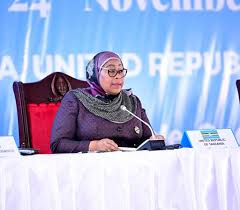
In their letter dated June 26th, 2024, High Commissioners and Ambassadors from 10 countries expressed their dissatisfaction with how the Tanzania Revenue Authority (TRA)…
Climate change will push 132 million people into poverty by…
Imaginative agriculture concepts are essential to sustainable food production…


Learning poverty is costing African young learners dearly Median international school fees in Africa span…

Constructed under the East African Community regional development project, the road is key to the much aspired regional integration and opens doors to the ports for Africa’s landlocked countries like Uganda, Rwanda and the DRC.
Owing to its importance, the African Development Bank and the Japan International Cooperation Agency (Jica) are among the project funders as well as the Tanzanian government itself through its own internal revenue.
Complete with spar roads, the highway will open up enormous economic potential of each region it passes. On the other side of the border, the Kenyan government has also begun work on the connecting 40km project Mtwapa-Kilifi Road, part of the overall 460km Malindi-Tanga-Bagamoyo East African corridor development project.

So now the government through its Ministry for Agriculture has decided to take action to increase domestic production of edible oils. To do this, the government has developed several strategic approaches including upgrading peasant technology.
This initiative fits into the country’s overall industrialization initiative that targets mainly agricultural mechanization. By increasing funding for the set up of factories and smaller production plants, Tanzania is able to increase its output of edible oils.
However, the country needs to increase seed production hand in hand with increasing its value chain capacity. This is where the Tanzania Agricultural Research Institute (Tari) based in Dar es Salaam comes in. A globally-renowned research institute that develops hybrid seeds among other agricultural research works.
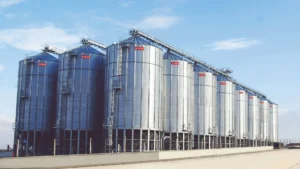
The Tanzania Cereals and Other produce Board (CPB) reported that the grain stores in Juba and Lubumbashi were already experiencing a vibrant business environment. They also expected the Mombasa facility to outperform the two.
According to the 2019 Statistics, Tanzania exported more than 97,000 tonnes of maize. This factor opened the country to the opportunity of launching its grain surplus scheme with the Southern Agricultural Growth Corridor of Tanzania (SAGCOT).
SAGCOT was established in 2010 to create a transformed and economically viable agricultural sector in Tanzania that protects food security, enhances environmental sustainability, and improves livelihoods. The Agricultural growth corridor uses 350,000 hectares in the fertile southern islands of Tanzania to grow maize, wheat, paddy, sorghum, cassava, millet, beans, bananas and sweet potatoes.

Tanzania Railway Investment In the most recent development, an additional 282km of the railway are…

While in France, President Samia attended the One Ocean Summit in Brest. The three-day summit discusses ocean safety and actions against the threats to the ocean. Among other things, initiatives launched at the summit aim to protect the marine ecosystem and develop sustainable fisheries.
The initiatives seek to fight pollution particularly from plastics as well as to respond to the impacts of climate change and to advocate for improved governance of oceans.
This State Visit follows last year’s visit to Tanzania by French Minister for Foreign Trade and Economic Attractiveness, Franck Riester, who visited the East African economic hub in October 2021.