
Trending
- Abu Dhabi radiates optimism as over 300 startups join AIM Congress 2024
- TLcom Capital Raises $154 million in Funding to Boost Its African Growth
- Africa’s $824Bn debt, resource-backed opaque loans slowing growth — AfDB
- LB Investment brings $1.2 trillion portfolio display to AIM Congress spotlight
- AmCham Summit kicks off, setting course for robust future of US-East Africa trade ties
- Why the UN is raising the red flag on the UK-Rwanda asylum treaty
- Portugal’s Galp Energia projects 10 billion barrels in Namibia’s new oil find
- Wärtsilä Energy offers tips on how Africa can navigate energy transition and grid reliability


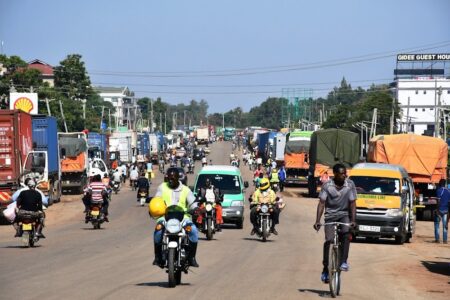
- Kenya’s President William Ruto says the free movement was necessary for sustainable growth in the Horn of Africa.
- Dr Ruto calls on member states in the region to eliminate national boundaries that are chocking growth.
- EAC Secretary General Peter Mathuki notes EAC can address challenges in advancing movement of goods and labour.
Barriers to free movement of goods and people are chocking East Africa’s regional integration. To unlock the bloc’s trade potential, Kenya’s President William Ruto is calling in the East African Community (EAC) and the Intergovernmental Authority on Development (IGAD) to remove barriers to free movement. Dr Ruto urges that free movement of people, goods and services can significantly enhance East Africa’s regional integration.
The Kenyan President notes the free flow of goods and capital was necessary for sustainable growth across East Africa.
The President is now challenging regional member states to eliminate national boundaries that have since become …
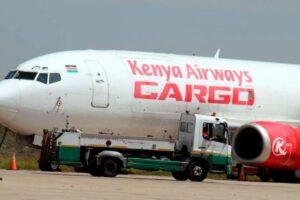
- Limited infrastructure, lack of standardized regulations and high air transport costs are among the challenges affecting the air transport sector in the East African Community according to a new report by East Africa Business Council.
- According to the report, limited liberalization of air transport contributes to high flight ticket rates and visa restrictions limit the movement of non-residents into the EAC region.
- The report calls for an EAC single air transport services agreement in a bid to lower the cost of air transport within the region.
Air Transport costs in the East African Community are higher than those in Europe and other African countries according to a new report by East Africa Business Council.
According to the report, the ticket price per kilometre in the EAC region is more than twice the ticket price for destinations in Europe and other countries in Africa.
‘‘The average ticket price per km in …
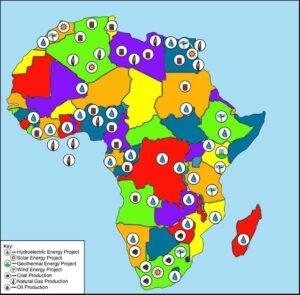
As Africa’s role in the global economy continues to garner prominence, it’s imperative for the continent to seal the gaping hole in its power supply.
Lack of universal power access remains a major roadblock that has retrogressed industrialization and socio-economic development. Statistics from the World Bank indicate that Africa remains the least electrified region in the world, with 568 million people lacking access to electricity.
The Bretton Woods institution, further notes that the Sub-Saharan Africa’s share of the global population without electricity, jumped to 77 per cent in 2020 from 71 per cent in 2018, whilst most regions saw declines in their share of access deficits. It has become a Hobson’s choice for African governments to prioritize the power sector, which is the epicenter of industrialization, working towards Goal 7 of the UN SDGs; which advocates for universal access to affordable, reliable and modern electricity services.
Currently, Africa’s power is …


Small and Medium Enterprises in the region recognize the potential of working with public-private partnerships, and 63 percent of them think private sector initiatives and partnerships will benefit businesses and the markets in which they operate.
This has been revealed in a study conducted by Mastercard dubbed MEA SME Confidence Index.
The study also reveals that one in three SMEs or 32 percent think that collaborating with governments and businesses outside their markets could impact their growth. In Southern Africa this was especially pronounced, with over half at 56 percent agreeing.
The research also highlights the important role of government support in helping small and medium enterprises across the region to recover, position for growth, and contribute to economic prosperity.
As such, government support and implementation of effective policies has been highlighted as important by 88 percent of the region’s SMEs, 50 percent of which rated this point as a …

Business people in the East African Community are now set to benefit through prompt resolution and intervention of issues disrupting trade, following the launch of the EAC-EABC Technical Working group (TWG).
Based in Arusha Tanzania, the Technical Working Group launched by the East African Community (EAC) and East African Business Council (EABC) – the umbrella body bringing together private sector associations in East Africa- is tasked with receiving and synthesizing issues received from the private sector at various levels and advise on appropriate solutions.
A statement by the EAC-EABC has revealed that the team will be chaired by EAC Director General for Customs and Trade, Kenneth Bagamuhunda and co-chaired by EABC CEO John Bosco Kalisa. It will also entail members from the national apex private sector associations in the EAC region.
The team will be responsible for following up on challenges disrupting intra-EAC trade raised by businesses and support their …
EAC Partner States have begun the 2021/2022 financial year with a focus on economic recovery through industrialization and inclusive growth.
This comes at a time when the coronavirus pandemic has had adverse effects on economies across the region and worldwide.
Data by Deloitte indicates that the outbreak led to disruption in the various sectors, most notably the financial industry and the tourism and hospitality sectors.
Additional data by UNECA adds that the effect of the pandemic on growth in Eastern Africa has been heterogeneous. The organization added that the impact has been more severe for countries dependent on tourism.
Kenya’s Principal Secretary for EAC, Dr. Kevit Desai, said that the region was putting in place strategies to ensure economic recovery in all Partner States from the destructive effects of the COVID-19 pandemic.
“As a region, we have witnessed the devastation created within the economies of the Partner States, including the …

Kenya’s Capital Markets Authority (CMA) has announced a new deal that will help businesses in the private sector forge their way to recovery.
CMA has signed a Memorandum of Understanding (MoU) with the Kenya Private Sector Alliance (KEPSA) to support market deepening and leveraging capital market products to catalyze growth in the sector.
The partners say the move is line with the Big 4 Agenda and Sustainable Development Goals.
Through the MoU, CMA and KEPSA say they will be seeking avenues for private and public sector finance and investment necessary to support Kenya’s economic growth and complement development funding gaps.
The two institutions will also seek to collaborate in the development of policy and regulatory interventions to create a conducive business environment that will support a robust, resilient, and inclusive financial sector through the growth of the capital markets.
The CMA Chief Executive, Wyckliffe Shamiah said the partnership is expected …
Covid-19’s impact on transportation in East Africa has been the greatest impediment to trade in the entire region. Due to the multiple medical tests that drivers are forced to undertake, the wait period has been a critical hinderance on goods being delivered on time. This has drastically changed much of the supply of goods and services from the two key ports of the region, namely the Mombasa Port in Kenya and the Dar es Salaam Port in Tanzania.
With the global pandemic continuing its tirade, no corner in the world is spared. Trade in Eastern Africa has severely been affected by internal and regional barriers inhibiting competitiveness of regional goods and services.
Prior to the outbreak of COVID-19, for example, the port of Mombasa, the busiest in East Africa, handled approximately 27 million tonnes of cargo and processing more than one million containers. Following the pandemic, however, the …

For the last 8 years, member states that make up the East African Community have not met their annual commitments to the regional body fully. The closest they came to fully meet these commitments was in the financial year 2011/12, and were at their lowest at 70% for FY2019/20.
This has led to the EAC to push for its organs to reduce their budgets to adjust to this reality which has included reducing the number of activities and missions abroad. These efforts to reduce the expenses by the community were acknowledged last month by the African Development Bank, which ranked the EAC as the most performing regional community in Africa.
For example, documents availed to The Exchange by sources within the community show that the travel expenses which were at USD 17.7 million during FY2013/14 were reduced to USD 12.05 million during FY2017/18.
However, according to sources within the community, …