


Trending
- Who got the money and who didn’t in Africa’s 2025 race for foreign direct investments?
- AI’s Dual Capacity and a Strategic Opportunity for African Peace and Security
- How African economies dealt with the 2025 debt maturity wall
- Africa’s Green Economy Summit 2026 readies pipeline of investment-ready green ventures
- East Africa banks on youth-led innovation to transform food systems sector
- The Washington Accords and Rwanda DRC Peace Deal
- Binance Junior, a crypto savings account targeting children and teens debuts in Africa
- African Union Agenda 2063 and the Conflicts Threatening “The Africa We Want”


Browsing: premium
The East African country is in a booming phase. Innovations in the financial sector have played a significant role in catapulting Rwanda’s economy. Economic growth has ballooned at an average of 7.2% per year.
Mobile banking, communication networks development and growth-oriented policies have seen the country’s financial sector fostering growth in the economy. Rwanda is one of the fastest-growing nations in Africa. Significant progress has been made, considering the political landscape the country was coming from, post the horrific 1994 genocide.
KCB Group Plc reported a 22.2% y/y decrease in EPS to KES6.11. The turn in profitability was mainly due to a slight doubling in Loan Loss Provision (LLP) to KES27.5Bn. Net Interest Income (NII) recorded a solid growth of 21.0% y/y to KES67.9Bn. The balance sheet grew 9.9% y/y to KES987.8Bn, propelled by growth in both deposits (driven by precautionary instincts due to COVID-19 shock) and loan book. During the period, the company rallied from KES38.75 at the beginning of the month and closed at KES41.3 accounting for a significant investor participation in the sector.
Equity Group reported an 11.6% y/y decrease in EPS to KES5.24. The drop in profitability was as a result of a quadrupling in LLP to KES26.6Bn. Its balance sheet grew by half its previous level to KES1,015.1Bn. Equity group benefited from its digital transformation that accounted for 63% of the total transactions being generated outside the branch network. Its 66.5% acquisition of Banque Commerciale Du Congo that widened the bank’s penetration in the regional market increased its customer deposits by 53% to KES740.8Bn, boosting investor confidence in the growth of the bank across the region.
The number of small-scale miners in mineral-rich Tanzania has more than doubled in a period of less than a year. Mining is the country’s leading revenue earner in terms of foreign export as well as increased government revenue.
The figures were made public by Prime Minister Kassim Majaliwa while addressing parliament. He said in the financial year 2020/2021 4,652 mining exploration licenses were issued to small and medium sized miners.
Notably Tanzania is the only country in the world with deposits of the precious stone tanzanite; Tanzania is also one of Africa’s largest gold producers.

That’s right—it is not on mere goodwill that the magnanimous sums are dished out; it is a two-way street. We give you this amount if you do this for us. This give and take barter in economics is known as conditionality.
To put it in the words of Kjell J. Havenevik, author of ‘The IMF and the World Bank in Africa (Conditionality, Impact and Alternatives), ‘Conditionality is the term given to the conditions relating to macro-policy elements which countries have to meet in order to get access to international loans and/or aid.’
We in the journalism science get information about the big sums ‘handed’ to African countries; what we usually do not get through the all-too-frequent press releases is the conditionality that comes with that money.
Tanzania is yet another country making a series of moves within the realms of the economy. At the moment the sixth President of Tanzania, Samia Suluhu Hassan is laying another foundation on top of the late John Magufuli presidency’s legacy, which was cut short before it took off for a major portion of its second term.
Earlier in April Tanzania and Uganda managed to strike a victory on the crude oil pipeline project that had stalled. In effect, President Hassan managed to pass another crucial item left by Magufuli’s presidency forward.
For the longest time, Africa took a back seat in the world economy. Albeit for various reasons, some beyond the continent’s control, Africa was not recognized as an active economic participant by developed countries. However, there has been a paradigm shift in the past few decades as Africa has begun to forge its destiny and implement policies that benefit its economic status in the world. Africa has been recognized as the world’s second-fastest-growing regional economy with anticipated annual growth of about 3.9% by 2022.

Barely a month after the tragic and unexpected death of Tanzania’s outspoken and visionary leader Dr. John Magufuli, the country has gone ahead and inked an oil pact with neighbouring Uganda.
The move puts a lid on speculations of how the country’s first woman President Mama Samia Suluhu Hassan will handle duties of the top office. The new president, who was former vice president under the Magufuli regime, sat with her Ugandan counterpart Yoweri Museveni and together shook hands for French Total E&P and China’s CNOOC and signed key agreements for the East African Crude Oil Pipeline (EACOP).

The month of March marked one year after most countries globally locked up their people, introduced tough restrictions on movement and introduced ways of containing the Novel Coronavirus (Covid-19). For East Africa, this has been a tough outing with thousands sick, and millions affected economically. The countries in the region have also reacted differently, with Rwanda and Kenya being on the extreme cautious path, while Tanzania and Burundi have applied the Laissez-Faire approach.
Stocks in the region have been hit hard with the regional bourses shrinking significantly, as well as a loss in interest by foreign investors. The Nairobi Securities Exchange (NSE) seems to have been hard hit with an unprecedented bear run. According to the Capital Markets Authority (CMA) end-of-year statistical bulletin, all indices at the Nairobi bourse performed poorly, with net foreign outflow hitting KSh28.63 billion ($260.9M) compared to a net foreign inflow of KSh1.38 billion ($12.6M) in 2019.
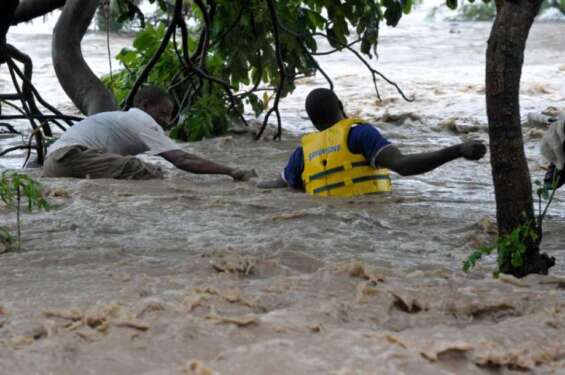
African cities are prone to flood damage, which can be widespread leaving hundreds homeless, communities and economic systems destabilized and infrastructures costing millions to build, destroyed.
All these issues factor in an uncomfortable reality that African communities cannot afford. According to a 2018 publication by The Conversation, floods cost Tanzania up to $2 billion annually, while tracing back to 2012, Nigeria—Africa’s top economy suffered its largest floods in the century which wiped out assets worth nearly $10 billion.

In this case, investing in data is crucial for developing economies. Hence—over time—different organisations such as the World Bank (WB) and the World Economic Forum (WEF) have rallied for the utilization of data and promoting data democratization for effective development planning.
The value of data is vast and elongates further especially in emerging economies. According to a January 2021 publication by WEF, there are more things to explore when it comes to data and Africa has been painted as one of the interesting places on the planet with sufficient opportunities.