


Trending
- Who got the money and who didn’t in Africa’s 2025 race for foreign direct investments?
- AI’s Dual Capacity and a Strategic Opportunity for African Peace and Security
- How African economies dealt with the 2025 debt maturity wall
- Africa’s Green Economy Summit 2026 readies pipeline of investment-ready green ventures
- East Africa banks on youth-led innovation to transform food systems sector
- The Washington Accords and Rwanda DRC Peace Deal
- Binance Junior, a crypto savings account targeting children and teens debuts in Africa
- African Union Agenda 2063 and the Conflicts Threatening “The Africa We Want”


Browsing: premium
Tanzania wants to increase export of tobacco. In its most recent export expansion plans, the government announced it is eyeing markets…
For the 2030 Agenda for Sustainable Development to be actualized appropriate financing is required and remains a major challenge, added to concerns over insufficient financial accountability, transparency and integrity. The President of the UN General Assembly and the President of the UN Economic and Social Council instituted a 15-member panel on Financial Accountability, Transparency and Integrity (FACTI) in March 2019, to look at ways to address illicit financial flows (IFFs), among other issues. Earlier, the problem of IFFs was brought to light by the Thabo Mbeki-led High-level Panel on Illicit Financial Flows from Africa in a 2015 report. Tackling the issue further the United Nations Conference on Trade and Development (UNCTAD) released the Economic Development in Africa Report 2020 titled, Tackling Financial Flows for Sustainable Development in Africa. All these efforts serve to highlight the urgency with which world leaders need to deal with this issue.
A mineral-rich continent, with a fast-growing economic potential and a considerable population stands a chance to become a predominant global hub for trade and investment. Africa’s growth potential has been mainly driven by a significant surge in investment, as indicated by the African Development Bank. As opposed to consumption expenditure driving economic growth, industry players and governments have realised the long-term benefits of investment to the growth of African economies. A longevity approach to a sustained growth of the African continent as a whole is the thrust of Agenda 2063 of the African Union, propelled by the African Continental Free Trade Area (AfCFTA) agreement.
For the first time in the 25-year history of the World Trade Organisation (WTO) an African woman is set to take over as Director-General. Three women were shortlisted amongst the final five and ultimately two highly qualified women made it to the final round of consideration for the top position; no woman had ever made it to this stage in the history of the institution. Dr. Ngozi Okonjo-Iweala became the obvious front-runner after her South Korean rival withdrew and the US reversed its previous opposition to her taking the leadership role of the body. There may still be some impediments but the future for African women is bright!
A healthy manufacturing sector is a fundamental path to economic growth and development. It is key in creating employment as it absorbs the unemployed population into productive decent paying jobs that help improve their standards of living. Historical evidence shows how industrialisation has transformed countries such as the United Kingdom, Germany and most recently, China, by growing their economies tremendously and earning them amongst the best performing economies in the world. According to the Global Manufacturing Competitive Index, South Africa, Egypt and Nigeria are leading in the evolution of manufacturing in Africa, while Ethiopia and Morocco are following closely behind; all of them have adopted policies that promote manufacturing development.
Africa’s financial potential has become an interesting prospect for emerging market investors. Three decades ago a proposal to invest in Africa would have been considered ridiculous, but this is no longer the case. In fact, between 2006 and 2011, the continent was registering the highest returns on FDI at 11.4 percent, even higher than Asia at 9.1 percent, while the global average was 7.1 percent. To add to that according to the World Economic Forum, since 2000 “half of the world’s fastest-growing economies have been in Africa. As western markets mature and foreign investments saturate in Asia, Latin America, Central and Eastern Europe, and India, Africa is fast becoming the most lucrative investment destination. The inefficient African markets are an excellent source of excess returns, given the level of perceived risks.
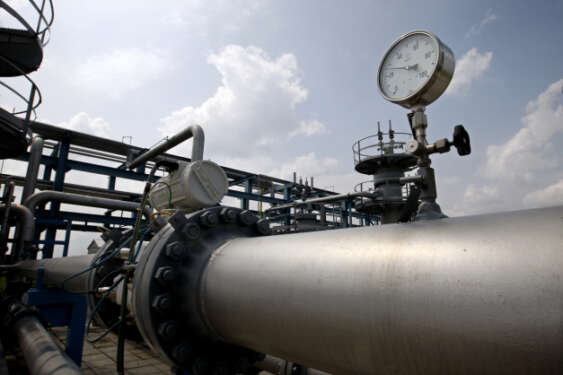
The oil and gas industry in Africa is yet another profitable sector that can transform the energy and revenue generation of gas-endowed nations and contribute greatly to their economic development.
According to the global network firm PriceWaterhouseCoopers (PwC), by the end of 2017, Africa had nearly 487.8 trillion cubic feet (Tcf) of proven gas reserves, comprising 7.1 per cent of global proven reserves.
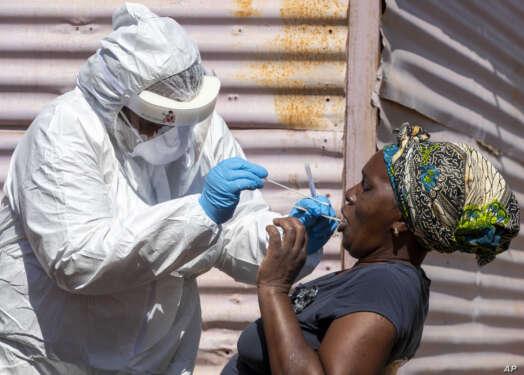
The pandemic has shown the globe that more is needed to fortify our systems, as nearly 95 million people have contracted the virus and more than two million people have succumbed to it, while millions face the economic shocks of the virus, particularly those located in developing economies.
A World Economic Forum (WEF) publication which is part of The Davos Agenda (a virtual global leaders’ meeting on sustaining an inclusive and cohesive future) noted that the pandemic has exposed several threats to the world.
Concerns about the pandemic especially with new fast spreading mutations, heightened political activity and uncertainty around the shape of business and economic recovery continues weighing heavily on risk asset pricing in the local market.
The distribution of vaccines is off to a slow start especially in the developed countries while locally, news flow indicate vaccines will be available later this month than as previously indicated.
Debt service is putting tremendous pressure on East African governments because of limited foreign exchange earnings; therefore the Covid-19 vaccination program for East Africa will give investors confidence in most sectors especially agriculture and tourism which are major foreign exchange earners for the region.
The foreign exchange gains will lead to a positive trickle-down effect to the different businesses and general population.