


Trending
- Who got the money and who didn’t in Africa’s 2025 race for foreign direct investments?
- AI’s Dual Capacity and a Strategic Opportunity for African Peace and Security
- How African economies dealt with the 2025 debt maturity wall
- Africa’s Green Economy Summit 2026 readies pipeline of investment-ready green ventures
- East Africa banks on youth-led innovation to transform food systems sector
- The Washington Accords and Rwanda DRC Peace Deal
- Binance Junior, a crypto savings account targeting children and teens debuts in Africa
- African Union Agenda 2063 and the Conflicts Threatening “The Africa We Want”


Browsing: premium
Before you completely give up, know that creating a budget and sticking to it is a skill. And as skills go, it takes time and effort to master.
Several personal finance coaches weigh in on some of the common pitfalls that people fall into which end up costing them big time and how to fix them to get you on the fast track to budgeting like a pro.

The medical insurance industry in Kenya is exploding taking advantage of a growing digital sphere to introduce affordable covers. Carepay, the…
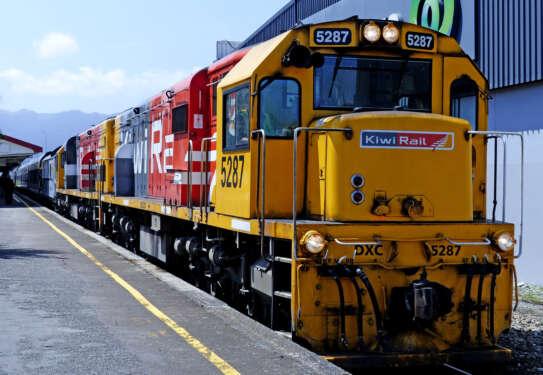
The cornerstone of a successful trade is the efficient distribution of goods from the source to all points of sale. As such, cultivating logistics and distribution channels is necessary for the successful implementation of the African Continental Free Trade Area (AfCFTA).
The continent is made up of over 50 different countries whose levels of development vary vastly. Each country needs to seek its solutions locally, but governments need to come together to improve intra-African trade and cross-border co-operation.
AfCFTA will undoubtedly be a breakthrough in reducing the cost of shipping in Africa and improving efficiency. The amount of time that will be spent on customs clearance is set to drop drastically. Currently, it takes more than a week at one-border stops in some countries.

Africa’s tech habitude is on the rise. Internet usage has risen significantly on the continent. On top of that, the advent of the coronavirus pandemic accelerated the prospect of growth in the digital sphere. E-commerce is one such opportunity that affords businesses access to broader market opportunities in every arena. According to McKinsey, a worldwide consulting firm, the e-commerce industry in Africa is expected to grow to a $75 billion industry by 2025.
E-commerce is growing. It is accelerated by a growing and youthful population that is increasingly exposed and has an appetite for greater efficiency and improvement of business to first-world standards. The African diaspora has also contributed to this growing demand as people have become more exposed to what is going on around the world. Technology itself dissolves existing borders and opens up trade regionally and internationally.

The World Bank (WB)—one of the world’s largest sources of funding and knowledge for the developing sphere published its Global Economic Prospect report in January 2021.
The report zoomed in on the prospects of the global economy and Africa, displaying how the region remains pinned by the shocks of COVID-19 unless sound policy changes and strategic investment-enhancing reforms are made.
On the bright side, the global economy is expected to expand by 4 per cent in 2021—this is dependent on the progression of COVID-19 vaccine provision throughout the year.

The super spreading virus that triggered a pandemic of global proportions has entered a second wave. Most African countries are struggling to cope. Their already fractured health systems are at pains and facing challenges in handling the ballooning cases. Lockdowns and travel restrictions are still in place for some countries, greatly impacting economic activity.
For example, Zimbabwe is currently in the middle of a month-long lockdown with only essential services operating. The restrictions have shut down all informal sector activity, which forms the bulk of economic activity. In South Africa, level 4 restrictions induced the closure of the busiest land borders.
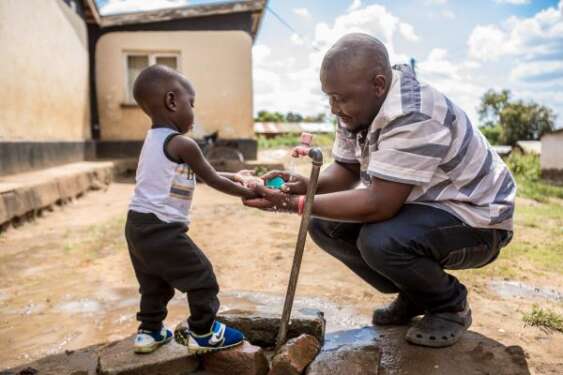
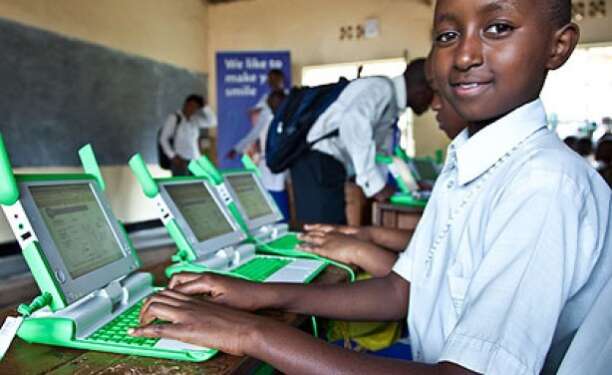
Education is the lifeline of development in Africa. At present, things are changing rapidly within the African education domain. Modern technology is now transforming learning in classrooms in South Africa, Nigeria, Kenya, Tanzania and Rwanda to mention a few.
African states, just as other nations across the globe, are experiencing economic shocks from the coronavirus (COVID-19), which forced 250 million African children to stay home.
Across the region, children were out of school for various periods. In Kenya, children remained home for the entire course of 2020 since March, while Tanzania’s school shutdown lasted for three months.
In 2019, 9 per cent of the GDP in Africa was contributed by mobile technologies and services. This means the mobile industry in Africa is fueling sound growth and social impact necessary for acquiring sustainable economic growth.
The world is interconnected and it is getting seamlessly interconnected by the hour each day. This means the more you get digitally connected the more knowledgeable, wealthy and creative you become, to say the least.
This scenario is manifesting itself across developing countries, especially in Sub-Saharan Africa, where ingenious innovations are made in Rwanda, Kenya, Uganda, South Africa and Tanzania, featuring seamless use of online platforms to learn, earn a living and access services.
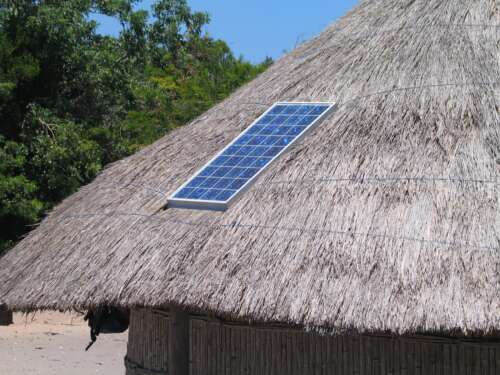
Africa is poised to overtake highly populated continents like Asia in terms of population growth. Along with rapid urbanization, the burgeoning population creates an urgent need to find solutions for growing energy demands. As the population grows, demand for fuel and energy to power movement, urban lifestyles, cooking, heating, and refrigeration will catapult in tandem.
This positions the continent as a significant demand hub for energy solutions like gas, oil, and electricity, which has answered the needs and demands of home use. In addition to the demand for energy use in the home, there is a growing need for industrial and manufacturing energy solutions. The advent of Africa’s free trade area is set to propel industrial output by creating synergies and opening up the broader market.
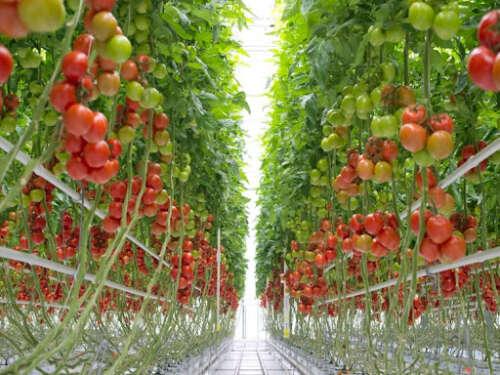
The East African region is primarily agricultural-based with the sector contributing an average of two-thirds of GDP and providing jobs to the majority of citizens. It is a key tax earner for governments and serves as a solid base under which the region’s industries are based. Agribusiness contributes about 25 per cent of Africa’s GDP and a staggering 70 percent of its employment.
Global food demand is expected to increase by somewhere between 59 percent and 98 percent by 2050 as the world population reaches an estimated 9.7 billion.
Most of the region’s countries have an ideal climatic condition for agriculture and mainly rely on rain-fed agriculture. Kenya, the most developed economy in the region which interestingly has a diversified economy more than just agriculture is least endowed in rain-fed agriculture compared to Tanzania, Rwanda, and Uganda.