

- Africa’s Green Economy Summit 2026 readies pipeline of investment-ready green ventures
- East Africa banks on youth-led innovation to transform food systems sector
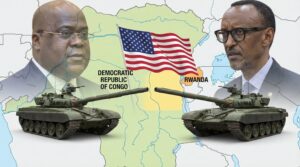
- The Washington Accords and Rwanda DRC Peace Deal
- Binance Junior, a crypto savings account targeting children and teens debuts in Africa
- African Union Agenda 2063 and the Conflicts Threatening “The Africa We Want”
- New HIV prevention drug is out — can ravaged African nations afford to miss it?
- From banking to supply chains, here’s how blockchain is powering lives across Africa
- Modern railways system sparks fresh drive in Tanzania’s economic ambitions
Author: Laurence Sithole
I am a financial services professional with a strong background in diverse areas of banking. My skill set includes among others International Banking, Trade Finance, Commercial Lending, Customer Service, Finance, Banking, Corporate Finance, and Investment Banking. Africa is my home and I am passionate about its development,
Zimbabwe did not have a parallel market for foreign exchange in the years running from 2009 to around 2016. Zimbabwe is heavily reliant on imported products and expends more foreign currency than it can afford. Demand pressure has contributed to the fall of the Zimbabwe dollar resulting in general inflation. To dollarize or not to dollarize? This question has robbed monetary authorities of sleep as the Zimbabwe dollar falls precipitously on the parallel market. Zimbabwe did not have a parallel market for foreign exchange in the years running from 2009 to around 2016. It all began with the introduction of…
A Primer McKinsey & Company, the global business consulting giant conducted a study on the slow pace of infrastructure development and financing in Africa and found overwhelmingly that: “More than anywhere else on Earth, Africa has huge unmet needs for infrastructure, reflecting a long history of underinvestment. Today the continent has the opportunity to build the infrastructure its people and businesses need—at speed and scale. The funding is available, together with a large pipeline of potential projects. To ensure that the money is spent where it is needed, and delivers high-quality infrastructure on time and on budget, governments and private…
In the US, cheap and accessible shale gas is rapidly displacing coal. And in China, concerns about poor air quality and related health issues have caused demand for coal to fall three years in a row, from 2014 to 2016. So is coal demand about to decline globally? Is coal headed for the ash heap of history? Such a development is unlikely.”
The relegation of coal to the dustbin of energy sources, the Boston Consulting Group (BCG) does not believe is likely. They are not the only ones who hold this view.
McKinsey & Company, another highly regarded consulting company, does not believe coal will not have a role in the energy mix of the world going forward. They are not as blunt in expressing their views as their counterparts at the BCG however. McKinsey & Company featured an article on their website proclaiming that the adoption and development of renewable energy will be an evolution that is gradual as opposed to a sudden revolution.
China had been funding the development and exploitation of massive coal reserves in countries like Indonesia and Vietnam under an initiative called the Belt & Road but has come under pressure as the world tries to honour its Paris climate agreements.
This Belt & Road initiative is a strategy initiated by the People’s Republic of China that seeks to connect Asia with Africa and Europe via land and maritime networks with the aim of improving regional integration, increasing trade and stimulating economic growth.
To realize this vision required the use of natural resources which China does not have entirely but other nations do and would then secure supply of this through the development of resources such as coal mines in developing countries. The Chinese are reportedly developing a US$3 billion coal mine in the Hwange area of Zimbabwe.
A strong ESG proposition will enable a company to gain access to new markets and grow existing ones. As was reported in another article, “Doing Good is Good Business” certain aluminium producers were able to increase the margins on their products by eliminating carbon from their products and selling it to customers who are demanding more of that product.
For companies that rely on government contracts, having a comprehensive ESG proposition places them in good stead to receive increased business from governments of nations that are becoming more climate and green conscious.
According to leading business consultants when governing authorities trust corporate actors, they are more likely to award them the access, approvals, and licenses that afford fresh opportunities for growth.
Africa’s largest multinational companies are following the global trend that is in vogue – that of making ambitious goals and undertakings to reduce carbon emissions ahead of this month’s climate change conference to be held in Glasgow, Scotland. Leading the pack is Africa’s largest lender by assets, the Standard Bank Group, which in October held a 2-day climate summit that was streamed online and ran under the theme ‘Africa’s Journey to Net Zero’. The summit was hosted in partnership with the Institute of International Finance (IIF) a global financial think tank which partners with financial services firms worldwide including the Standard Bank Group. More specifically…
Firstly, environmental criteria which consider how well a company performs as a steward of nature. This includes the energy a company takes in and the waste that it produces and the consequences for humanity as a result.
This aspect of the criteria also encompasses carbon emissions and climate change which have become highly topical especially in the ongoing COP26 conference in Glasgow. This aspect of the ESG criteria is important because every company uses energy and it is affected by the environment.
The social criteria which is second considers how that company manages its relationships with stakeholders namely employees, shareholders, lenders, customers, suppliers, and the communities where it operates. This feature addresses the relationships a company has and the reputation it fosters in the communities it operates in which may include labour relations, diversity, and inclusion.
If your goal is financial success, then the investment is the vehicle that will get you to that destination. Having said that, many people just do not know the first thing about investing let alone investing in the stock market. Many appreciate the need and the urgency to invest for the future, but they come up short in terms of how to go about the business of investing in a practical manner. Unfortunately, this lack of understanding of this concept has seen many people fall prey to con artists who swindle them of their savings. What does it mean to…
Anglo American, the mining behemoth took the decision on May 7th, 2021 to divest from its South African thermal coal and demerge its assets in this space into a separately listed entity that it chose to name Thungela Resources. The name “Thungela” comes from the Zulu word meaning to “ignite” or to “set alight” or to “set on fire”. This new mining outfit was formally demerged and listed on the Johannesburg and London Stock Exchanges on June 7th, 2021 and it presented its first set of interim financial results as a standalone entity in July. Its results exceeded expectations from the market which…
The government of Zimbabwe through its ministry of mines and mineral development expressed its intent to create and develop a US$12 billion mining industry by 2023. This is not a far-fetched goal. It is feasible especially since this number is approximately the same amount that one large global mining company, Rio Tinto, earned as profits in the six months to June this year. The mining industry in Zimbabwe is estimated to be worth in the region US$4 billion. The southern African country can achieve this in two years provided it meets certain conditions precedent for the growth of the…


