


Trending
- AI’s Dual Capacity and a Strategic Opportunity for African Peace and Security
- Africa’s Green Economy Summit 2026 readies pipeline of investment-ready green ventures
- East Africa banks on youth-led innovation to transform food systems sector
- The Washington Accords and Rwanda DRC Peace Deal
- Binance Junior, a crypto savings account targeting children and teens debuts in Africa
- African Union Agenda 2063 and the Conflicts Threatening “The Africa We Want”
- New HIV prevention drug is out — can ravaged African nations afford to miss it?
- From banking to supply chains, here’s how blockchain is powering lives across Africa


Browsing: FDI
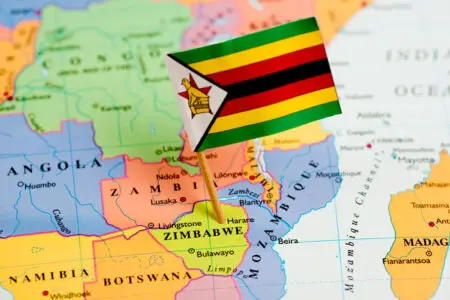
Reduced commodity prices will hamper Zimbabwe’s economic growth aspirations in 2024. Commodities produced by Zimbabwe include platinum, gold, and diamonds.…
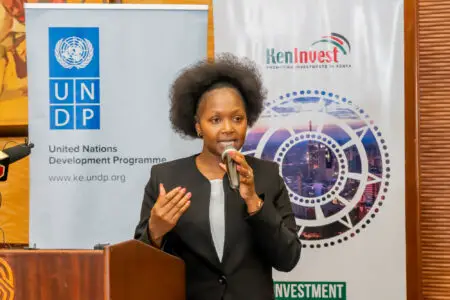
Kenya seeks to attract $10 billion in Foreign Direct Investments (FDI) in the next four years despite dwindling inflows over…
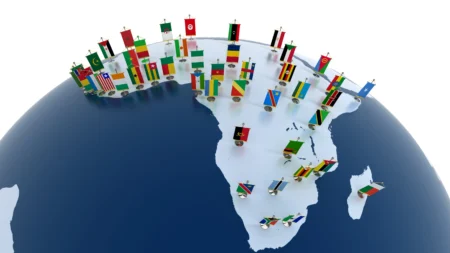
The implications of fragmentation and polarization on Africa’s economic growth and whether these trends will continue are unknown. What is certain is that multilateral organizations will need to continue encouraging international dialogue to promote economic integration and collaboration. As a result, one problem that emerges is whether African nations would adopt a unified stance or take a non-aligned approach in the Sino-American dispute.
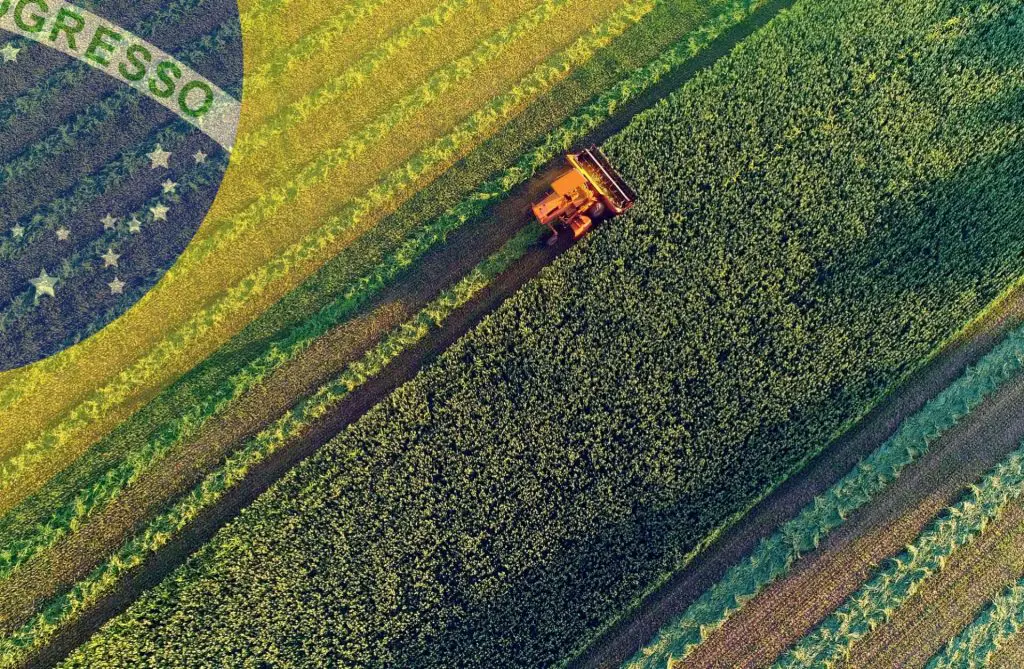
According to Statista, agriculture contributes at least 4% of the annual value added to the gross domestic product of Brazil. It accounts for at least 9% of the people who are employed and able to work. On the face of it reading numbers 4% and 9% seem like they are nominal until one considers the sheer size of the country of Brazil in terms of land mass. Brazil is one of the largest countries in the world in terms of land area. It sits on no less than 8.5 million square kilometres.
Of this land mass, approximately a third is used for agriculture. For perspective’s sake, Brazil is the fifth largest country in the world after Russia, Canada, China, and the United States. The Brazilian Report states that all the countries that make up the European Union would fit inside Brazil’s borders!
To bring the perspective much closer to home, the land mass Brazil sits on is reportedly seven times larger than South Africa. Zimbabwe would fit twenty-two times into Brazil’s land mass, and Kenya would fit 15 times into the South American country. The country is large. The land it uses for agriculture purposes alone would be larger than some countries and continents.

Southern Africa, East and West Africa saw their flows of FDI rise in 2021. It was only in Central and North Africa that flows of foreign direct investment were flat or declined, respectively. Flows to North Africa fell by 5 per cent to $9.3 billion.
Egypt saw its FDI drop by 12% as large investments in exploration and production agreements in extractive industries were not repeated. Despite the decline, Egypt has the second highest flows of FDI in 2021 on the continent.
UNCTAD reports that it expects FDI flows to increase in North Africa owing to pledges of as much as US$ 22 billion to the region from Gulf states. In Egypt, according to the UNCTAD World Investment Report 2022 tripled green field projects of US$ 5.6 billion and real estate projects of US$ 1.5 billion.
In Morocco, FDI flows increased by 52% to US$ 2.2 billion. This was driven by a large international project finance deal announced in that country to finance the construction of a power line.
AfCFTA will be a game changer for Africa, but its success depends on certain enablers being present. The first and most obvious impediment and an obstacle to the initiative will be mustering the political will of the signatories to implement the necessary reforms to enable its success. This may not always be politically feasible or possible.
The less obvious enablers and the financial institutions on the African continent. Their presence and activities have a direct and strong bearing on the success of AfCFTA. One of the foremost bankers on the African continent, Sim Tshabalala, the chief executive of the continent’s largest banking institution by assets, is fond of saying that banking is a derived business. This means that banks butter their bread from the activities of economic agents.
If AfCFTA is to succeed in its quest to merge the various comparative advantages of the countries that constitute Africa it will need champion banks to support the intra and intercontinental trade activity from there being a single market and all participants, both local and foreign looking to make money. Africa will need champion banks to facilitate the flow of capital to worthwhile projects and ensure that the capital deployed into various activities earns the best returns for its providers.

Interestingly, of the US$1.5 trillion in foreign direct investment recorded in 2021, 53% of that money was channelled towards developing economies. Africa made a very strong showing in terms of foreign direct investment in 2021.
According to the report, Africa attracted US$ 83 billion in foreign direct investment compared to the US$ 39 billion it achieved in 2020. Of the global investment flows that landed on African shores in 2021 US$ 41 billion went directly to South Africa.
Despite the positive developments that occurred in 2021 in foreign direct investment, the UNCTAD report concludes by stating that the growth and momentum in FDI flows in 2021 will not be sustainable given the adverse economic developments that have occurred in 2022.
UNCTAD expects these developments will either put downward pressure on the flow of FDI or flatten the curve.
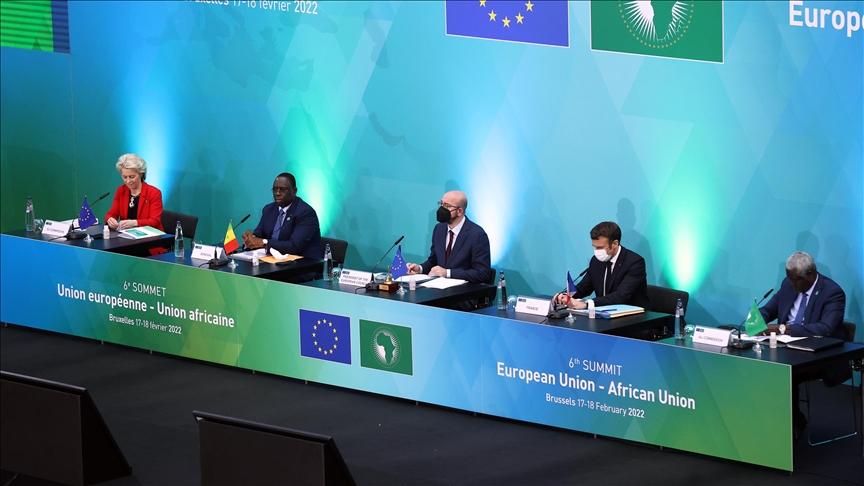
The European Union (EU) and Nigeria have enjoyed robust trade and bilateral relations since the formulation of this lucrative partnership,…
UNCTAD World Investment Report 2021 specifically states that “Greenfield investments in industry and new infrastructure investment projects in developing countries were hit especially hard.”
These financial flows of investment dollars have deep-rooted implications for Africa in the sense that they are vital for sustainable development in less developed and poorer countries.
The decline in investment flows was disproportionately skewed towards developed countries where FDI fell by 58 per cent according to UNCTAD. Investment flows in developing economies fell by a moderate 8 per cent mainly because of resilient flows in Asia.

Foreign Direct Investments (FDIs) in East Africa declined by 9 per cent to $7.8 billion in 2019, from $9 billion…