

- Safaricom posts 52.1% jump in half-year net earnings to $331M, Ethiopia loss narrows
- African mergers and acquisitions set to rise in 2026 as licensing rounds open new opportunities
- AIM Congress China Chapter 2025 to be Held in Shanghai as Forum Expands Global Reach
- Mukuru and JUMO tie up to pioneer AI-powered retail loan services in South Africa
- In a first, Kenya launches green fertilizer plant powered by geothermal energy
- Trump’s DR Congo Peace Deal Falls Apart: The Story Behind a High-Stakes Accord
- How African economies can turn youth bulge into wealth boom
- How the Centre for Cyber Diplomacy and Leadership Is Changing the Game of Cybersecurity in Africa
Browsing: India
- China begins construction of world’s largest hydropower dam.
- Premier Li Qiang attends construction launch new dam.
- Mega project expected to cost $170 billion.
China has started construction of what will be the world’s largest hydropower dam on the Yarlung Zangbo River in Tibet, in the foothills of the Himalayas. China’s ambitious Premier Li Qiang announced this week that construction of the $170 billion mega project has begun.
The dam will be located in the lower reaches of River Yarlung Zangbo, on the eastern rim of the Tibetan Plateau. It is designed to have at least five cascade hydropower stations with the capacity to produce 300 billion kilowatt-hours of electricity annually.
Analysist say its potential is equal to the amount of electricity consumed by the entire of Britain for the whole of last year!
Due to be located in the lower reaches of the Yarlung Zangbo a river that has waterfalls …
- Global demand for copper is on the rise.
- Coincidentally, Tanzania’s scrap metal industry is also growing.
- India tightens copper recycling laws.
Demand for recycled copper is growing rapidly as the global focus on sustainability intensifies. According to sector experts, as global sustainability laws are tightened, demand for recycled metals is increasing.
“On the backdrop of tightening sustainablility laws, the metal recycling industry in Africa is emerging as a compelling investment opportunity,” says Pete Oheral, anim investment expert at InvestAfrica.
“Africa’s rich mineral resources, coupled with its growing population and urbanization, create a fertile ground for a thriving metal recycling sector,” he explains.
According to Oheral, the copper recycling industry in Africa is experiencing growth due to increasing demand for recycled materials, particularly in manufacturing and infrastructure development.
In his report, ‘Africa’s demand for recycled metals,’ the expert notes that several factors, including the depletion of high-grade copper resources and a …
- Tata Steel leads the way to decarbonizing steel production.
- Switching from coal furnaces key to energy transition.
- Steel remains the metal of modern development.
The CEO and Managing Director of Tata Steel T. V. Narendran talks about going green in an interview with McKinsey’s Rajat Gupta.
Qn: Besides its decarbonization effort, what else has Tata Steel done to address sustainability?
Ans: People sometimes don’t realize that we are one of the largest mining companies in India. We mine over 45 million tons a year of mostly iron ore and some coal. We will be up to 65 or 70 million tons of mining in the next few years.
We have always done a lot of work converting mines back into forests after they are done. Today, with biodiversity being so important, there is a structured way to go about it. We bring in a third party to do …
- Steel is both a problem and part of the solution for green energy transition.
- Governments must afford better policies for decarbonization of steel. production
- New technologies are helping decarbonize the industry.
Tata Steel: Steel production is at the top of the list of climate change, with the industry viewed as one of the worst polluters. However, industry pundits now suggest that the industry may very well hold solutions for the ongoing global energy transition.
In an interview titled ‘Steel is part of the problem but is also part of the solution’ held with global steel giant producer Tata Steel’s CEO T. V. Narendran this month, the Indian leader in steel production alluded to the premise that steel production can go green.
According to the CEO, the company has been actively pursuing Environmental, Social, and Governance (ESG) ideals since its establishment in 1907. “For instance, founder J. N. Tata did not …
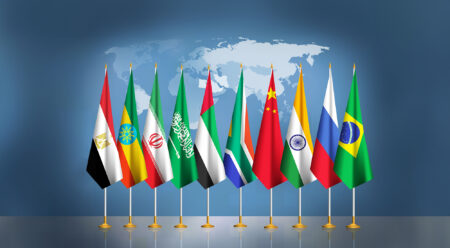
- Global economic growth will emanate from powerhouse BRICS economies over the next five years as per the IMF predictions.
- The ten BRICS nations comprise more than a quarter of the world economy and almost half the global population.
- China will contribute most significantly to global growth over the next half-decade, with its 22 per cent share outpacing all G7 countries combined.
The countries comprising BRICS— Brazil, Russia, India, China, and South Africa, with five new members—are an informal grouping of emerging economies hoping to increase their sway in the world order.
The BRICS group has become a major political force in the last two decades, building on its desire to counter Western influence in global institutions.
BRICS’ 2024 expansion has come with a range of geopolitical implications. It forms a rising economic and demographic heft: the ten BRICS nations comprise more than a quarter of the world economy and almost …
- Ramadan fasting increases economic activities around the world.
- The travel sector, especially airlines registers higher revenues during pilgrimage after Ramadan fasting.
- Zanzibar has announced tax breaks for consumables during Ramadan fasting.
Every year, from the beginning of Ramadan fasting, Muslim faithful increase spending, travel more and invest significantly to celebrate the Eid vacation.
“As people’s mobility increases, the transport sector’s business also experiences a surge…as people spend the overall economy is stimulated,” explains Abdul Rashid an economist in Tanzania.
The economics of a country change during Ramadan and the months leading to and immediately after the Holy Month. This multiplier effect is felt throughout the world as the Islamic communities prepare, fast and observe the Holy Month.
Take Tanzania for example, the East African country is over 40 per cent Muslim, Ramadan fasting causes increased economic activities ranging from import and export of food, increased spending and pilgrimage related spending.…
- Tanzania and India have agreed to trade in local currencies weaning off the use of the US dollar.
- There are advantages of using local currencies in trade versus the traditional dollar.
- Tanzania and India have also agreed on military, maritime, and space technology cooperation.
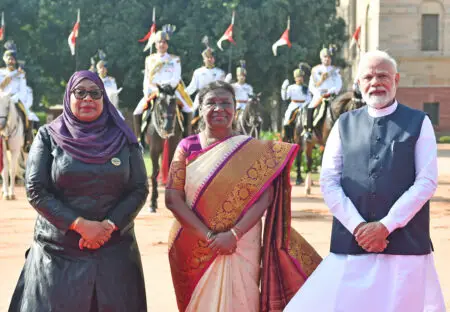
India’s Ministry of Foreign Affairs Secretary Dammu Ravi has met with Tanzania’s President Samia Suluhu Hassan with reports emerging that the two leaders have among other things, agreed to trade in Rupees, the sub continent’s local currency.
The decision implies that the two countries, with long-running business ties, will effectively wean off using the king dollar as their ‘gold standard’, instead embracing the Indian Rupee as their common currency in exchange for value.
“When international transactions are denominated in local currencies, countries can avoid currency fluctuations and the associated risks. This stability helps to mitigate exchange rate volatility, reducing uncertainty and facilitating more accurate planning …
- Since ascending to office in September 2022, President Ruto has remained relentless in his bid to boost Kenya’s agricultural productivity.
- Agriculture remains the bedrock of the country’s development and the key to creating equitable and sustainable growth for its citizens.
- President Ruto has focused on implementing policies and programs to enhance productivity, improve farmers’ incomes, and ensure food security.
Agriculture as a bedrock of Kenya’s economic prosperity
Kenya has made impressive economic strides in innovation and entrepreneurship, private sector enterprise, infrastructure, and human skills development. However, agriculture remains the bedrock of the country’s development and the key to creating equitable and sustainable growth for its citizens. The importance of agriculture has been highlighted in Kenya’s Vision 2030
Moreover, research has demonstrated that agriculture remains a major driver of economic prosperity for most African countries. In addition to driving economic growth, agriculture creates jobs for most rural communities and is essential …
- Heads of State from China, Brazil, and India, except Russia will attend the 15th BRICS summit in Johannesburg South Africa, starting August 22.
- President Vladimir Putin will participate in the summit virtually but will be represented in Johannesburg by Foreign Minister Sergei Lavrov.
- The bloc is also expected to discuss how to boost local currency fundraising and lending within the New Development Bank.
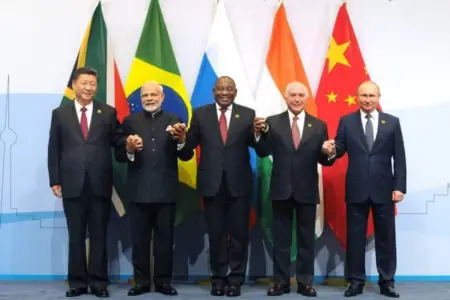
The five nations, Brazil, Russia, India, China and South Africa (BRICS) are now a band of economies showcasing their ambition to maximize their emerging economies potential, across geopolitics axis. In one day time, heads of state from China, Brazil, and India, (except Russia) will attend the 15th BRICS summit in Johannesburg South Africa from August 22-24.
South African President Cyril Ramaphosa, Chinese President Xi Jinping, Brazil’s President Luiz Inacio Lula da Silva and Indian Prime Minister Narendra Modi are expected to discuss a number of items as …
- In 2021, 76 percent of adults had an account at a bank or regulated institution
- Financing will enable African nations to expand portfolio of digital financial solutions and initiatives
- The facility will be housed and managed by the African Development Bank,
India will contribute $2 million to the Africa Digital Financial Inclusion Facility (ADFI), in an effort to break the barrier to growth and spur uptake of digital financial solutions.
The facility will be housed and managed by the African Development Bank. It will mainly focus on accelerating financial inclusion in Africa, India said.
India is recognised globally for the success of its digital public payments system. The country’s collaboration with ADFI enables the facility to learn from best practices and help scale up initiative. The program aims to meet the needs of financially excluded and underserved people in Africa.
Africa yet to fully benefit from inclusion
Despite the growing …