
Trending
- Kenya, Tanzania braces for torrential floods as Cyclone Hidaya approaches
- EAC monetary affairs committee to discuss single currency progress in Juba talks
- Transport and food prices drive down Kenya’s inflation to 5% in April
- Payment for ransomware attacks increase by 500 per cent in one year
- History beckons as push for Kenya’s President Ruto to address US Congress gathers pace
- IMF’s Sub-Saharan Africa economic forecast shows 1.2 percent GDP growth
- The US Congress proposes extending Agoa to 2041, covering all African countries
- Millions at risk of famine as fuel tax row halts UN aid operations in South Sudan




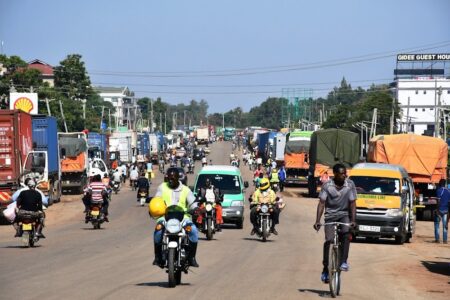
- Kenya’s President William Ruto says the free movement was necessary for sustainable growth in the Horn of Africa.
- Dr Ruto calls on member states in the region to eliminate national boundaries that are chocking growth.
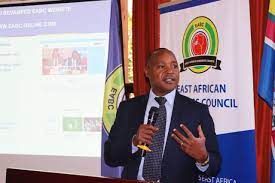
- EAC Secretary General Peter Mathuki notes EAC can address challenges in advancing movement of goods and labour.
Barriers to free movement of goods and people are chocking East Africa’s regional integration. To unlock the bloc’s trade potential, Kenya’s President William Ruto is calling in the East African Community (EAC) and the Intergovernmental Authority on Development (IGAD) to remove barriers to free movement. Dr Ruto urges that free movement of people, goods and services can significantly enhance East Africa’s regional integration.
The Kenyan President notes the free flow of goods and capital was necessary for sustainable growth across East Africa.
The President is now challenging regional member states to eliminate national boundaries that have since become …

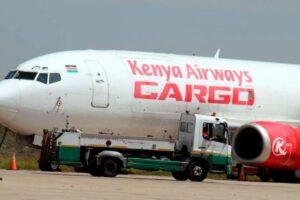
- Limited infrastructure, lack of standardized regulations and high air transport costs are among the challenges affecting the air transport sector in the East African Community according to a new report by East Africa Business Council.
- According to the report, limited liberalization of air transport contributes to high flight ticket rates and visa restrictions limit the movement of non-residents into the EAC region.
- The report calls for an EAC single air transport services agreement in a bid to lower the cost of air transport within the region.
Air Transport costs in the East African Community are higher than those in Europe and other African countries according to a new report by East Africa Business Council.
According to the report, the ticket price per kilometre in the EAC region is more than twice the ticket price for destinations in Europe and other countries in Africa.
‘‘The average ticket price per km in …
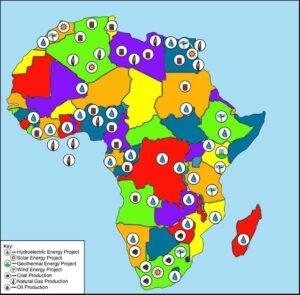
As Africa’s role in the global economy continues to garner prominence, it’s imperative for the continent to seal the gaping hole in its power supply.
Lack of universal power access remains a major roadblock that has retrogressed industrialization and socio-economic development. Statistics from the World Bank indicate that Africa remains the least electrified region in the world, with 568 million people lacking access to electricity.
The Bretton Woods institution, further notes that the Sub-Saharan Africa’s share of the global population without electricity, jumped to 77 per cent in 2020 from 71 per cent in 2018, whilst most regions saw declines in their share of access deficits. It has become a Hobson’s choice for African governments to prioritize the power sector, which is the epicenter of industrialization, working towards Goal 7 of the UN SDGs; which advocates for universal access to affordable, reliable and modern electricity services.
Currently, Africa’s power is …



Before the economic shock of COVID-19, world merchandise trade in 2019 was already slowing down due to trade tensions and decelerating economic growth.
According to the World Trade Organization (WTO), “the dollar value of world merchandise exports in 2019 fell by 3% to US$18.89 trillion”. Overall, world trade is expected to continue falling and will range between 13% and 32% in 2020, as the health crisis continues to disrupt world economies.
In addition to the economic disruption, so far, Coronavirus has left more than 200,000 people dead across the world, more than the fatalities recorded in the World War 11, as observed by the UN Secretary–General, Antonio Gueterres. The effects of the ‘Great Lockdown’ as perceived by the International Monetary Fund (IMF), is far beyond the effects of the 1930s Great Depression. With exception of businesses dealing in pharmaceuticals, life-saving amenities …
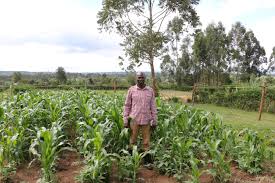
Close to three million Kenyans are at risk of facing starvation as the impact of Covid-19 and locust invasion on food security escalates. According to the latest report from World Bank, despite the government’s efforts to mitigate the impact of corona virus on food security, millions are at risk.
The Report says food security in Kenya is facing twin shocks from restrictions in place due to the Covid-19 crisis and the earlier locust attack, contributing to a spike in food prices.
“While Kenya’s cereal producing counties were spared the first-round of the locust invasion, there is high probability that the second-round towards mid-year could impact major food growing areas. The government is implementing a number of measures to mitigate the impact of the corona virus on food security and food prices,” the report states.
Kenya relies heavily on maize, wheat, rice and Irish potatoes for food. It is estimated that …
The East Africa 15 (EA15) highlights on 15 of the most traded and highly capitalized stocks in the region on a monthly basis. The primary purpose of the EA15 is to give investors a description and perspective of the regional stock markets’ performance.
EAC countries’ economies had a turbulent time in 2019 characterized by rising public debt against missed revenue targets,slow private sector growth and under-par performance of traditional key sectors of the economy such as tourism, agriculture and manufacturing. Further, regional trade which was earmarked as crucial to economic development has been marred by trade spatssuch as protectionism resulting in a decline involume and value of intra-regional trade.
The region is looking to maintain a loose monetary stance to boost private sector growth and more importantly,resolve disputes in order to intensify regional trade. Despite the tough economic environment, the region’s GDP is projected to grow the fastest in sub-Saharan …

East Africa(EA) business community will address issues on harmonising airspace among others during the East African Business and Investment summit taking place in Arusha, Tanzania from 28 to 29 November.
Denis Karera, the Vice Chairman of the Council said that the summit seeks to address the most pressing issues challenging business in the region, especially cross border trade.
“Non-tariff barriers impede cross border trade. One of the key things we want to raise, again, is the domestication of airspace so that our airlines can move easily and quickly and tickets can become cheaper as well,” he said as he addressed the press.
He added that flight ticket prices are driven by none harmonized and heavy duties imposed on airlines landing at different African airports. He said that flight tickets are expensive because all the east African countries charge taxes among other handling services for every landing.
Also Read: EAC
…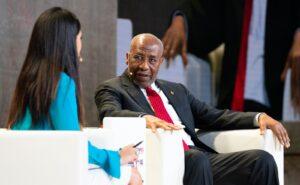
Uganda’s use of innovation to solve social challenges drive its development and creates new employment opportunities, Dr. Ruhakana Ruganda, Prime Minister of Uganda, said during the Global Business Forum Africa, GBF Africa 2019, in Dubai.
Speaking during an opening session, Dr. Ruganda discussed on how Uganda is fostering innovation and technology to unlock its economic potential.
He gave an example of mobile technology being used to register and track valuable data, improve access to education and address existing issues.
“These efforts in innovation taking place in Uganda – especially by the younger generation – are also being replicated in similar settings in a number of African counties in East Africa, Southern Africa, West Africa and North Africa,” Dr Ruganda said.
While discussing Uganda’s need to create 600,000 jobs every year for the next 10 and Uganda’s new programme set to embrace the Fourth Industrial Revolution, Dr
… 
The value of intra-trade among East African Community (EAC) states increased to $5.98 billion in 2018 from $5.46 billion in 2017, accounting for a 9.4 per cent growth.
According to the East African Community Trade and Investment Report (2018), all EAC member states except for Burundi recorded growth in trade with their regional counterparts.
Uganda, Tanzania, Rwanda, South Sudan and Kenya’s combined exports to the East African Community and Southern African Development Community regions amounted to $3.1 billion and $1.9 billion in 2018 respectively showed a report prepared by the EAC Secretariat.
In 2015 and 2016, intra-EAC trade was in the negative zone. In 2018, Burundi’s total trade with other countries in the region fell by 11 per cent to $150.9 million from $162.6 million in 2017.
Kenya’s total trade with EAC partner countries rose to $1.95 billion in 2018 from $1.86 billion in 2017 an increase of 4.7 …