

Trending
- Africa’s Green Economy Summit 2026 readies pipeline of investment-ready green ventures
- East Africa banks on youth-led innovation to transform food systems sector
- The Washington Accords and Rwanda DRC Peace Deal
- Binance Junior, a crypto savings account targeting children and teens debuts in Africa
- African Union Agenda 2063 and the Conflicts Threatening “The Africa We Want”
- New HIV prevention drug is out — can ravaged African nations afford to miss it?
- From banking to supply chains, here’s how blockchain is powering lives across Africa
- Modern railways system sparks fresh drive in Tanzania’s economic ambitions


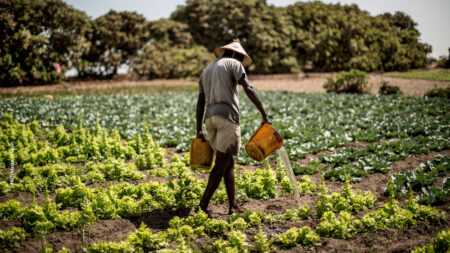
Sustainable Agriculture Farming Practices have been identified as the only way to ensure food security in the future Crop Life International launched its flagship…
Expensive loans remain a significant issue across populations engaged in…
Sustainable agriculture employs 65-70 percent of Africa’s labour force. Only…

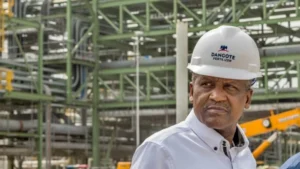
The global fertilizer market has been shaken, and the Governor of the Central Bank of Nigeria, Godwin Emefiele, said that the plant is timely and will help Nigeria solve a perennial fertilizer problem.
The new fertilizer plant will produce 3 million metric tonnes annually, with Buhari expecting a boom as fertilizer is now readily available in more significant quantities and better quality. The head of state encouraged Nigerians to take up agriculture as a business, saying that he expects the rise of a new breed of agropreneurs who will add value to farming and make the nation self-sufficient in food production.”
Dangote said that fertilizer from the plant would be exported to many countries, including the United States, Brazil, Mexico, and India.
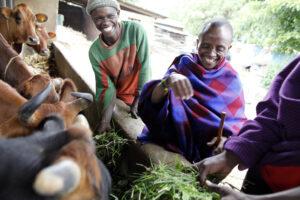
In Uganda alone, the annual loss caused by tick-related animal complications amounts to US$1.1 billion, with the East Coast Fever being the most prevalent and economically bruising tick-borne disease (TBD).
The Global Alliance for Livestock Veterinary Medicines (GALVmed) has partnered with Elanco Animal Health, a global leader in animal health, to launch a new initiative to manage ticks and tick-borne diseases in Africa.
The Bill and Melinda Gates Foundation supports the initiative.
Agriculture value chain analysis, also commonly referred to as mapping the agriculture value chain, is the assessment of the value chain participants and factors influencing the performance of the agricultural commodity industry and evaluating the relationships between these participants to identify the main constraints.
The purpose of agricultural value chain analysis (AVCA) is to increase the efficiency, productivity and competitiveness of an agricultural sub-sector or industry and develop solutions for how the identified constraints can be overcome.
AVCA assists in developing an understanding of how value chain actors/participants deal with powers and who governs or influences the chain.
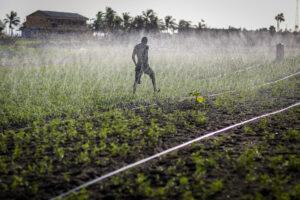
There are twenty-two irrigations projects under GIDA, covering 6,505 hectares. Additionally, there are twenty-two schemes constructed under the Small Scale Irrigation Development Project (SSIDP) and six schemes under the (Small Farms Irrigation Project) SFIP.
The SSIDP and the SFIP projects are all less than 1,000 hectares in size, except for the Tono and Kpong Irrigation Projects, which have about 2,500 hectares and are overdeveloped.
The primary beneficiaries of the irrigation projects have been indigenous small-scale farmers. However, the outputs have not been very encouraging, and the lack of maintenance of the projects has rendered most of the schemes unproductive.
Moreover, 14 companies have been enlisted and have taken up more than 3,000 hectares of land to cultivate commercial farming operations.
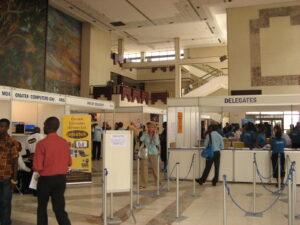
Thomas James, Agritech West Africa’s project director, said that the rising demand for food and the targeted food growth in Ghana and West Africa requires innovation and mechanization in agriculture patterns. This could be done by adopting new and modern agriculture technologies, machines, crop care practices, irrigation, warehousing and storage facilities.
Ghana has invested heavily in mechanisation in agriculture, importing Tractors, Spares, Implements, Agrochemicals and Irrigation setups worth US$1 billion. Annually, Ghana imports over 10,000 tractors and their associated implements and parts.
The seminars, pre-fixed meetings and conferences in the exhibition will help Ghanaian and West African agriculture-based companies an opportunity to network with manufacturers and suppliers from across the globe.

The National Project for Developing the Egyptian Countryside is an initiative estimated to cost US$1.11 trillion. This project will impact at least 1,350,366 households. President Abdel Fattah al-Sisi said in January 2021 that the project would be completed in three years. US$519.28 million of the total funding will come from the International Fund for Agricultural Development (IFAD).
The government that took power in 2014 inaugurated a series of projects to reignite Egypt’s economy. As a result, Egypt’s planning minister, Hala al-Saeed, expects the country’s economy to grow to 5.6 percent in the FY2021-22. Prime Minister, Mostafa Madbouly, referred to Haya Karima as an “icon” project that will help Egypt rebuild its economy and better the lives of more than half the population in Egypt.