

Browsing: Africa healthcare

Healthcare digital tools offers solutions to Africa, the continent with the largest disease burden and the most limited healthcare resources, globally. Photo/CNN
  • Healthcare digital tools reduce cost burden for Africa.
  • Digital tools make it easier for patients to comply with treatment plans.
  • Paperless data alone can saving up to $700 million in Kenya’s healthcare system.

Healthcare digital tools offers solutions to Africa, the continent with the largest disease burden and the most limited healthcare resources, globally. The acclamation was made by Marilyn Kimeu and Giovanni Sforza, associate partners in the McKinsey research institue of Nairobi, Kenya.

“Digital health tools could help health sys­tems deliver care at better quality, faster, and at lower cost and thereby optimize constrained resources, including a shortage of healthcare professionals, especially in rural areas…Africa has an opportunity to improve its healthcare systems by expanding its use of digital health tools,” the report authors attest.

  • Africa healthcare is largely dependent on external aid and imports.
  • Africa imports more than 95% of active pharmaceutical ingredients and 70% of medicines.
  • Nigeria leads the continent in producing healthcare products locally.

If the Trump aid cuts have done anything, they have pushed policymakers to rethink the Africa healthcare with countries now forced to urgently develop plans for self reliance. “The future of African health systems will be driven by domestic investment and demand for regionally made drugs,” notes Muhammad Ali Pate, Nigeria’s Minister of Health and Social Welfare.

Thanks to the Trump administration, multilateral aid is contracting and major donors are pulling back, as a result, Africa is now forced to tackle it’s health threats with fewer resources; self reliance is the only sound and logical option. “As health systems grapple with growing pressure and unpredictability, the need for locally driven, sustainable solutions is becoming ever more urgent,” Pate
  • The African pharmaceuticals market is projected to reach $34 billion by 2027.
  • Egypt has been tipped to contribute most to Africa’s pharmaceutical industry’s growth.
  • What implication does this change present to global pharmaceutical giants?

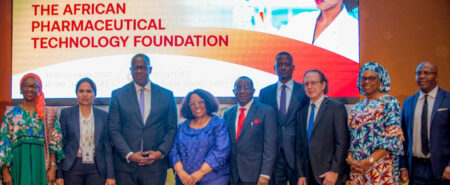
Africa pharmaceutical investment is well underway, and for the first time, the continent seeks to produce and distribute medicinal drugs but, what would be the impact on the global industry? “The failures of the global health systems during the COVID-19 pandemic—when export restrictions, lockdowns, and hoarding sent supply chains into frantic disarray—made local manufacturing of pharmaceutical supplies a top priority for African leaders,” notes global health writer Sara Jerving in her report titled New foundation is ready to help African pharmaceutical manufacturers.

Africa pharmaceuticals market reached $25 billion 2022 and is expected to grow at a 6 percent five-year CAGR to reach $34 billion by 2027 reports IQVIA, a global research institute. According to the …

The Bill and Melinda Gates Foundation has unveiled a $40 million funding plan to support multiple African companies for new messenger RNA vaccine development. This initiative addresses the challenge faced by millions of African people who were among the last to receive COVID-19 vaccinations.

The Gates Foundation asserts this initiative will leverage over 20 years of collaborating with vaccine makers in poor countries. Further, it will harness recent scientific breakthroughs to develop cost-effective, high-quality health tools with a global reach.…