

Trending
- AI’s Dual Capacity and a Strategic Opportunity for African Peace and Security
- How African economies dealt with the 2025 debt maturity wall
- Africa’s Green Economy Summit 2026 readies pipeline of investment-ready green ventures
- East Africa banks on youth-led innovation to transform food systems sector
- The Washington Accords and Rwanda DRC Peace Deal
- Binance Junior, a crypto savings account targeting children and teens debuts in Africa
- African Union Agenda 2063 and the Conflicts Threatening “The Africa We Want”
- New HIV prevention drug is out — can ravaged African nations afford to miss it?


Browsing: US dollar

Currently, Africa is over-exposed to the impact of the US Dollar. Thus, African nations must either act individually or together to mitigate these effects. Dollar strength bursts are cyclical. Therefore, there should be enough time to implement efforts before the next one occurs. African governments have recognized the harm done in the previous year and should work round the clock to find a lasting solution.
Official data has shown that the cost of transacting in international currencies is often 2 or 3 per cent higher than dealing in local alternatives. The higher cost often creates significant international trade obstacles. Ultimately, the progressive decision-making of the Russian government could save Africa from the damaging effects of a strong dollar. Consequently, international trade will become accessible to businesses in Africa. This will boost economic growth in the respective partner countries.
Ghana finds itself in the classic emerging market trap. This comes from owing too much in someone else’s currency when the global economic tide turns. One ought not to read too much into an emerging economy getting creative with money or to confuse the confiscation of private assets with a more conventional process of fiscal retrenchment that would gain IMF approval. If the plan succeeds, Ghana may have saved itself from an economic meltdown, especially in a period widely considered as economic turmoil, per the World Bank’s analysis of the 2023 economy.

Over the past decade, African countries have accumulated external debt at a faster pace. The countries have capitalized on abundant, low-cost international credit for fiscal and balance-of-payments funding to help drive development plans.
Africa’s total external debt, accrued by both the private and public sectors, owed to foreign lenders, has surpassed $1 trillion. The related annual debt servicing costs broke through the $100 billion threshold for the first time in 2021.
Economies the world over have made significant recoveries from the effects of the Covid-19 pandemic, Russia-Ukraine conflict and disruptive supply…
It is 1985, the US dollar is unbeatable, it is the reigning champion of the World’s heavy weight currencies.…
Because of erratic economic policy, Zimbabwe continues to be the sick man of the Southern African Development Community (SADC) region.…

According to the EIU graphic, much of the external debt stock of African countries consists of public medium- and long-term borrowings. This form of borrowing has been on the rise since 2000.
Private medium- and long-term debt stock in Africa has also been on the increase but not at the same scale and magnitude as the public debt. In short, governments, through their finance ministries, have been on a borrowing binge since 2000, whereas the private sector has marginally increased its borrowings in United States-denominated debt.
The increased levels of borrowing in hard currency badly expose governments to movements in interest rates and exchange rates. South Africa has the most external debt exposure of any country in Africa, followed by Egypt and Nigeria. With these facts in mind, it is no surprise to how much the Rand, the South African currency unit, has depreciated against the dollar.
The United Nations (UN) recognises about 180 currencies in the world as legal tender. Have you ever asked yourself which one is the strongest?
The United States (US) dollar has been for decades, used as a fixed-based currency because it’s used in most foreign markets.
The strongest currency, therefore, is one that yields the smallest exchange against the dollar. This means that the strongest currencies are those that are more expensive than the US dollar.
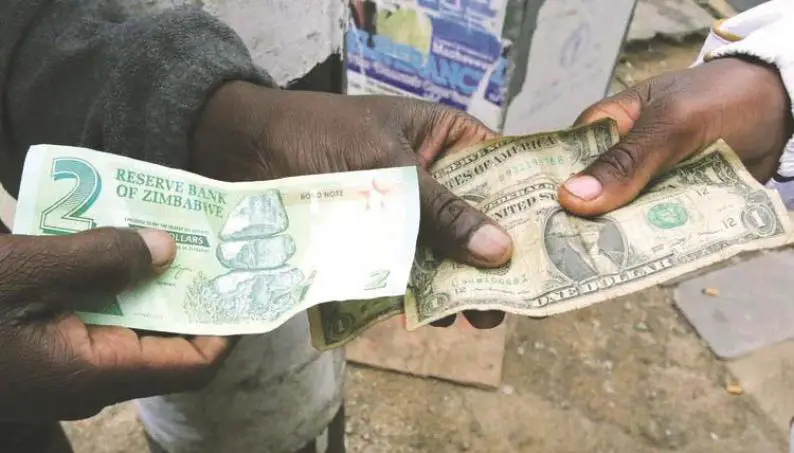
Before Mnangagwa’s statement, the Zimbabwean currency was officially valued at 165.94 to the US dollar, but it was trading on…