


Trending
- AI’s Dual Capacity and a Strategic Opportunity for African Peace and Security
- How African economies dealt with the 2025 debt maturity wall
- Africa’s Green Economy Summit 2026 readies pipeline of investment-ready green ventures
- East Africa banks on youth-led innovation to transform food systems sector
- The Washington Accords and Rwanda DRC Peace Deal
- Binance Junior, a crypto savings account targeting children and teens debuts in Africa
- African Union Agenda 2063 and the Conflicts Threatening “The Africa We Want”
- New HIV prevention drug is out — can ravaged African nations afford to miss it?


Browsing: Sub-Saharan Africa

The number of tourists arriving in Tanzania has increased an impressive 52% between January and November 2021 and with it,…
As of 2017, the trade initiative had created over 300,000 jobs in sub-Saharan Africa, many of which were in the apparel sector.
We recently carried out a Kenya country case study on the implementation of AGOA in the 2000 to 2016 period. We found that in this period, Kenya’s total exports to the US grew by US$443.2 million (or 405 per cent) from US$109.4 million to US$552.6 million. By 2020, the figure had risen to US$569 million, with most of the country’s exports coming from eligible products.
Looked at differently, in the nine years before the trade programme (1992 to 2000), Kenya’s average annual exports to the US were US$101 million. In the nine years after (2002 to 2010), average annual exports to the US rose to US$305 million. They rose further on average to US$557 million in the 2012 to 2020 period.
Because outside of the governments, politicians, civil servants, lobbyists and pressure groups that thronged the Conference there is a cohort of entrepreneurs that are passionate about reversing climate change, that have fantastic commercially viable and innovative ideas, but who require funding and strategic support to make these ideas a reality.
And so I want to suggest that as well as taking personal responsibility for our carbon footprint and doing all that we can to minimise our negative impact on Planet Earth, we should also be investing in line with environmental, social and governance principles at all times – and ensuring that 20% of our investments in 2021/22 should be directly targeted at investments that will have a positive environmental impact.

In June, the Voice of America reported that a bomb had gone off at a market in Tigray at about 1 pm, right when the market would be at its busiest time. At least 43 people were killed and dozens of others wounded.
This was June 22, a day after Ethiopia held its sixth national elections and a fortnight from the commencement of the second filling of the GERD.
Will fighting in Tigray deter Ethiopia’s GERD plans?

The government of Tanzania has received 1.3tri/- as Covid-19 relief package from the International Monetary Fund (IMF). Now the government…
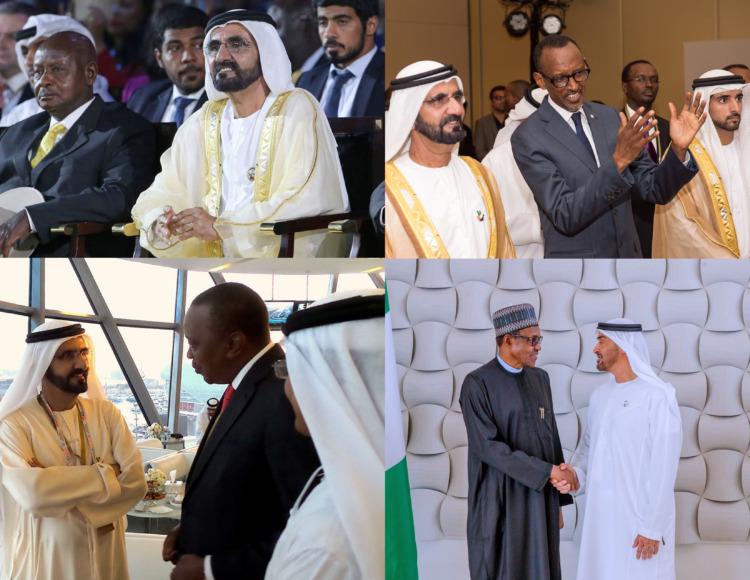
Commenting on Africa’s participation at the conference and the continent’s development in general Egypt’s representative at Expo 2020, Ahmed Maghawry Diab, who is also an official from the country’s Ministry of Trade and Industry said, “…the world has started to look at Africa and rediscover it…the continent has a lot of difficulties, but it has also started to develop.”
Another optimist for the continent’s development and what it has to offer is Dr. Levi Uche Madueke, Head of the African Union (AU) Strategic Partnerships Office and AU Commissioner General for Expo 2020 said, “…Africa is undergoing a dynamic socio-economic and political transformation. There is a lot happening on the continent but the world is yet to hear all about it. It is time to take charge of Africa’s narrative and reclaim its rightful place in the global arena.”
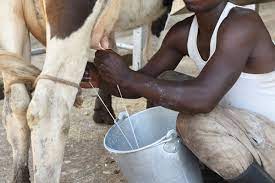
Looking at the bigger picture, speculations are that the milk and milk product levies and taxes are designed to lure Uganda to choose favourably towards other trade issues that are pending.
As local Ugandan media puts it; “Uganda maintains that if there are issues that need to be addressed, they can be handled through bilateral arrangements or the regional trade agreements within the East African Community instead of using arbitrary means such as high taxes.”
Squeezing Uganda to act in its favour, Kenya has also imposed what Uganda is terming ‘a restriction to Ugandan diary products since January 2020.’ Notably, Kenya is Uganda’s largest milk trading partner in the region, yet for over an year now, Kenya has maintained restrictions on Ugandan milk products despite the East African Community (EAC) common market protocol.
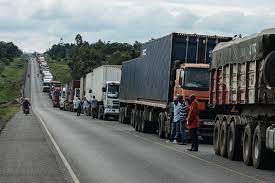
The next step in harmonizing policies and operating modules, is the need centralizing the related revenue administration and collection, because; “When we harmonize our tax administration we shall not compete with each other as EAC member states,” the sector experts reasoned.
There is also the matter of Visa fees which gravely affect the ability of traders to move between countries. It is now expected that the Republics of South Sudan, Uganda, and Kenya will expedite the removal of visa fees while the rest of the EAC partner states still need to remove what was described as ‘discriminatory fees, levies, and charges’ that hinder trade and persons movement across borders.

On the bright side, even with the credit growth slowdown, it remained positive, growth still maintained and upward trajectory. This is also for both domestic credit extended to the private sector as well as the central government too.
Growth is expected to improve as the global economy normalizes over time but meanwhile, the government, through the central bank is instituting measures to increase liquidity and reduce lending rates, which in turn is expected to allow the private sector to have increased access to credit.
As part of these fiscal measures, the BoT has already issued TShs1 trillion to commercial lenders to help beef up their lending capacity and to do so at lower interest rates. This in turn is meant to encourage the private sector to borrow and increase production.

Tanzania may have been bumped up to low-middle income status but its housing sector speaks a lot as to the…