

Trending
- Zoned for impact: How a cross-border Special Economic Zone is powering Africa’s green switch
- AIM Congress 2025: UAE’s tolerance conference aims to fix a fractured world
- AfDB’s $10Bn lifeline: Can smallholder farmers finally escape poverty?
- Juba on edge: Is South Sudan the next failed state?
- Kakuzi PLC slips into the red after Red Sea crisis, forex losses
- Tanzania’s Prof Janabi in the race for WHO Africa leadership
- Who will rule Africa’s web as Google takes on Musk’s Starlink
- From persona non grata to hero’s welcome: Ebrahim Rasool’s return to SA


Browsing: IEA
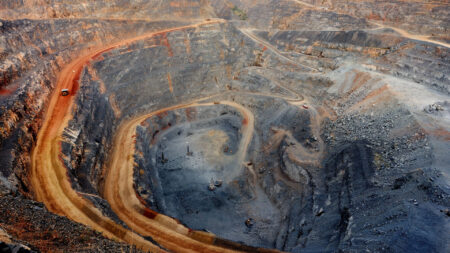
The mining industry in Tanzania holds a unique position as one of the most financially rewarding sectors, consistently generating foreign currency. Beyond its economic significance, this sector also wields considerable political influence within the nation. Therefore, a recent multi-million-dollar agreement forged with Australia and the US for the extraction and processing of critical minerals positions Tanzania advantageously as it prepares to participate in the forthcoming Critical Minerals Summit 2023.…
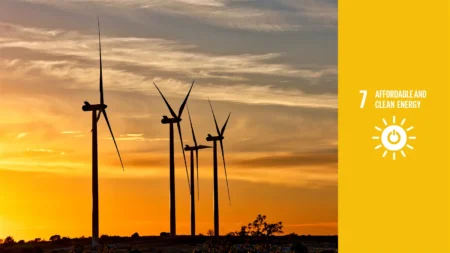
A new commentary from the International Energy Agency (IEA) on the upcoming World Energy Outlook 2023 has revealed that despite improvements, global access to electricity still needs to catch up to the pace required to meet SDG 7. The commentary supports discussions from the recently concluded United Nations’ SDG Summit on 18-19 September 2023. It is also part of the IEA’s support of the first global stocktake of the Paris Agreement, which will be finalized in the run-up to COP28, the next UN Climate Change Conference, at the end of 2023.…
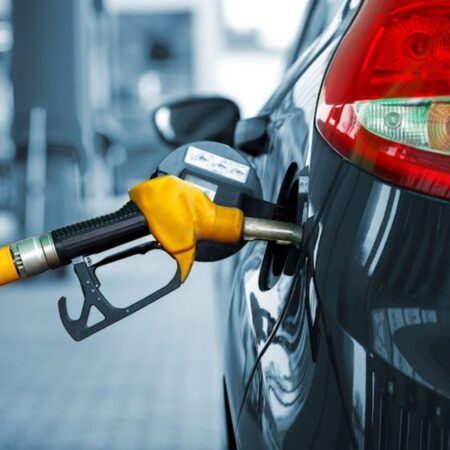
Russia’s invasion of Ukraine in February 2022 threw oil and gas markets into disarray. Consequently, the world experienced the first real global energy crisis during the uneven economic recovery from the COVID-19 epidemic. Russia’s inclusion in the OPEC+ group has hampered international attempts to manage the situation. This has made it harder to handle the significant inflationary effects of rising global fuel prices, particularly in developing nations.
Global fuel prices have risen exponentially in the last few months. The rise is hugely significant, as it has seriously aggravated the global cost-of-living crisis. African economies have particularly been on the receiving end. The continent has suffered from disrupted supply chains and a slowdown in the global economic outlook. Thus, rising energy costs complicate matters even further.…
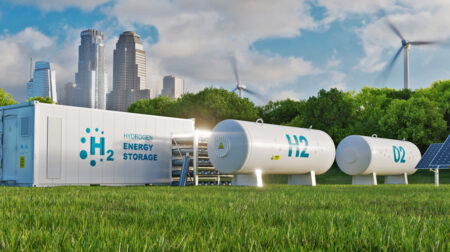
- Green hydrogen is defined as hydrogen produced by splitting water into hydrogen and oxygen using renewable electricity.
- Green hydrogen is the future for Africa, especially in the wake of transitioning from old ways of energy production to modern systems featuring clean, renewable energies.
- The conversation on clean and renewable energy has become interesting over the years as technology and finance in the sector grows.
Africa has the potential to produce $1.06 trillion worth of Green hydrogen energy, according to a European Investment Bank report dubbed ‘Africa’s Extraordinary Green Hydrogen Potential’.
Global demand for hydrogen is projected to rise seven fold by 2050, with Egypt, Kenya, Mauritania, Morocco, Namibia and South Africa primed to ride the demand for green energy.
Another report by Africa Green Hydrogen Alliance by 2050 asserts that green hydrogen could increase the GDP of the six nations by $126 billion, equivalent to 12 percent of their GDP.…
For practical reasons, European gas buyers need to find a way to make up for the supplies missing from Russia. And for both policy and practical reasons, Brussels wants to deny Moscow the opportunity to continue using gas supplies as a blunt instrument with which to threaten Europe in the future.
The change isn’t going to be immediate. Reducing Russia’s profile in the EU’s energy mix will take time. But the process of supply reduction is underway, and it has already opened up new opportunities for African gas producers to acquire market share in Europe. I expect those opportunities to last beyond the near term as the EU attempts to establish a new combination of gas suppliers to replace Russia over the next few years.
I also hope Africa’s emerging gas producers take advantage of new LNG technologies, such as the modular Fast LNG solutions offered by New Fortress Energy …
- Africa is facing a dilemma between mining fossil fuels and adopting cleaner sources of energy
- Due to the Russia-Ukraine crisis, oil prices could jump even further than the US$129 a barrel
- The IEA 10-point plan will open up job creation, skills transfer, technological development opportunities and new industries such as electric mobility
Africa is facing a dilemma between mining fossil fuels and adopting cleaner sources of energy. On one side, fossil fuels contribute immensely to the gross domestic products of most nations in the continent and stopping the mining of oil looks like “self-sabotage”. On the other hand, the world is experiencing harsh weather conditions due to climate change caused by the mining of these fossil fuels. There is a colossal force to mitigate and eventually halt these challenges.
How are African governments manoeuvering past this conundrum?
The decision appears like a mountain to climb, considering Africa is discovering new …