


- U.S. President Donald Trump reversed his controversial tariff policy after intense pressure from Republicans, business leaders, and a tanking bond market.
- The tariffs had triggered global financial turmoil, job losses, and sharp stock declines before Trump finally admitted the need for flexibility.
- Though the markets rebounded after the pause, the episode exposed the impulsive and chaotic nature of the policy’s creation and execution.
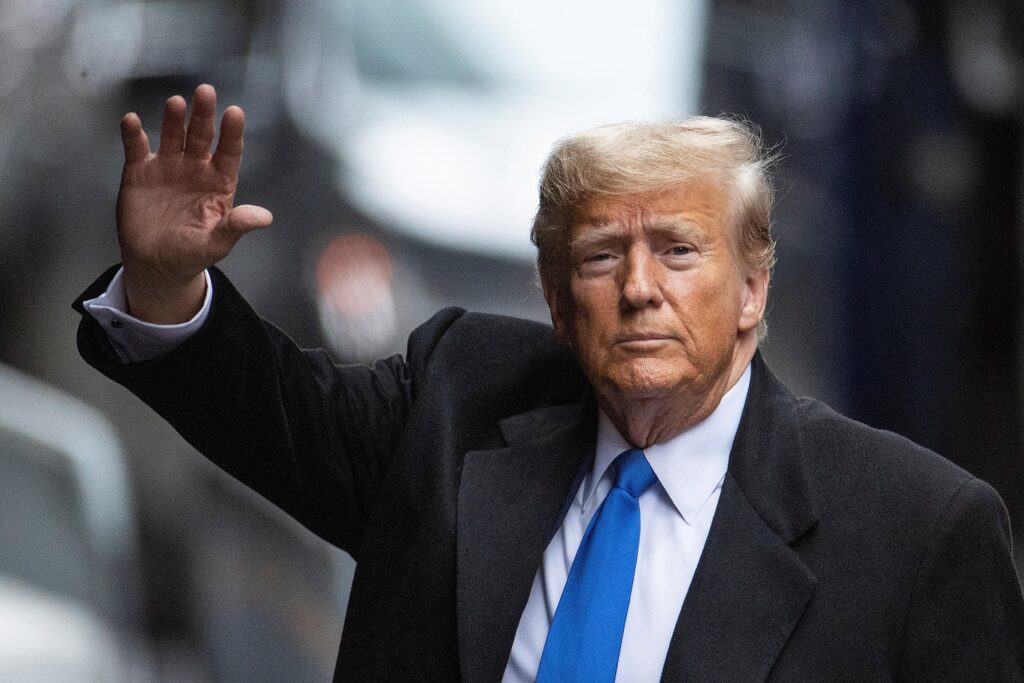
Trump tariffs took a dramatic turn this week, as President Donald Trump reversed course under a storm of pressure from Republican allies, business leaders, and even close confidants—all warning that his hardline trade stance was steering the U.S. toward economic disaster.
News outlet, CNN, in a report titled “Inside Trump’s tariff retreat: How fears of a bond market catastrophe convinced Trump to hit the pause button,” revealed that the president ultimately yielded to market realities and bipartisan concern.
A sudden turnaround under the spotlight
Despite earlier claiming, “MY POLICIES WILL NEVER CHANGE,” Trump backed down, acknowledging the toll the tariffs had taken on financial markets. Standing outside the White House alongside three flashy race cars, he admitted that markets had performed “glumly” since the announcement, adding, “You have to have flexibility.”
The report noted that the flurry of urgent calls was instrumental in helping Trump realize the political cost of ignoring the markets. Lawmakers were reportedly overwhelmed with angry constituent calls as markets nosedived, while advisors worried about the president’s dwindling political capital.
Treasury Secretary Scott Bessent and other officials attempted to spin the move as part of a broader negotiating strategy, with Bessent stating, “It took great courage for him to stay the course until this moment.” However, the reversal told a different story.
Economic whiplash: Trump tariffs spark global and domestic turmoil
The one-week lifespan of the universal tariffs had already wreaked havoc. Global trade was jolted, markets plunged, and a major automaker laid off 900 American workers. Even Trump’s wealthy backers turned against him.
Among the critics was billionaire investor Bill Ackman, CEO of Pershing Square Capital, who warned, “We are heading for a self-induced economic nuclear winter.”
Trump brushed off the criticism, saying some voices were getting “a little yippy, a little afraid.” Still, the impact was undeniable: the president paused the tariffs on all countries—except China—for three months.
Markets rebound, but not without cost
Trump’s U-turn led to an immediate market rebound. The Dow climbed 7.87 per cent, the S&P 500 rose 9.5 per cent, and the Nasdaq surged 12.2 per cent. However, this bounce came after a turbulent week marked by record-setting, trillion-dollar losses in stock values.
Even U.S. government bonds—traditionally a safe investment—were rattled. The Treasury Department raised alarms over the sharp sell-off, with Bessent personally briefing Trump on the escalating crisis in the bond market.
“The bond market is very tricky, I was watching it,” Trump later said. “The bond market right now is beautiful. But yeah, I saw last night where people were getting a little queasy.”
Impulse over strategy? Trump’s own words reveal chaos
Perhaps the most telling insight came from Trump himself, who described the creation of the tariff policy as spontaneous: “We didn’t have access to lawyers… It was written from the heart, and I think it was well written too, but it was written from the heart.”
This admission underscored a worrying lack of strategic planning behind a policy that had rocked the global economy.
Trump tariffs: Allies caught off guard
Even close Republican allies were blindsided by the abrupt reversal. During a Capitol Hill hearing, Democratic Rep. Steven Horsford remarked to U.S. Trade Representative Jamieson Greer: “It looks like your boss just pulled the rug from under you and paused the tariffs.”
Trump, meanwhile, trivialized the entire episode, saying: “If you keep going, you’re going to be back to where it was four weeks ago.” Ironically, he confirmed that markets were healthier before his policy took effect.
Whether the tariff saga was part of a master plan or simply a reactionary blunder disguised as heartfelt leadership, its impact was far-reaching. Over the course of just one week, global markets were shaken, thousands of jobs were threatened, and even the once-reliable bond market wobbled.
For now, investors and advisors may breathe easier—but the unpredictability of Trump’s decisions, often made on impulse rather than consultation, continues to keep markets and allies alike on edge.
Read also: How South Africa plans to counter the negative impact of Trump tariffs sting