


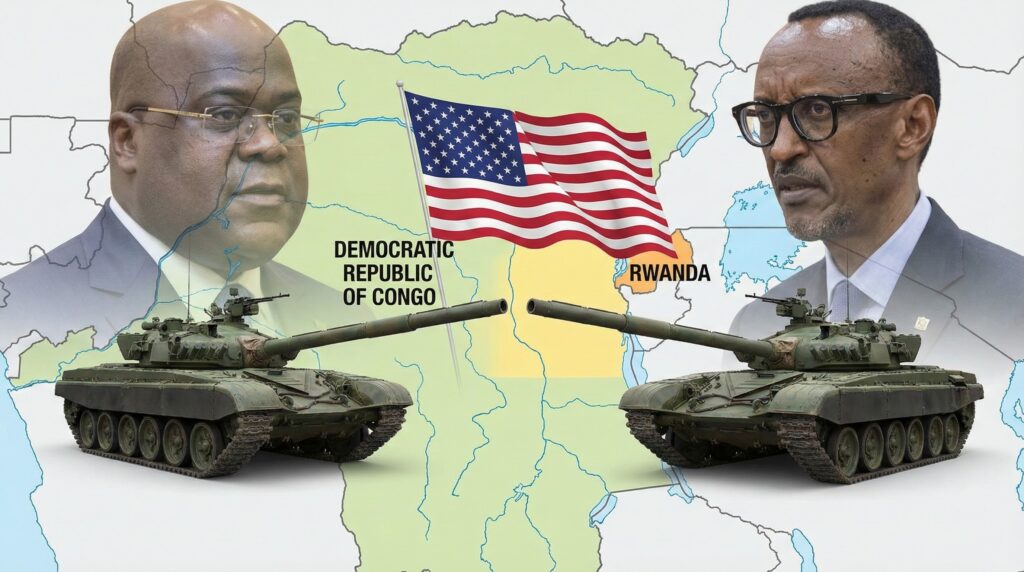
The world looked on with guarded optimism when the foreign ministers of the Democratic Republic of the Congo (DRC) and Rwanda signed a historical agreement in Washington, D.C., on June 27, 2025. The Rwanda DRCC peace agreement, which became known as the Washington Accords, raised hopes for an end to decades of fighting in eastern Congo, disarmament of militias and a new chapter of regional cooperation. With Rwandan President Paul Kagame and Congolese President Félix Tshisekedi set to ratify the agreement on Dec. 4, 2025, the stakes are now higher than ever, both politically and economically.
The accord is far reaching, not only calling for an end to hostilities, but also coupling security guarantees with a regional economic integration plan designed to exploit Congo’s vast mineral resources. For a Rwanda long accused of supporting militias in eastern Congo, it represents an opportunity for diplomatic rehabilitation. For Congo, it bodes a way to rebuild state authority and stability in areas devastated by combat. For the world’s investors and Western powers, it provides access to virtually unlimited natural resources.
Whether the Washington Accords hold and peace finally becomes a permanent reality, not an elusive dream like all the failed starts of the past, will depend on follow through.
What the Washington Accords Include for Rwanda DRC Peace
The Core Security Commitments
Central to the deal is an end to fighting between Rwanda and the DRC. The agreement requires Rwandan troops to withdraw from eastern Congo, a process that must be completed within 90 days of the signing, and calls for Rwanda to stop backing non state armed groups, including the infamous militia Democratic Forces for the Liberation of Rwanda (FDLR).
It also recommends the establishment of a joint security coordination mechanism to supervise troop withdrawal and monitor disarmament, disengagement and any potential integration of non state armed elements on a “very strict sideline”.
Rwanda’s previous “defensive measures” in eastern Congo would be over. The agreement presents Rwandan troops as not attacking, but rather blocking attackers from outside, a reframing of the situation that has political and diplomatic significance for Kigali.
Output and Mineral Trade: To Get Rich Is Glorious?
The Washington Accords exceed the proposed ceasefire lines. Among the deal points is a Regional Economic Integration Framework which will, in theory, connect Rwanda and the DRC, and even Western investors (with U.S. companies to be given special status), through joint business on mining, infrastructure, energy, tourism and public health.
More specifically, the two countries pledge to manage their minerals resources on a sovereign basis; they undertake to ensure that revenues do not support armed groups, and they promise to create a world class mining industry with supply chains crossing borders.
The game is transparent: attract billions in Western investment on condition of peace. In an area that is rich in cobalt, lithium, copper, tantalum and gold, all of which are minerals used in electronics and electrification of economies, there is no shortage of financial motive.
Diplomatic and Symbolic Underpinnings
The agreement was brokered by the United States and Gulf region diplomacy (primarily Qatar). By hosting the June signing, the US claimed its place as a strategic power broker and offered Rwanda and DRC diplomatic redemption.
And beyond its formal clauses, the accord itself bears powerful symbolism: It emerges after years of war that has uprooted millions and killed hundreds of thousands, suggesting a potential for ceaseless enemies to find common cause, or at least common interests.
What Has Happened Since June and What Remains Unresolved for Rwanda DRC Peace
However, the disparity between diplomatic aspiration and reality on ground is disturbing.
On the Ground, Violence Continues
Despite the security provisions of the agreement, by mid September 2025 Rwandan soldiers had not pulled out of Congo’s east and the FDLR had not been demobilized.
And the primary rebel force in the east, M23, was not part of the Washington Accords. M23, which is widely believed to be backed by Rwanda, remains pinned down in remote mineral rich areas and is stubbornly resistant to peace efforts.
Cease fires between the Congo government and M23, brokered as part of two separate tracks in Doha, Qatar, have collapsed before, she added. Fighting is ongoing, and both sides accuse each other of violating it.
As one analysis noted, “the evolution of the security situation on the ground has not followed the progress made over the diplomatic front.” The number of civilian casualties is high, forced recruitment and conflict related sexual violence are ongoing practices, and displaced populations continue to suffer.
Promises of Jobs, For the Many Still on Paper
Though the economic coordination structure was made formal in November 2025 by regional ministers, its operationalisation depends largely on security assurances.
This means risk for investors eying Congo’s huge mineral reserves. In the absence of security, mining, and the infrastructure to service it, remains a long way off.
Read Also: Tshisekedi asks US, EU to buy key minerals direct from DRC rather than “looted” exports via Rwanda
Read Also: What the U.S. gains from the Congo Rwanda peace treaty and the race for critical minerals
Distrust, Delays, and Political Frustration
Rwandan President Kagame had lodged this accusation against the DRC at a press conference last November. He said Rwanda was ready, but Kinshasa had added new conditions around the deal that was signed in Washington.
For their part, Congolese authorities have underscored sovereignty and control. According to spokespeople, any kind of integration, whether economic or security, has got to be done in such a way that respects the DRC’s sovereignty over its territory and resources.
The result: Full ratification of the peace deal was delayed innumerable times. An agreement in June among foreign ministers has still yet to be fully implemented on the ground.
 The December 4 2025 Washington Summit and Rwanda DRC Peace
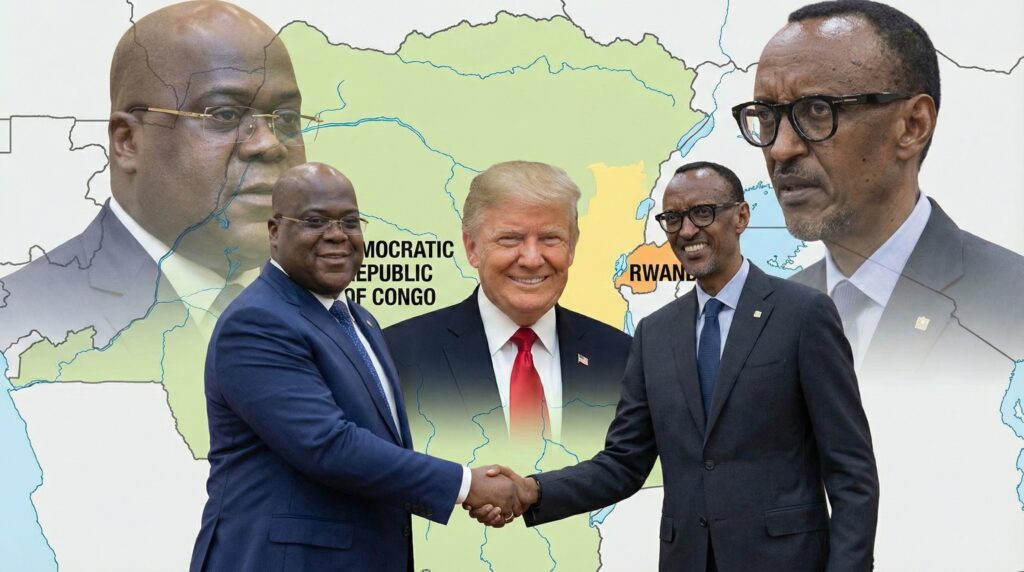
On December 4, 2025, both presidents Kagame and Tshisekedi will travel to Washington D.C. to witness the ratification of the Washington Accords during a ceremony at The White House with U.S. President Donald J. Trump presiding over the signing ceremony.
White House officials have said that the event represents the payoff of months of work in diplomacy, and a platform for future peace and prosperity.
The agreement to be inked would reportedly formalize the security guarantees made in June and endorse the Regional Economic Integration Framework announced earlier this month.
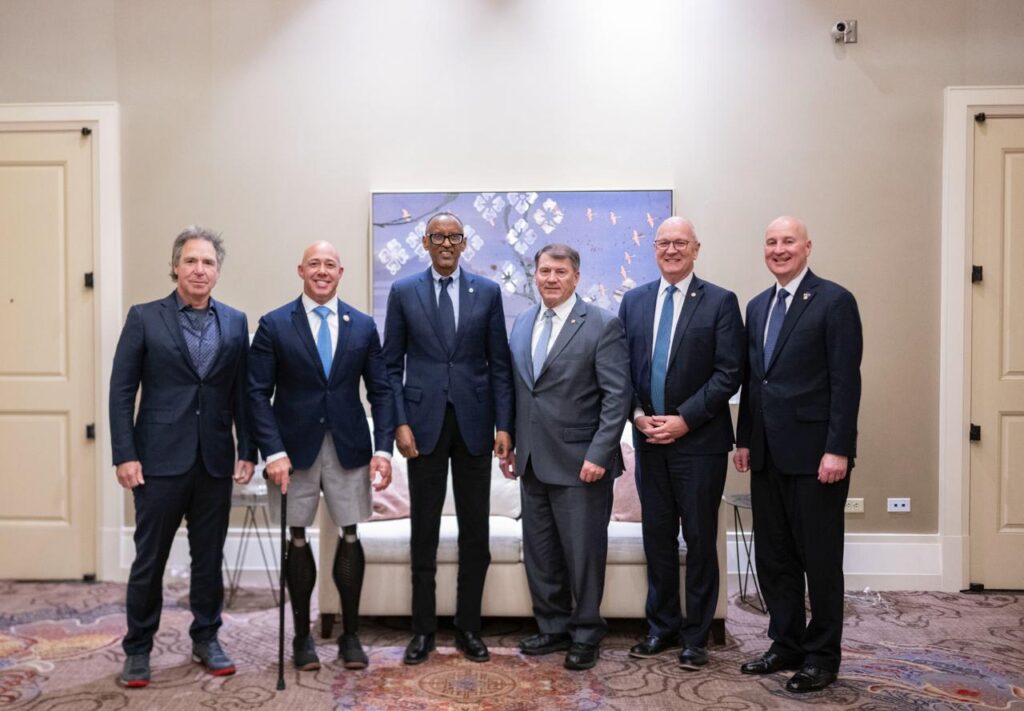
On the sidelines of the summit, President Kagame is set to hold a dinner with U.S. Congress members who are instrumental in steering the African peace initiative. The symbolic act is an attempt to help build political support in America, which will make investing not only in the diplomatic accord but also mining and development projects in eastern Congo feasible.
For many watchers, the Washington dinner is as crucial as the issuing of signings themselves, a message that U.S. Africa relations are turning a page to where diplomacy, business and strategic interest intersect.
The Road Ahead for the Washington Accords and Rwanda DRC Peace
Histories of Conflict, Not Just Between Nations
Thirty years of instability, inter ethnic relations and distrust cannot be resolved by some signatures on paper. As one analyst of conflict in Congo would observe: no amount of agreement, however well written, can bring to an end such violence as is so deeply rooted.
The involvement of M23, the leading rebel faction holding vast territories, is still not part of the accord and remains a pressing concern. Without M23’s disarmament or integration, the fighting can rage on no matter what Kigali and Kinshasa sign.
Non Observance After Security Clearance: Soldiers, Militias, and Timings
It is now over five months since the June deal: Rwandan combatants are still in DRC, the FDLR has not been disbanded, and M23 is back fighting.
DRC’s demand that the economic cooperation is contingent upon full compliance introduces another round of uncertainty. Without security, the economic promises will just be empty words.
The Risk of Being Exploited: People over Minerals
The deal, critics warn, is peace for profit in practice, demonstrating that the mining revenue comes at the expense of justice, reconciliation and human rights. In a part of the world marked by genocide and ethnic violence, stability in the long run may be weakened if there is no strong system of accountability.
Under the rush for Western investment, local communities would similarly be marginalised and their rights and needs preempted by foreign corporate interests.
Distrust and Politically Motivated Delays
President Kagame’s recent public assertion that DRC is the one holding up the deal, by imposing new conditions, points to the ongoing suspicion. If one side or the other sees the agreement as a trap or weapon of political leverage, the frail peace may never get off the ground.
Why the Washington Accords Matter for Regional Stability and Global Geopolitics
The Washington Accords offer a new pattern for resolving conflict in Africa that embodies elements of diplomacy, security and inducements. For the first time in many decades, America and its allies in the Gulf, with their stake in an era of mineral fueled peace, are willing to gamble on it.
If implemented, the agreement could help bring stability to the east of Congo. Displaced people might be able to return home, trade routes could reopen and mineral rich provinces would become a magnet for investment rather than rebel looting. For Rwanda, it serves as a route to regional legitimacy and economic success. And for the global tech and manufacturing sectors, it offers access to key minerals like cobalt and lithium, essential battery minerals as well electronics components in green technologies.
But it is a gamble. The success of the accord has less to do with words signed and more on the boots on the ground, trust between communities and political will to ensure justice is served and reparations are made.
The Road Ahead for Rwanda DRC Peace: What to Look for After December 4
Troop Withdrawal and Disarmament. After the cease fire deal is signed, will Rwandan forces start withdrawing right away? Will FDLR fighters hand in their arms and demobilise, or will they face military action? Observers will be looking for tangible progress within 30 to 60 days after the ratification in Washington.
M23’s Response and Involvement. Unless a key party, the main armed group in eastern Congo, is included in negotiations, the accord’s security arrangements might be irrelevant. Additional negotiations, perhaps by way of the Doha process, are also crucial.
Implementation of the Economic Framework. Will mining licences, infrastructure projects and foreign investment commence, or will security drawdowns put everything on hold?
Local Perceptions and Justice Mechanisms. Communities that have endured decades of conflict will be watching closely whether the peace also brings reconciliation, reparations and accountability, or just another round of plunder.
International Oversight and Engagement. Both American and global stakeholders will have to be vigilant, on compliance but also on human rights and transparency, not just sign a deal and forget about it.
Read Also: Trump’s DR Congo Peace Deal Falls Apart: The Story Behind a High Stakes Accord
The Washington Accords could be a new chapter for Rwanda DRC relations, but not if they merely start and end on paper. For now, the world watches.