


Trending
- Africa’s Green Economy Summit 2026 readies pipeline of investment-ready green ventures
- East Africa banks on youth-led innovation to transform food systems sector
- The Washington Accords and Rwanda DRC Peace Deal
- Binance Junior, a crypto savings account targeting children and teens debuts in Africa
- African Union Agenda 2063 and the Conflicts Threatening “The Africa We Want”
- New HIV prevention drug is out — can ravaged African nations afford to miss it?
- From banking to supply chains, here’s how blockchain is powering lives across Africa
- Modern railways system sparks fresh drive in Tanzania’s economic ambitions


Browsing: AfCFTA
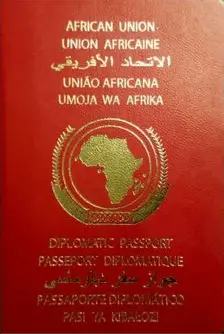
The African passport is a common passport document that is set to replace the existing nationally issued AU member states’ passport, and exempt bearers from having to obtain any visas for all 55 states in Africa. The three types of AU passports that are to be issued include the Ordinary Passport which is 32 pages and valid for five years, that will be issued to citizens and is intended for occasional travel such as business trips and vacations. The Official or Service passport will be issued to officials attached to government institutions, who have to travel on official business.
Finally, the diplomatic passport will be issued to diplomats and consuls for work-related travel and to their accompanying dependents. The passport has inscriptions in English, Swahili, Arabic, French and Portuguese.
The initiative aims at transforming Africa’s laws, which remain generally restrictive on the movement of people. This, despite political commitments, to bring down borders, with the view to promote the issuance of visas by member states, thereby enhancing the free movement of all African citizens within the continent. The passport will be biometric or an e-passport that meets international standards and will be modelled akin to the EU’s Schengen Zone one; to prevent fraud and illegal issuances, therefore, ensuring accountability. Leveraging on technology, the electronic system could be used to track movements, and hence aid in monitoring illegal travel and improve safe travel conditions.

Among the ways that the colonizers slowed down the growth and unity of Africa is through the demarcation of boundaries 60 years ago. These boundaries gave birth to over 41 different currencies on the continent that have complicated intra-African trade.
The continent uses over 5 billion dollars in currency conversion, monies that could have been directed to other economic development projects. African countries’ attempts to form a common regional currency have proven futile precisely because of all the frameworks of laws that need to be revised and harmonized in the different countries.
Africans and African diaspora across the world commemorated Africa Day on May 25, 2022. The day truly serves to integrate…
These gains will come from reduced tariffs which are stubbornly high among states in the region. More and greater gains will come from the reduction of trade costs by reducing non-tariff barriers and improving what the World Bank describes as hard and soft infrastructure at borders. The aim of these measures is to reduce red tape, lower compliance costs for traders and make the integration of African businesses with global supply chains seamless.
AfCFTA is still in its infancy stages in terms of implementation with a lot still to be seen in terms of its success. These practical reforms will be difficult to implement given the sheer size of the trade area. The trade area encompasses 54 countries however, the successful implementation of the initiative will provide substantial rewards. In terms of employment, seamless and frictionless trade between African countries has the potential to lower the gender wage gap in favour of women and help all workers by increasing the amount of decent employment opportunities.
The World Bank estimates that the implementation of AfCFTA will lead to an increase in wages by 10% with the largest gains accruing to women and unskilled labour.
As part of its overall mission, DIGILOGIC aims at developing a trend radar of the latest digital logistics technology trends…
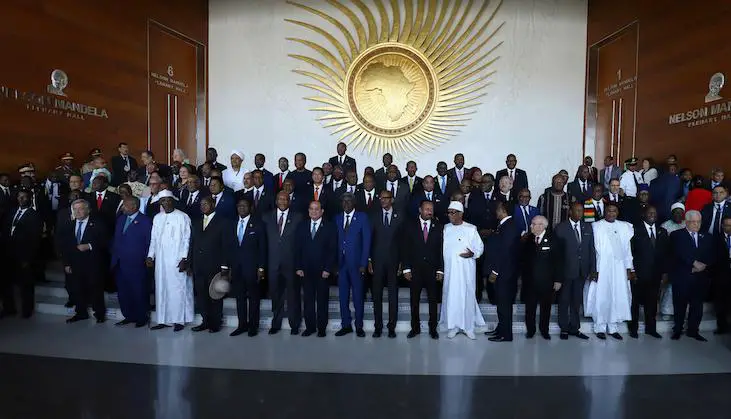
Africa’s role in the world economy derives from its economic importance to the rest of the world in international trade and as a destination for international investment. Africa has recently become home to the largest free trade area in the world, both by area and by the number of countries.
As economies have been hard hit by the Covid-19 pandemic, the Africa Continental Free Trade Area (AfCFTA) holds economic promise for the continent. The AfCFTA comprises 55 countries with a population of 1.3 billion and combined GDP of about $3.4 trillion. Business leaders and observers regard economic and regional integration as essential for accelerating Africa’s manufacturing, e-commerce, and digitization to reduce an over-reliance on imports, especially from China.
However, there is still much more to do as major components of the agreement still must be negotiated, between many countries and regional economic communities. Moreover, according to the IMF, removing non-tariff barriers could be up to four times more effective in boosting trade than tariff reductions.
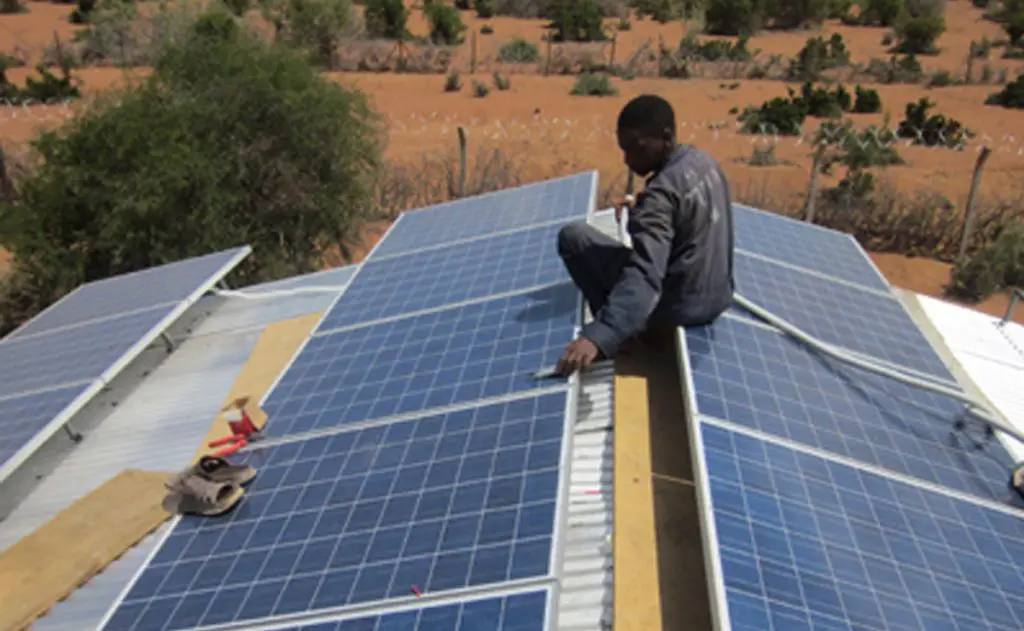
Unfortunately, even with an increased power supply, electricity is mostly used for lighting but the vast part of the community still relies on biomass ‘…which makes up close to 90% of the total primary energy consumption in Tanzania.’
According to REA, this reliance on biomass leads to the deforestation of 100,000 hectares every year and only about a quarter of this is ever reforested. At the moment, at least 63.5% of the households in Tanzania Mainland use firewood as the main source of energy for cooking which is the main cause of deforestation along with the clearing of forests for cultivation.
Another 26.2% of Tanzanians rely on charcoal for cooking and another 5.1% use, liquified petroleum gas and a mere 3 per cent use electricity. These figures show that even though there is an increased supply of electricity there is still profound destruction of forests and the atmosphere through deforestation and the burning of fossil fuels respectively.
A road here and a railway there can never equate to bloodshed, torture endured, families separated, a history lost, a culture destroyed, a people lost. Because of colonisation modern-day Africans no longer know who they are or what their heritage is.
They look up to the Caucasians as the embodiment of beauty, progress, of reason, none the wiser that it is their forefathers in Puntland and Ohir, in Egypt and Mesopotamia, that brought civilization to the world.
2022 Africa Day must be about recognition of Africa, re-branding Africa and re-establishing Africa’s position in the global socio-economic and political arena. On this Africa Day we must not only ask what is Africa but who is Africa.

African countries’ attempts to form a common regional currency have proven futile precisely because of all the frameworks of laws that need to be revised and harmonized in the different countries. For example, the eco in West Africa and the shilling in East Africa.
Ghana and Nigeria have even gone ahead to create their central bank digital currencies, indicating their lack of belief in the workability of the eco.
What does this mean? In the next 100 years or more, Africa cannot create a common currency acceptable throughout the continent.

AfCFTA is reshaping African markets; deepening economic integration in accordance with the Pan African Vision of ‘An integrated, Prosperous and Peaceful Africa,’ as enshrined in Agenda 2063. The agreement established a single continental market for goods and services, making for the largest and most ambitious trade bloc in the world, after the WTO. This has created a new market of 1.3 billion consumers across Africa, accounting for a combined GDP in excess of US$3.4 trillion in 55 countries.
According to the World Bank, AfCFTA has the potential to eradicate extreme poverty in the lives of 30 million Africans, and boost the incomes of 68 million of them, that live below the poverty line. Moreover, in the long term the continent is set to immensely reap more benefits out of the Agreement such as the diversification of Intra African trade, elimination of barriers and tariffs, job creation, increase in wages for unskilled workers, export diversification, an enlarged regional market that better attracts FDI and durable sustained economic growth.
Despite its implementation being slowed down by the C-19 pandemic, AfCFTA is still a beacon of hope for the continent, projected to be an engine of growth in the continent for years to come. The Secretary-General of AfCFTA, Wamkele Mene, notes that despite the pandemic shocks, the conti