


Trending
- VALR sets sights on East Africa as blockchain moves deeper into Africa’s financial system
- The cost of the data gap: Why Kenya’s lenders can’t afford to miss the full picture
- Tanzania takes EAC labour migration helm as regional rules face overhaul
- 2026 is turning out as a defining year in geopolitics, but for whom?
- Saudi Arabia and Tanzania pledge to deepen bilateral trade ties
- Tanzania rewrites its digital investment playbook
- Ethical sourcing boosting demand for Tanzania organic cotton
- DRC deploys 70,000 Ebola vaccine doses in high-stakes trial against deadly Bundibugyo strain


Browsing: Emerging Markets
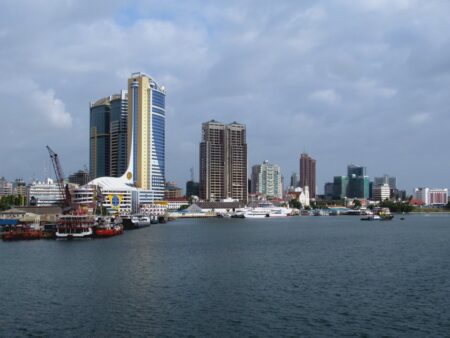
For investors seeking growth and opportunities, here are the top 5 sectors to invest in Tanzania for 2026. The country…

Uganda stands at a critical economic crossroads with the commencement of commercial oil production expected to coincide with the 2026-2027…

Central banks across Africa weighing interest rates in the next three weeks are poised to lower them, cautious that the…

Swiss Capacity Building Facility (SCBF) and APA Insurance have partnered with a consortium of local insurance innovators to provide affordable…

According to the EIU graphic, much of the external debt stock of African countries consists of public medium- and long-term borrowings. This form of borrowing has been on the rise since 2000.
Private medium- and long-term debt stock in Africa has also been on the increase but not at the same scale and magnitude as the public debt. In short, governments, through their finance ministries, have been on a borrowing binge since 2000, whereas the private sector has marginally increased its borrowings in United States-denominated debt.
The increased levels of borrowing in hard currency badly expose governments to movements in interest rates and exchange rates. South Africa has the most external debt exposure of any country in Africa, followed by Egypt and Nigeria. With these facts in mind, it is no surprise to how much the Rand, the South African currency unit, has depreciated against the dollar.
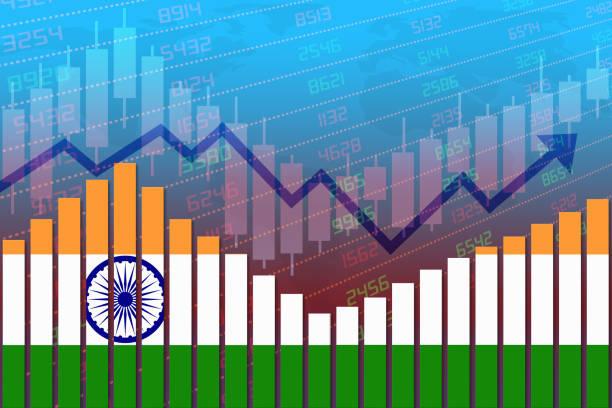
In terms of the economic outlook for India, opinions are divided given the headwinds facing the global economy presently, like the cost-push inflation from increases in food prices and soaring energy costs brought on by the Russia-Ukraine conflict. Deloitte, the global consulting and accounting firm, is optimistic about the economic growth prospects of India. It is projected that the Asian country will remain the fastest growing economy in the world, with growth projected to come in at between 7.1% to 7.6% in the years 2022 to 2023 and 6% to 6.7% in the years 2023 to 2024.
How has India managed to bullet-proof its economy to the extent that it has managed to register economic growth within a context of slowing global economic growth? According to Deloitte, India is primarily a domestic demand-driven economy, with consumption and investments contributing to 70% of the economic activity.
According to the Reserve Bank of India (RBI) analysis of 10,000 listed companies, businesses have seen a steady net profit-to-sales growth over the past year and are sitting on piles of cash. This fact highlighted by the global accounting firm is a key contrast with African economies, which tend to be driven by factors other than domestic demand. African economies generally suffer from a disproportionate dependence on foreign demand to drive economic growth.

Emerging markets have become an asset class which investors need to consider to optimize their portfolios. In 2000 investment flows…

Many, if not all, emerging markets have relaxed the regulations and restrictions related to FDI to encourage global investors to the continent.
The Business Insights on Emerging Markets 2021 also reported that the foreign direct investment in the emerging markets jumped from 15 per cent to 46 per cent over the last two decades.
The wave of technological advancements integrated with digitalization has captivated the globe and benefited the global economy in many unexpected ways. Developing countries in Africa need to embrace the fast pace technological revolution, which shall revamp the markets in the continent.
Emerging markets have been very active in creating the digital infrastructure for technological innovations accelerated by the onset of the Coronavirus pandemic.