Trending
- Africa’s Green Economy Summit 2026 readies pipeline of investment-ready green ventures
- East Africa banks on youth-led innovation to transform food systems sector
- The Washington Accords and Rwanda DRC Peace Deal
- Binance Junior, a crypto savings account targeting children and teens debuts in Africa
- African Union Agenda 2063 and the Conflicts Threatening “The Africa We Want”
- New HIV prevention drug is out — can ravaged African nations afford to miss it?
- From banking to supply chains, here’s how blockchain is powering lives across Africa
- Modern railways system sparks fresh drive in Tanzania’s economic ambitions


Browsing: Libya

Development of the Misurata Free Zone, road to Chad and Niger, and support for the Sahel-Saharan Bank for Investment and…
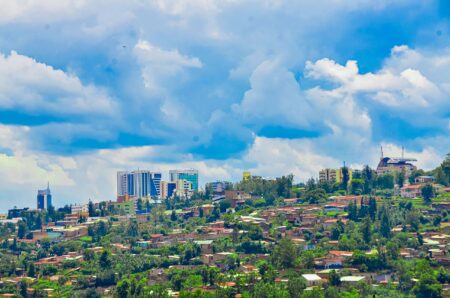
Africa will be the second fastest-growing regional economy in 2024. Over 10 African countries will experience substantial GDP growth. In October 2024, the International Monetary Fund emphasized Africa’s pivotal role in global economic development and resilience.
Africa could face economic headwinds this year. However, some of the continent’s brightest spots are lighting up the economic prospects. According to the International Monetary Fund, six of the top 10 performing nations globally are projected to come from Africa in 2024.
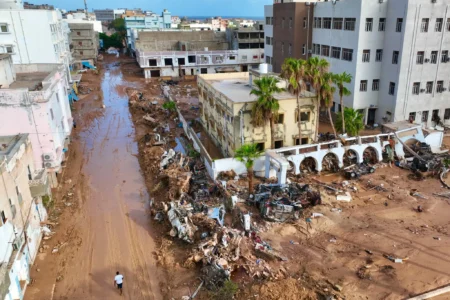
The eastern Libyan city of Derna has gone into mourning after catastrophic flooding that left about 10,000 people missing. Rescue teams have embarked on recovery efforts for the remains of loved ones as the scale of the disaster unfolds. Media reports say authorities estimate that close to 2,000 people have lost their lives in the Derna area alone.
The Libyan Government of National Unity (GNU) has issued a heartbreaking report stating that the entire road and bridge network in Derna has collapsed. This now calls for an estimated $67 million for reconstruction.
Given these large costs and the effect on Africa’s economic growth, it remains imperative to prevent the prevalence of conflicts. Several economic and structural factors, including low-income levels, poor growth outcomes, weak governance, state capacity, and inequality of opportunity—especially across ethnic, religious, and regional groups—increase the likelihood of conflict. Addressing these challenges would address political instability in Africa and prevent conflict.
While Russia’s preferred visions and modes of action in the Maghreb seem to be fairly well identified, the perceptions and expectations, but also the possible reservations on the Maghreb are more rarely expressed by the leaders of these countries and little-studied at the academic level.
Perhaps we should look at this, as far as the powers that be are concerned, a concern for discretion regarding the sensitive aspects of this foreign policy component – this is particularly true for Algeria – an area on which they generally communicate little and for the academic research community in North Africa, a lack of knowledge related to the history, geography and culture of contemporary Russia.
If there is undoubtedly, on the Maghreb side and with important nuances from one country to another, a manifest interest in a development or a deepening of the partnership with Moscow, questions may remain about Russia’s objectives, especially in Rabat and Tunis.
North Africa GDP was negative -1.1 per cent (2020) and -5.1 percentage point drop over 2019 But the region is…