
Browsing: Trade

Afreximbank Aliko Dangote
  • Afreximbank has signed a $1.35 billion loan financing for Dangote Industries Limited (DIL) as part of a larger $4 billion syndicated credit plan.
  • Syndication of one of the largest loans in recent African financial markets that aims refinance construction of the Dangote Petroleum Refinery and Petrochemicals Complex.
  • Dangote Refinery is the biggest single-train refinery in the world with a capacity of 650,000 barrels per day.

The African Export-Import Bank (Afreximbank) has signed a $1.35 billion loan financing for Dangote Industries Limited (DIL) as part of a larger $4 billion syndicated credit plan secured by one of Africa’s largest industrial conglomerate.

In a market update, Afreximbank said it acted as the Mandated Lead Arranger, for the syndication of one of the largest syndicated loans in recent African financial markets that seeks to refinance construction of the Dangote Petroleum Refinery and Petrochemicals Complex.

This investment is the biggest single-train refinery in the …

ITC Agribusiness
  • By fostering e-commerce expertise, the International Trade Centre (ITC) is paving the way for West African agribusinesses to thrive beyond borders.
  • ITC’s initiative offers tips on digital marketing, online payments, shipping logistics, and customer service, fostering a collaborative spirit across borders.
  • For many players, poor online visibility, limited e-commerce access, and inadequate digital skills stifle growth and restrict trade opportunities within ECOWAS.

In the fertile fields of Nigeria and Côte d’Ivoire, small agribusinesses dream of reaching regional markets, but limited digital skills and sparse access to online platforms keep them tethered to local sales.

To unlock their potential, the International Trade Centre (ITC) has launched a transformative initiative under its ECOWAS Agricultural Trade (EAT) programme, equipping local advisors and institutions to guide these businesses into the digital age.

By fostering e-commerce expertise, ITC is paving the way for West African agribusinesses to thrive beyond borders.

A Regional Training Revolution

In …

IMF Africa's debt debt reduction
  • The IMF counsels that successful debt stabilization requires measures to strengthen public finances and institutions, alongside pro-growth structural reforms and a sound macroeconomic environment.
  • Fiscal adjustment is likely to result in stronger, more durable reductions in debt when complemented by pro-growth structural reforms and by measures to strengthen institutional frameworks.

In the context of high global uncertainty, tighter global financial conditions, and rising borrowing costs, concerns about sub-Saharan Africa’s debt vulnerabilities are mounting. But the region is tackling this issue head-on and public debt ratios have stabilized on average.

Our analytical note in the International Monetary Funds (IMF)’s latest Regional Economic Outlook for sub-Saharan Africa uses a new data set to highlight when, how often, to what extent, and how debt stabilization was achieved.

Surprising frequency

Contrary to perception, countries in the region have often been able to stabilize or reduce their debt ratios without debt restructuring. With more than …

African Leaders
  • “It is time to replace the logic of aid with the logic of investment and trade,” says Angolan President João Lourenço.
  • “We should review the high tariffs on African countries. What is needed is more trade between Africa and the U.S., not less,” said AfDB President Akinwumi Adesina.
  • Bank President adds: “As we build transport corridors, let us also build strategic partnership corridors.”

African leaders have called for an urgent review of U.S. tariffs on African exports, urging a shift towards transformative partnerships and investment in Africa’s economic potential.

Addressing more than 2,000 government and business leaders, and other delegates at the U.S.-Africa business summit in the capital Luanda, Angolan President João Lourenço said: “It is time to replace the logic of aid with the logic of investment and trade.”

He urged U.S. companies to diversify beyond traditional oil and mineral extraction and invest in sectors such as automotive manufacturing, …

Burkina-Ghana trade corridor
  • Burkina-Ghana border post suffers from poor management, weak agency coordination, and widespread non-compliance.
  • Burkina Faso’s exit from ECOWAS continues to negatively impact future trade policies, border protocols, and regional cooperation. 
  • For decades, Burkina Faso has depended good relations with Ghana to access the sea, so it can ship its minerals and cotton to overseas markets.

A new study has unveiled a number of reforms to rev up opportunities that cross-border investors eyeing Burkina-Ghana trade corridor can bank on to grow. For years, landlocked Burkina Faso has depended establishing good relations with Ghana in order to access the sea, so it can ship its minerals and cotton to overseas markets.

However, red tape has always hampered the movement of goods, and labour along the border. The situation worsened even further with the start of insurgency in Burkina Fase about a decade ago. Ever since, traders – especially women – have to …

Africa's integration AfDB
  • Beyond physical infrastructure, Africa’s integration requires modern software upgrades: the systems, policies, and institutional frameworks that power trade across borders.
  • By positioning economic transformation at the heart of our integration agenda, Africa can advance up the value chain to generate wealth.
  • By effectively mobilizing our own resources first, driving economic transformation, and building both the required software and hardware, we can successfully integrate Africa.

Ask any traveler about their experience moving across parts of Africa, and you will likely hear about familiar challenges: high costs, indirect routes, and unpredictable schedules that can make even the simplest journeys more complicated and costly. These travel hurdles highlight the immense opportunity to further strengthen Africa’s integration and unlock seamless connectivity across the continent.

The potential is undeniable. According to the World Bank, the African Continental Free Trade Area (AfCFTA) stands to be the world’s largest free trade zone, encompassing 1.4 billion people and …

Afreximbank
  • Development of the Misurata Free Zone, road to Chad and Niger, and support for the Sahel-Saharan Bank for Investment and Trade are some of the key projects targeted in new era of cooperation.
  • The partnership is poised to facilitate the development of vital infrastructure, bolster trade, and support Libya’s efforts in economic diversification and reconstruction.
  • With a GDP of $50.49Bn in 2023, Libya is ranked as Africa’s 12th largest economy. However, less than 10% of its trade occurs with other African nations.

Libya has formally acceded to the Afreximbank Establishment Agreement, becoming the 53rd member nation of the pan-African financial institution. The entry of oil-rich Libya marks a crucial step in advancing continental integration through trade and investment.

Signed by Libya’s Minister of Finance, Dr. Khaled Al-Mabrouk Abdullah, the accession document sets the foundation for a new era of cooperation between Libya and African Export-Import Bank (Afreximbank). The partnership is …

African MSMEs
  • Small scale firms in Africa urged to embrace technology, research, and development to power their growth at scale.
  • African MSMEs have been challenged to tap opportunities presented by the African Continental Free Trade Area (AfCFTA) Agreement.
  • Agriculture, manufacturing, ICT, minerals, and creative industries highlighted as sectors that have huge potential for MSMEs’ growth.

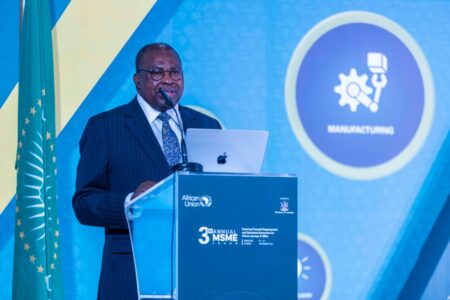
The African Union (AU) has called upon startups and micro, small, and medium-sized enterprises (MSMEs) across Africa to harness the power of innovation for their growth and sustainability. This appeal has been made by Albert Muchanga, the AU Commissioner for Economic Development, Trade, Tourism, Industry, and Minerals during the third African Union Micro, Small, and Medium-Sized Enterprises Forum, which is taking place between September 9 to 13 in Windhoek, Namibia, and virtually.

This forum, which is arguably one of Africa’s largest gathering of MSMEs, focuses on the theme: “Fostering Financial Empowerment and Educational Innovation for African …

DRC Joins Organisation of Southern Cooperation
  • DRC Joins the Organisation of Southern Cooperation after depositing the Instrument of Acceptance
  • Secretary-General Manssour Bin Mussallam received the Instrument of Acceptance.
  • The OSC, aimed at fostering cooperation and development among Southern Hemisphere countries

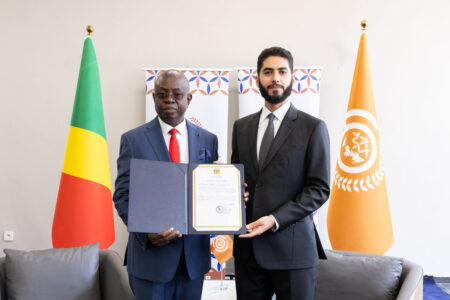
The Republic of the Congo has consolidated its full membership status of the Organisation of Southern Cooperation (OSC) by depositing the Instrument of Acceptance by Daniel Owassa, Ambassador of the DRC to Ethiopia and Permanent Representative to the African Union.

Secretary-General Manssour Bin Mussallam received the Instrument of Acceptance at a handover ceremony yesterday at the OSC Headquarters in Addis Ababa.

The Republic of the Congo is a founding member of the OSC. The depositing of the Instrument of Acceptance signifies the completion of the full membership process by countries in the Global South.

Read Also: SkyPower, AFC, and DRC join forces for $2.3Bn Green Giant project

H.E. Bin Mussallam said the occasion marked the beginning …

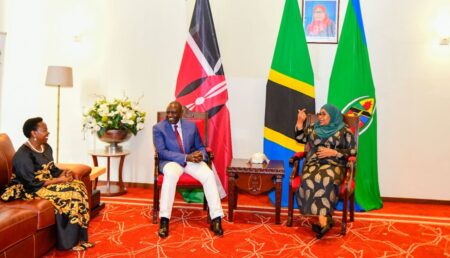
Kenya and Tanzania are working on resolving non-tariff trade barriers that have stifled business between East Africa's largest economies.
  • Non-tariff trade barriers are restrictions trade blocs impose to further their political and economic goals.
  • Kenya and Tanzania are working on resolving non-tariff trade barriers that have stifled business between East Africa’s largest economies.
  • Kenya is a crucial partner for Tanzania and is the largest source of African Foreign Direct Investment in Tanzania.

The East African Community

Countries have adopted regional trading blocs as a strategy to increase global competitiveness. The East African Community (EAC) member states are dedicated to enhancing economic efficiency and fostering regional integration through strategic investments using established industries.

EAC aims to position the Community as a single investment area, harmonising trade policies, investment incentives, and product standards.

At the beginning of its operations, EAC ended non-trade barriers (NTB) between member countries intending to liberalise trade. However, this affected the NTB imposed by the members, especially Kenya and Tanzania, who are critical traders in the market.…