

Trending
- AI’s Dual Capacity and a Strategic Opportunity for African Peace and Security
- How African economies dealt with the 2025 debt maturity wall
- Africa’s Green Economy Summit 2026 readies pipeline of investment-ready green ventures
- East Africa banks on youth-led innovation to transform food systems sector
- The Washington Accords and Rwanda DRC Peace Deal
- Binance Junior, a crypto savings account targeting children and teens debuts in Africa
- African Union Agenda 2063 and the Conflicts Threatening “The Africa We Want”
- New HIV prevention drug is out — can ravaged African nations afford to miss it?


Browsing: Uganda

Most Kenyans, 83 per cent, indicated a willingness to increase the amount of money they allocate to savings and investments, but the inability to save due to insufficient funds after fulfilling their obligations that require regular funding and the availability of quick digital loans.
Among their obligations which contribute to Kenyans’ financial strain is supporting their extended family which considerably bites into their savings. 84 per cent of people indicated that they regularly provide some income to their extended family, mostly in case of emergencies, because they feel a sense of obligation to send their extended families money and because their extended family members treat them better when they are sent money.
On their part, the extended family members mostly use the money to cater to recurring expenses like food & transport, school fees and medical expenses at 23 per cent, 19 per cent and 18 per cent respectively. Farm-related expenses like purchase of fertiliser ranked fourth at 14 per cent, phone and home upgrades came in fifth at 7 per cent while entertainment like Christmas celebration was sixth.

Most Kenyans, 83 per cent, indicated a willingness to increase the amount of money they allocate to savings and investments, but the inability to save due to insufficient funds after fulfilling their obligations that require regular funding and the availability of quick digital loans.
Among their obligations which contribute to Kenyans’ financial strain is supporting their extended family which considerably bites into their savings. 84 per cent of people indicated that they regularly provide some income to their extended family, mostly in case of emergencies, because they feel a sense of obligation to send their extended families money and because their extended family members treat them better when they are sent money.
On their part, the extended family members mostly use the money to cater to recurring expenses like food & transport, school fees and medical expenses at 23 per cent, 19 per cent and 18 per cent respectively. Farm-related expenses like purchase of fertiliser ranked fourth at 14 per cent, phone and home upgrades came in fifth at 7 per cent while entertainment like Christmas celebration was sixth.

The Entebbe airport stands to transform Uganda’s movement over time as it advances to become an oil economy alongside Tanzania.
South Africa, one of the wealthiest countries, has the largest road network, 750,000kms, while Tanzania, East Africa’s competitive economy, has more than 86,000km of roads.
In the current economic scenario, where uncertainty brought by economic shocks from the pandemic and political tensions force nations to expand their horizon of influence, the past years have shown why African infrastructures must be robust and conducive to enhancing value creation.
Whoever moves fast and swiftly dominates the economic conversation. South Africa, Kenya, Namibia and Nigeria are among the top African nations with more robust economies.

Uganda to resume sugar imports into Tanzania Kenya is yet to allow the proposed import of 90000 tonnes of Ugandan…
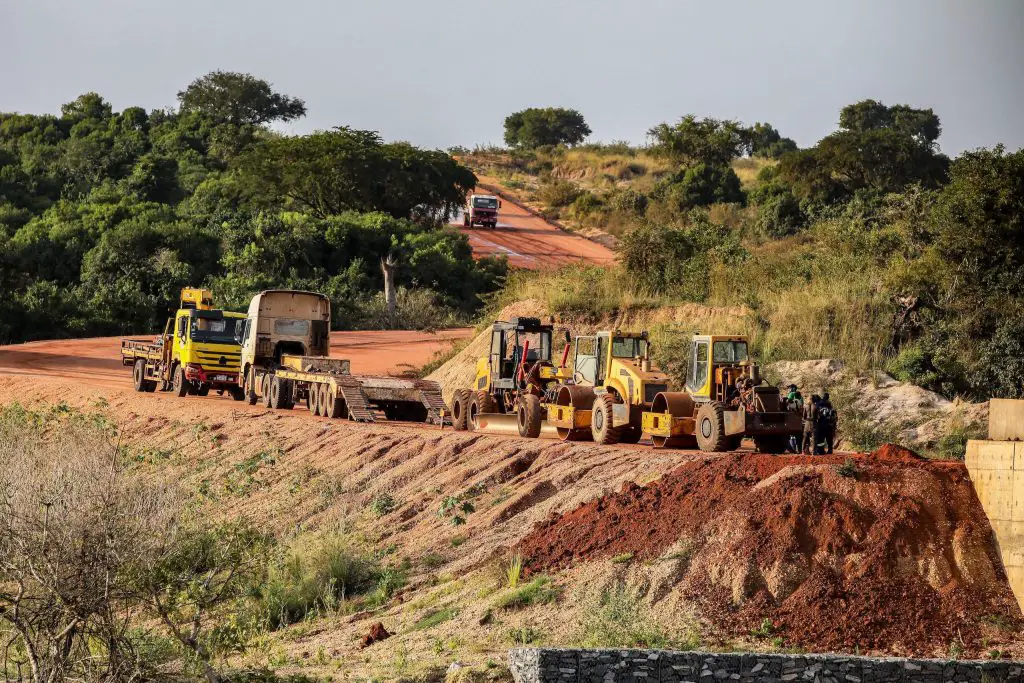
The EACOP is one of the biggest oil project in Uganda The total investment has reached $10 billion Uganda will…
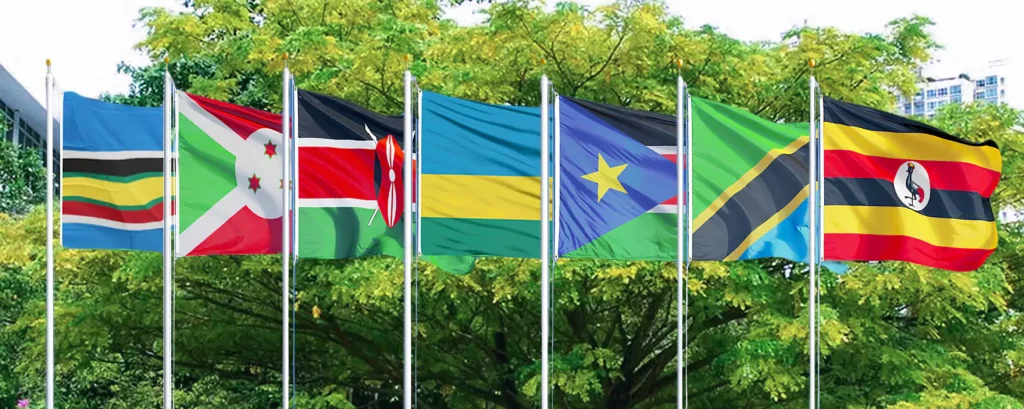
With the recent addition of the DRC to the East African region, landlocked countries have found an alternative port of entry in the Atlantic Ocean. The swiftness of trade with two ports of entry and the region’s strategic location will be incomparable to any other region on the continent.
The East African Federation would be the fourth largest country in both population and landmass, trailing after China, India and the United States. President Uhuru Kenyatta says that the federation would have over 300 million people.
The gross domestic product for the region will sum up to US$250 billion, the fourth-largest in Africa and the 34th biggest globally. Since the beginning of the last decade, East Africa has had the fastest growing economy globally. In 2019, the region’s economy grew by about 5 per cent. If the federation continues with this growth rate, the new country would quickly become the biggest superpower in Africa.
The EAF would become Africa’s largest superpower precisely because of the weaker nations surrounding the region. Among the languages official languages suggested in the region will be English and Swahili.
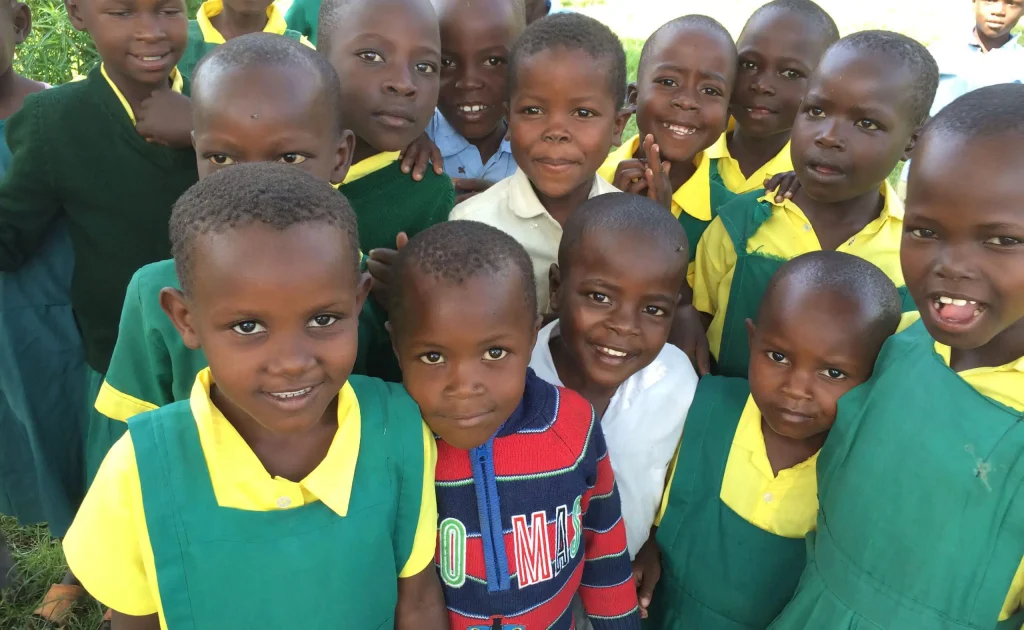
AKF has a very deep-rooted history of funding education initiatives in Africa. This effort is one of many funding partnerships that give life to education programs in the region and eliminate illiteracy within communities.
Gone are the days of education being an overlooked sector. Over the past decade, funding for education has assumed a critical shape.
Aga Khan Development Network (AKDN) has been investing in education in Africa for several decades, from the early stages of learning to the university level.
AKDN has contributed to enhancing education systems in Uganda, Tanzania and Kenya with the support of partners—the network has reached 1,300 public schools, trained 6,00 teachers, and reached 500,000 students.

The EACOP is a 1,443km pipeline that is been constructed at a value of 3.5 Billion USD. These funds are been directly injected into the economies of Uganda and Tanzania effectively increasing their FDI by over 60 % during the construction phase alone.
The magnanimous project is been constructed and operated through a shareholding approach among several stakeholders including the government of Uganda through the Uganda National Oil Company (UNOC), the government of Tanzania through the Tanzanian Petroleum Development Corporation (TPDC), France’s Totalenergies and China’s CNOOC.
It is expected that through the East African Crude Oil Pipeline, the region’s East Africa’s oil potential. It will effectively attract investors and companies to explore the region’s oil potential. Further still, as new infrastructure projects commence in line with the pipeline, it will greatly contribute to the enhancement of the central corridor between Uganda and Tanzania.
As would be expected, Total rebutted the claims. Its first move was to make public the related project social and environmental studies and issue a statement in which it pledged transparency.
The company admits that; “The projects for the development of the oil and gas resources of the Lake Albert region and the cross-border pipeline are situated in a sensitive social and environmental context that requires special measures for the environment and the rights of the local communities.”
In a follow-up statement, the investors maintained that; “All the partners are committed to implementing these projects in an exemplary manner and taking into highest consideration the biodiversity and environmental stakes as well as the local communities’ rights and within the stringent environmental and social performance standards of the International Finance Corporation.”

The CET maximum rate was a realization by the EAC Secretariat on the proposed Common External Tariff (CET) rates of 30 per cent, 33 per cent and 35 per cent classified under the fourth (maximum) band, which include textiles, iron, steel and motor vehicles.
The East African Business Council (EABC) urges the partner states- Kenya, Uganda, Tanzania, Burundi, Rwanda and South Sudan- to adopt the maximum CET tariff trade to spur industrialization and strengthen the regional value chain.
In 2020, the total intra-EAC trade stood at 11.8 per cent, amounting to US$6.39 billion. The proposed 35 per cent tariff is set to boost the trade between EAC member states to US$6.4 billion.