


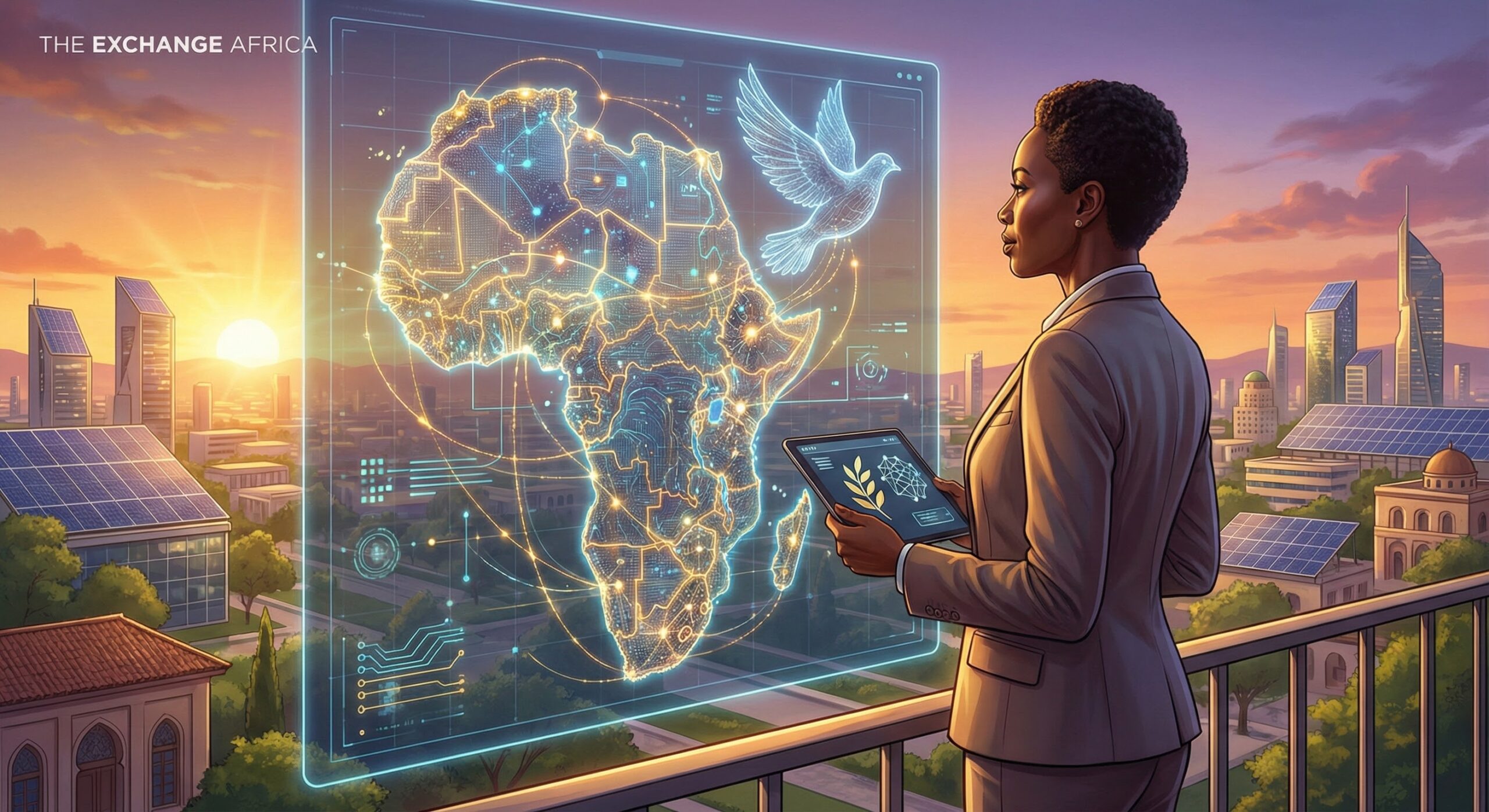
Artificial intelligence in Africa is no longer the stuff of science fiction or a distant technological curiosity. Already, it has entered into the political, social and security landscape of the heart of the continent, sometimes whispering, other times screaming and now and again with radical effect. For a continent struggling with entrenched conflicts, demographic pressures, misinformation and geopolitical shifts, AI represents both an extraordinary opportunity as well as an urgent governance challenge.
Africa is now at a cross point: we can define AI, or be defined by it.
AI, Governance and Peacebuilding in Africa
Across the continent, AI systems now shape how information flows, what citizens believe to be true and even whether conflicts will erupt or subside.
Amid the Tigray conflict in Ethiopia, social media algorithms amplified inflammatory content at an unprecedented pace, magnifying a war that resulted in an estimated 600,000 deaths and the displacement of over five million people. Here AI tools optimized for “engagement” acted as accelerants to division.
Elsewhere in Africa, the technologies have produced the opposite result. AI-powered monitoring also identified more than 800 instances of potentially harmful speech during the 2022 Kenyan elections, enabling authorities to intervene before tensions escalated.
Same continent. Same technologies. Two very different results. The distinction was the governance, not the algorithms themselves.
Read more: Google announces $37M funding to enhance AI, skilling in Africa
The Two Faces of AI in African Conflict
The 2024 Rwandan elections offered another caution. Researchers found over 400 accounts using state-of-the-art language models to create political messaging that were nearly indistinguishable from human speech. It is a new age: disinformation campaigns built to taste, so organic and culturally attuned that they can be almost impossible to spot amid legitimate public sentiment.
The implications are profound. AI without strong ethical guardrails and digital literacy is a threat to electoral integrity, compromising elections, further inflaming polarization, and feeding into distrust of state institutions.
AI-enabled drones and other intelligence assets are increasingly common in battlefields from Libya and Sudan to Somalia and the Sahel. Armed groups, not just governments, now employ drones for surveillance and targeted strikes. Governments, meanwhile, are competing to create their own AI-based security forces.
In the ongoing conflict in Sudan, more than 25 million people are today in need of assistance and humanitarian response, yet uncontrolled use of AI-driven systems has resulted in civilian deaths and further deteriorated humanitarian conditions. Africa will repeat this process if it fails to establish clear guidelines for the use of AI in warfare.
Read more: Cassava Technologies, Accenture deal to fast track AI cloud adoption in Africa

Africa’s Continental AI Strategy and the Imperative of Governance
Yet AI also provides the strongest peace tools that Africa has ever known. We must not forget AI’s transformative potential for peace.
Project Jetson, in Somalia, is using AI to anticipate where people will flee to next, transforming the response from a game of bureaucratic crisis whack-a-mole into an exercise in predictive planning. In South Sudan, the “Alert Me” app enables communities to alert threats in real time so that local peace committees can take action and prevent conflicts from surfacing. In Sudan, AI-enabled digital dialogue spaces elevated the voices of women and youth groups who are typically marginalized from peace talks. AI-powered acoustic sensors are used to combat gun violence in South Africa. Medical drones in Rwanda deliver lifesaving supplies to remote clinics.
From one end of the continent to another, AI is proving itself as powerful for saving lives as it is for taking them.
The African Union knows how urgent this is. On 20 June 2024, during its 1214th meeting, the AU Peace and Security Council urged for a global governance framework on AI based on African values, international humanitarian law and continental sovereignty.
The AU’s Continental Early Warning System (CEWS), the Panel of the Wise, and Youth, Peace and Security mechanisms ought to be augmented with AI solutions that can detect early indicators of violence, track hate speech and misinformation, predict risks for displacement, evaluate climate security interactions, as well as amplify marginalized voices in peace processes. Preventive diplomacy, the heart of Africa’s peace architecture, must have 21st-century tools behind it.
Read more: How Agtech, AI and Fintech can revolutionize Africa’s food sector
Building Africa’s AI Future: Peace, Security and Sovereignty
Digital colonialism is the real danger. If Africa fails to invest in its own AI capability, it could potentially become a “data colony” and consume technologies that are designed elsewhere, governed by values that may not align with the African context.
Today, 83% of AI startup funding in Africa is in four countries: Kenya, Nigeria, South Africa and Egypt. Internet access remains at 37%. Electricity access barely reaches 40%. Without deliberate interventions, AI may exacerbate inequalities and perpetuate structural violence, the same forces driving conflict.
Africa must act with urgency to develop strong national and regional AI governance frameworks complemented by AU strategies, adopt AI into CEWS and other nation-state early warning systems, defend Africa’s information environments from manipulation, invest in youth-led innovation in AI, create ethics for military AI based upon African-led values that respect others as articulated in the African Charter, and promote data sovereignty designed on African wellbeing.
AI is not a menace or a messiah but, rather, an option, a strategic one.
AI is already reconfiguring every sector of Africa’s peace and security landscape. It is no longer a matter of if AI will affect conflict and diplomacy in the continent. It already has.
The real question here is whether African leaders will lead with artificial intelligence or be led by artificial intelligence.
If Africa invests today in ethical, inclusive, and strategic AI capacity-building then the continent can advance sovereignty, decrease violent conflict, and establish a future where technology serves peace rather than volatility.
African peace and security cannot rely on battlefield negotiations or cease-fire pacts to determine its shape. It will be decided in data centers, regulatory frameworks, university labs, innovation hubs and the decisions leaders are making now.
How AI will determine Africa’s future. The only question now is: Will Africa make AI its own?
By Ambassador Fred Gateretse Ngoga & Dr. Siyabulela Mandela