


- South Africa-based Standard Bank has been authorized to operate new RMB clearing bank.
- Initiative is part of Beijing’s strategy to enhance trade between Africa and China.
- Analysts say new RMB clearing bank is not a de-dollarisation move.
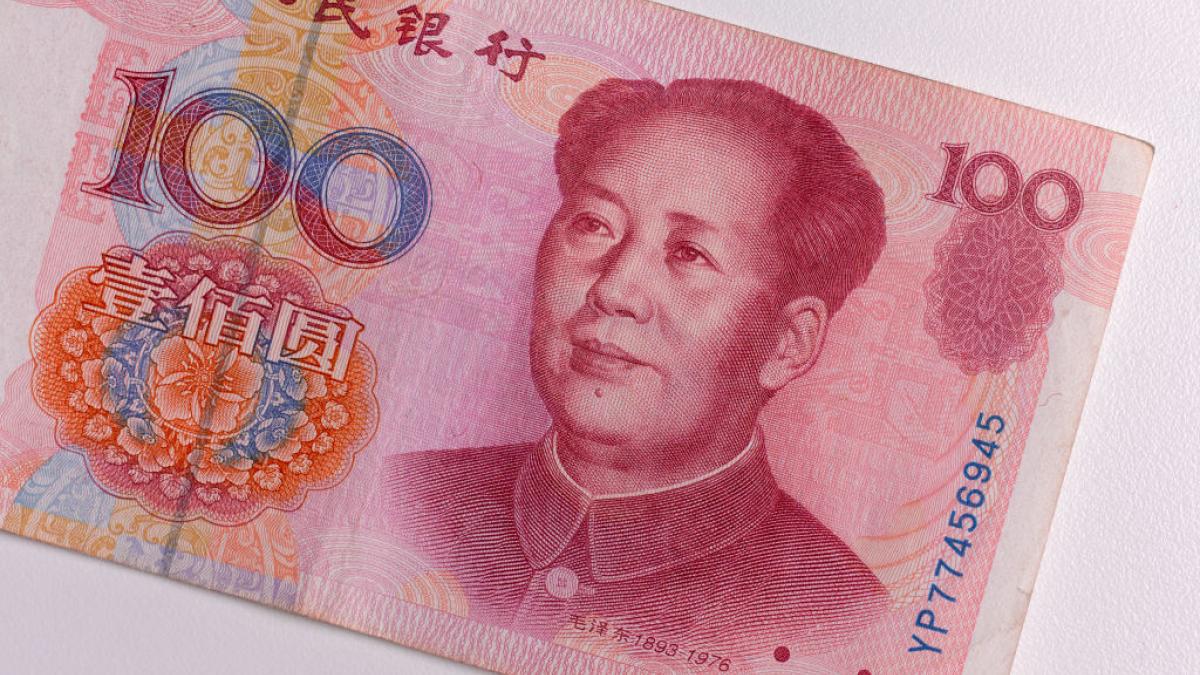
The People’s Bank of China has authorised Standard Bank and Industrial and Commercial Bank of China to operate jointly as the “Renminbi Clearing Bank of Africa.” For now, the authorization covers 19 countries and it is the very first time that African businesses and financial institutions get direct access to China’s capital markets without requiring the dollar as an intermediary.
The move makes Standard Bank the first African based financial institution to receive this authorisation. According to Richard de Roos, the Standard Bank Head of Operations for Corporate & Investment Banking, the bank is also the first on the continent to be authorised to participate in China’s Cross-Border Interbank Payment System (CIPS).
“We are immensely proud to be the first African bank to be granted clearing status. This status speaks to our purpose of promoting the continent’s growth and meeting our clients where they need us most,” the official expressed his delight.
In the official bank statement released after the announcement, the official explained that, CIPS enables interbank payments between Africa and China using Chinese RMB as the underpinning currency and not the dollar. He also noted that the Renminbi Clearing Bank of Africa is actually the first RMB clearing bank to be named after a continent and is also the first to be jointly operated by two commercial banks.
He said, combining the RMB management capabilities of the Industrial and Commercial Bank of China (ICBC) and Standard Bank Group’s strong African network, the new clearing bank is expected to become a core hub for RMB business across Africa.
“The status of RMB Clearing Bank provides exclusive access to China’s onshore financial system, including access to capital markets, liquidity, and payments innovations…this will significantly enhance the efficiency of RMB fund flows for all market participants,” he said.
The bank official went on to point out that the new service will provide clients with transparent, efficient and cost-effective payments solutions between China and Africa, and that way support trade and investment between the two economies.
He recalled the Standard Bank Group’s Capital Markets Day held in March 2026, where the bank underlined payments as the heart of every banking relationship, and according to the official, Standard Bank is at the forefront of ongoing payments evolution.
Notably, in the latest edition of the Standard Bank Africa Trade Barometer , survey results show that cross-border trade preferences across the 10 African markets that were surveyed have shifted notably; “Asian countries are now the preferred partners for an average of 35 per cent of respondents, up from 24 per cent in 2024.”
The survey also shows that China is the leading source of inputs for African businesses. The survey result says 67 per cent of surveyed businesses said China offers competitive pricing, product variety and supply-chain reliability hence their preference.
“China is Africa’s largest export market, and with clearer status added to CIPS participation, Standard Bank is even better placed to support Africa’s trade with China. We expect demand for these services to continue to expand,” adds de Roos.

China’s Renminbi Clearing Bank of Africa, a de-dollarization move?
According to analysts, opening of the Renminbi Clearing Bank of Africa is not a de-dollarisation move by China, rather, it is ‘plumbing.’
By definition “Market plumbing” is an unofficial terminology or a Wall Street slang, that refers to the infrastructure, settlement systems, and networks that power money markets, ensuring capital flows safely between banks, corporations, and the Central Bank.
“Without this invisible architecture, the everyday borrowing and lending of short-term funds would fail,” notes The Wall Street Journal in a piece titled “Pressure Is Building in China’s Financial Plumbing”.
The report says plumbing is an integral part of daily financial flow; “When you remove friction from a payment corridor, you don’t just make transactions cheaper you redirect trade flows, reshape financing relationships, and, over time, redraw the currency map.”
Notably, China-Africa trade rose nearly 18% last year when Beijing scrapped tariffs on imports from all 53 African nations. The result is that China is now the preferred trade counterpart for 35% of businesses across ten African markets, a sharp increase from 24% in the previous year.
“Standard Bank alone processed $500 million through China’s Cross-Border Interbank Payment System in its first four months in November 2025,” says the Wall Street Journal.
“The dollar isn’t going anywhere quickly…but Africa’s payment architecture is being quietly, methodically redrawn and this week’s announcement is one of the clearest signals yet of where that journey is heading,” it cautions.
Overall speaking, announcement of the Renminbi Clearing Bank of Africa may not be a de-dollarisation move but it means more African businesses will now trade directly in China’s Yuan rather than having to use the dollar as a denominator.
According to business analysts and financial author Ayodeji Adegboyega; “Although the US dollar is expected to remain the dominant global trade currency for the foreseeable future, the establishment of the RMB Clearing Bank of Africa marks another step in China’s long-term effort to make the yuan a more widely used international settlement currency, placing Africa at the centre of that strategy.”
According to the analysts, the new bank and the authorization to trade directly in the yuan, means that African businesses trading with China will gain faster and cheaper access to the world’s second-largest economy.
Noting that the move is major step in Beijing’s efforts to deepen financial ties with Africa and expand the global use of its currency, she said this latest development is part of Beijing’s ongoing effort to internationalise the yuan by encouraging more countries to settle trade in its currency instead of the US dollar.
To this end, Africa has become a key pillar and since China is Africa’s largest bilateral trading partner for more than a decade, the move does in fact single what maybe termed as ‘baby steps’ towards de-dollarisation.
Trade between China and Africa is only expected to grow faster and larger after Beijing removed tariffs on African imports, a move that saw trade between the two rising by nearly 18% last year alone.
This new bank clearing arrangement that allows trading in yuan serves to benefit African companies that import machinery, industrial equipment, electronics, vehicles and manufactured goods from China.
“By settling eligible transactions directly in yuan, businesses could reduce foreign-exchange conversion costs, shorten settlement times and limit exposure to fluctuations in the US dollar, an important consideration for companies operating in markets where access to hard currency remains constrained,” notes Adegboyega.
According to the analyst, the arrangement is also a milestone for China’s financial engagement with Africa since it is actually the very first RMB clearing bank to be established across the continent.
She goes on to underline the fact that the RMB clearing bank is jointly operated by two commercial banks, it provides the participating institutions with access to China’s capital markets, liquidity facilities and payment infrastructure.
“This forms part of China’s broader strategy to build the financial infrastructure needed to support its expanding economic footprint across Africa,” she notes. How the US will respond to this latest move by China remains to be seen, will Trump change his earlier high tariff stance on Africa?
Read also: Here is how investors in Africa will benefit from China’s zero tariff