





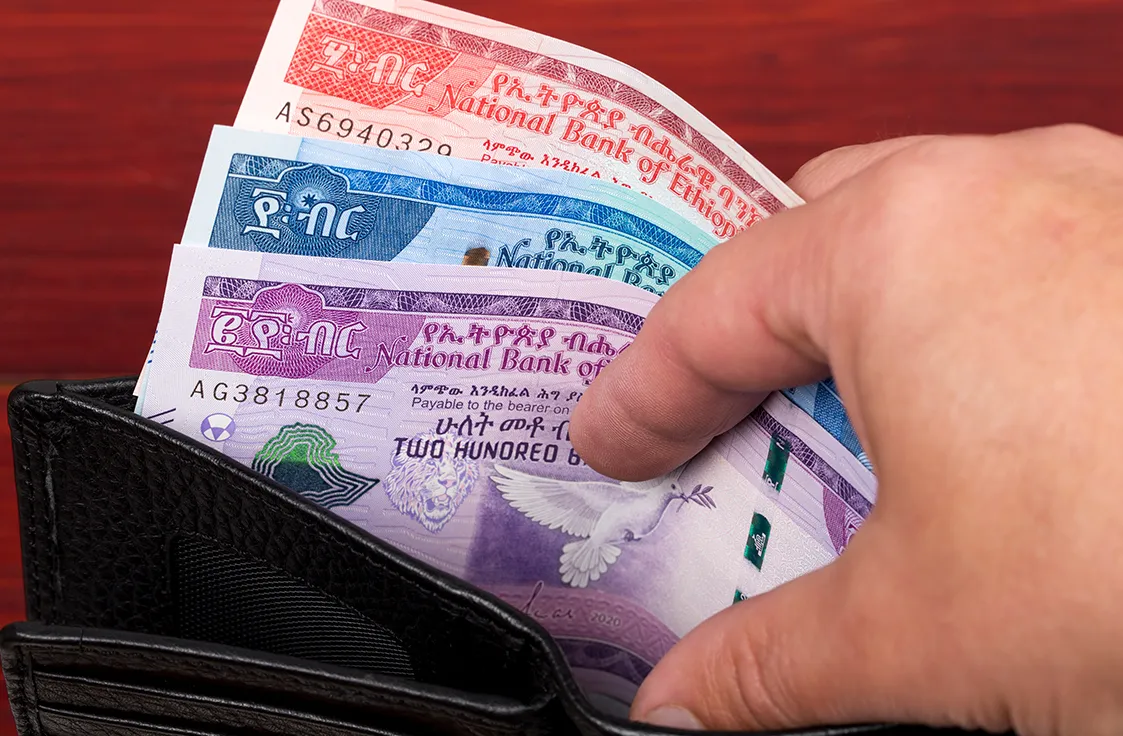
- Payments platform Grey adds the Ethiopian Birr in its global network, offering a direct lifeline for people in a country choked by chronic forex shortages.
- Grey also added the Argentine Peso, Chilean Peso and Thai Baht, taking its payout network market expansion to 55 countries.
Ethiopia, a nation of over 130 million people, has seen its mobile money accounts explode from fewer than one million in 2020 to more than 128.5 million by the end of 2024. The GSMA projects the country’s digital economy could add over ETB 1.3 trillion to GDP by 2028.
Yet for all this break-neck growth in digital access, the infrastructure for actually moving money across borders remains trapped in a previous era, slow, unpredictable and often utterly broken.
This is the gap that Y Combinator-backed cross-border payments platform, Grey, is seeking to bridge. The company has now added the Ethiopian Birr, alongside the Argentine Peso, Chilean Peso, and Thai Baht, to its payout network, expanding local currency access for users in all four markets.
For Grey, which now serves nearly three million users across 55 countries, the move is a direct response to what it calls “years of customer demand”. But for Ethiopia, it represents something more significant: a potential lifeline for a freelance and diaspora economy being systematically choked by the country’s chronic foreign exchange crisis.
“Some of the strongest signals for where Grey should go next come directly from our users,” said Idorenyin Obong, CEO and Co-founder of Grey, in a statement.
“At global events, in community conversations, and through direct feedback, users and prospective customers have repeatedly asked when Grey would fully support these countries. This payout launch is a direct response to that demand.”
The Ethiopian Birr Bottleneck
The challenge Grey is tackling in Ethiopia is a case study in how macroeconomic dysfunction can smother digital promise. The country is home to a rapidly growing community of freelancers, exporters, small businesses, and diaspora-linked enterprises.
International organisations have been actively training Ethiopia’s next wave of freelancers to access the global gig economy, recognising that the country, with over 200,000 science graduates annually and competitive labour costs, has the raw ingredients to become a remote work powerhouse. One digital freelancing training programme alone, supported by the International Trade Centre, recently trained 353 participants, with 87 securing new jobs as a result.
The problem, however, is getting paid. While digital financial inclusion has expanded dramatically on paper, the country’s ability to receive and convert foreign currency remains severely constrained. The issue is so acute that the government has resorted to dramatic measures.
In November 2025, authorities arrested 112 people and froze 519 bank accounts in a nationwide crackdown on what they described as illegal foreign currency trading and unlicensed money transfer networks. The operation, carried out by the National Intelligence and Security Service and the Federal Police, targeted informal hawala-style remittance networks that have flourished in response to the official banking system’s paralysis.
Foreign exchange shortages
The government argues these informal channels have contributed to foreign exchange shortages and undermined macroeconomic reforms. But critics point out that restrictive foreign exchange rules have essentially created the problem they claim to be solving.
Diaspora remittances have increasingly bypassed commercial banks in favour of informal channels, which offer faster settlement and better rates than a formal system where the parallel market rate can trade at nearly double the official level. The International Monetary Fund estimates Ethiopia’s net reserves are equivalent to less than a month of imports.
Grey’s entry point is the freelancer and diaspora user who has “signed up on various remittance platforms only to find they cannot withdraw funds locally”. By enabling direct payouts in Ethiopian Birr, the platform is attempting to bypass the bottlenecks that have made cross-border payments in the country notoriously unreliable. Yet it remains to be seen how Grey will navigate Ethiopia’s tight capital controls and whether its solution can effectively circumvent the foreign exchange shortages that plague the formal banking sector.
Read also: How Ethiopia saved $5Bn by not importing, then earned $10Bn by exporting
Ethiopia: A populous market in transition
Ethiopia is far from alone in its struggles. The four markets Grey has added, Argentina, Chile, Thailand, and Ethiopia, each represent a distinct but equally pressing facet of the global financial access challenge.
In Argentina, a strong freelance community has long earned from clients abroad but has had to contend with a volatile currency and strict capital controls. Chile’s stable business environment has made it a hub for startups, yet cross-border payments remain slow and unpredictable. Thailand, a magnet for digital nomads and remote workers, demands better localised financial access for a transient population.
Grey’s expansion comes at a moment of heightened regional focus on cross-border payments. In July 2025, the East African Community (EAC) and the Intergovernmental Authority on Development (IGAD) convened a five-day workshop in Addis Ababa under the Eastern Africa Regional Digital Integration Project (EARDIP), backed by the World Bank.
The workshop brought together central banks and policymakers from nine countries to advance harmonised legal and regulatory frameworks that would enable faster, safer, and more inclusive cross-border payments across Eastern Africa.
“The collaboration between EAC and IGAD exemplifies the spirit of regional solidarity and shared ambition that Africa needs to build the future it envisions,” said Dr. Mohyeldeen Eltohami, Director of Economic Cooperation and Regional Integration at IGAD. But the gap between regional ambition and on-the-ground reality remains vast. As one participant noted, payment systems interoperability is “no longer a luxury, but a necessity for regional prosperity”.
Read also: Ethiopia’s reform push paying off as $13Bn investment deals dwarf regional rivals
The $720 Billion Question
Grey’s move into Ethiopia underscores a broader truth about global finance in the age of remote work and digital nomadism. The platform started in 2020 as a way for individuals to receive international payments. But its users have evolved. They are “not just receiving money across borders, they are living, working, exchanging and spending across them”.
Mobile money providers processed nearly $1.7 trillion in transactions in 2024, and the GSMA estimates that by the end of 2023, the total GDP of countries with mobile money services was $720 billion higher than it would have been without them.
Yet mobile money’s promise has not been evenly distributed. Despite the explosive growth in mobile money accounts in Ethiopia, the country’s financial inclusion rates remain stubbornly low compared to its East African neighbours.
One 2024 GSMA report found that Ethiopia has lower financial inclusion rates than its regional peers, despite government targets to increase account ownership to 70 per cent and digital payment usage to 49 per cent by 2025 through mobile money expansion. Opening the telecom sector to non-bank mobile money providers has been identified as a potential game-changer.
Grey is now regulated as a Money Services Business under FINTRAC in Canada and FinCEN in the United States. It provides individuals and businesses with multi-currency accounts in USD, GBP, and EUR, supports transfers to over 170 destinations worldwide and offers virtual cards for international spending.
But whether its local currency payout solution can operate effectively in Ethiopia, a country where foreign exchange shortages have become an existential risk to macroeconomic stability, as the central bank governor warned, remains an open question.
For now, Grey’s expansion is a bet that the demand for local currency access in these four markets will outweigh the structural obstacles. In Ethiopia, it is also a bet that the country’s digital economy can finally find a way to convert its promise into tangible gains for its freelancers, diaspora, and small businesses, if the infrastructure for cross-border payments can catch up.