


- Kenya still sets the pace in East African horticulture exports. However, Uganda’s crop mix, new cargo capacity and tighter traceability are slowly narrowing the gap.
For close to three decades, Kenya has been East Africa’s horticulture powerhouse, sending French beans, snow peas and roses into European supermarkets by the planeload. A mix of new cargo capacity and rising diaspora demand is now turning its landlocked neighbour, Uganda, into a more serious competitor. The question for the region is not whether Uganda can overtake Kenya, because it cannot yet, but where it can realistically win.
The scale gap is real. Kenya earned about $1.06 billion from horticulture exports in 2024, down from $1.21 billion the year before, a softer year blamed on a stronger shilling and Red Sea shipping disruption. Even after that dip, the sector dwarfs Uganda’s. Much of Kenya’s advantage sits at Jomo Kenyatta International Airport (JKIA), the established East African air-cargo hub, where exporters draw on extensive pack-house and cold-room capacity built specifically for perishables. Decades of freighter frequency, buyer relationships and certified supply have compounded into a lead that will not close quickly.
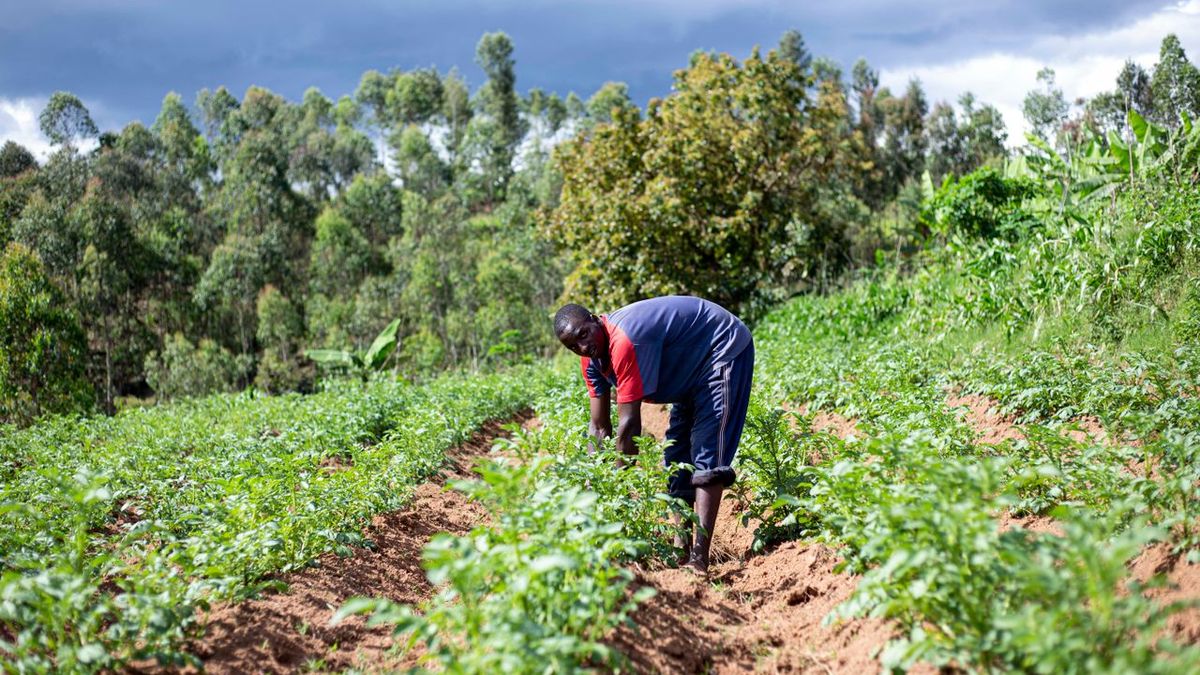
Uganda’s case rests on agronomy rather than infrastructure. It sits on the equator with two rainy seasons and fertile soils, which allow year-round growing without the sharp seasonal gaps that affect higher-latitude origins. Its crop mix is also distinctive. Alongside avocados and ginger, Ugandan exporters ship matoke (green cooking bananas), apple bananas, scotch bonnet peppers, white African eggplant and cocoyam, lines aimed at diaspora and specialist buyers rather than the mainstream vegetable trade Kenya dominates.
“Kenya built its horticulture export industry over decades, and that head start shows in scale and air capacity,” says Kristján Erlingsson, Managing Director of Mashamba, the trading name of Ugandan exporter FFP (U) Ltd.
“We watched Kenya’s rise between the early 2000s and 2010, when a single, prominent exporter grew from four tonnes of perishable exports a week to 500 tonnes, much of it for the UK’s largest supermarket chain, and much of the infrastructure it needed was financed by national development-aid organisations. Uganda’s edge is its climate and the range of crops we grow year round. Match that with a reliable cold chain and consistent quality, and we can compete on the lines that matter most to buyers.”
Read also: Kenya’s Kakuzi six-month profit dips to $2.3M on lower tea and avocado global prices
Obstacles facing Uganda’s horticulture exports
The obstacles come first, though, and most of them are logistical. Entebbe has commissioned a 100,000-tonne cargo centre with cooling facilities, a real step up from the converted hangar it replaced. Even so, it handles a fraction of JKIA’s throughput, offers fewer direct long-haul freighter options, and routes much of its produce through other hubs, which adds time and cost to a trade where hours decide shelf life. For now, the cold-chain depth and flight frequency that Kenyan exporters take for granted remain Uganda’s biggest structural disadvantage.
Set against those constraints, the momentum in Uganda’s horticulture exports is real. The United Kingdom, which sits outside the EU, is the biggest single market for the country’s fresh vegetables, while the European Union absorbed Ugandan fresh produce worth around 58 million euros in 2023, and a widening base of certified, smallholder-backed exporters is working to grow both. Much of the pull comes from African diaspora communities in cities such as London, where matoke, cocoyam and apple bananas are kitchen staples rather than novelties, a segment Kenyan exporters have largely left to others.
The sharper contest is compliance. European and British buyers require produce to meet strict phytosanitary rules and pesticide maximum residue levels, and GLOBALG.A.P certification has become the practical minimum for selling into European supermarkets. Uganda has struggled here. CABI, drawing on EU monitoring data, records more than 780 interceptions of Ugandan produce for harmful organisms between 2015 and 2024, most of them on fresh fruit and vegetables, with pests such as the false codling moth among the culprits. The same body estimates that stronger compliance could unlock up to $150 million in revenue now lost at the border.
“Buyers no longer ask only for volume, they ask where it was grown and how it was handled,” says Betty Kabahenda, Operations Director at Mashamba and the 2017 UEPB Female Exporter of the Year. “Working directly with smallholder farmers lets us trace every consignment and meet the standards the UK and EU now expect. That traceability is where Uganda can stand apart.”
Read also: Post-Uganda elections: 5 sectors ready for a 2026 rebound
Phytosanitary compliance
It is worth clearing up one common confusion. The EU Deforestation Regulation, which dominates trade headlines, applies to seven commodities, cattle, cocoa, coffee, oil palm, rubber, soya and wood, and is being phased in across 2026 and 2027. It does not cover the fresh fruit and vegetables at the centre of this trade. For horticulture exporters in both Uganda and Kenya, the binding constraints remain phytosanitary compliance, residue testing and traceability, not deforestation due diligence.
Uganda is closing part of the gap. Investment in cold storage, round-the-clock inspection at Entebbe and a growing pool of certified exporters all point the same way. Water access, long a historic constraint on year-round commercial volumes, is also easing as the government expands irrigation schemes that still cover only a fraction of the country’s potential.
What still holds the country back is harder to fix at speed: limited air-freight capacity, residue compliance that has to be consistent rather than occasional, and the plain matter of scale, since reliability at volume is what large buyers reward.
The realistic outlook is not Uganda overtaking Kenya, but Uganda carving out a defensible niche in the crops and seasons that play to its strengths, then proving it can ship them reliably and within the rules. Kenya is unlikely to lose its place as the regional benchmark soon. The more useful question is whether East Africa ends up with one dominant horticulture hub or two complementary ones. On current trends, the second looks increasingly plausible.
Analysis By Eric Potgieter. Eric works for Mashamba (FFP (U) Ltd), a Ugandan fresh-produce airfreight exporter, and writes on Uganda’s horticulture export sector.