




- Kenya has awarded $1.2bn JKIA modernization contract to China’s CRBC, with the deal signed just weeks after the tender closed, but transparency questions linger over the procurement process.
- The project will expand JKIA from 7.5 million to 22 million annual passengers, with a new 10-million-capacity terminal and rehabilitation of existing facilities, positioning Nairobi to fend off regional rivals Ethiopia, Rwanda and Tanzania.
- Consumer lobby COFEK has filed a constitutional petition challenging the procurement’s transparency and public participation, leaving the government’s ambitious 36-month construction schedule hanging in the balance despite assurances of full regulatory compliance.
Kenya has formally awarded the KSh154.2 billion ($1.2 billion) contract to modernise the Jomo Kenyatta International Airport (JKIA) to China Road and Bridge Corporation (CRBC), in a landmark infrastructure deal that aims to nearly triple the airport’s passenger capacity and secure Nairobi’s status as East Africa’s premier aviation hub.
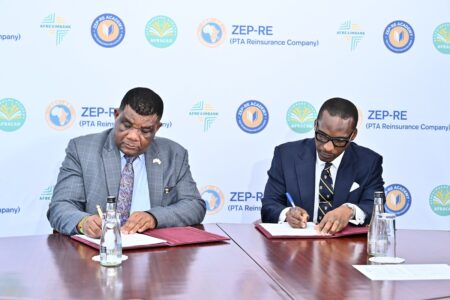
Transport Cabinet Secretary Davis Chirchir confirmed on Tuesday that he witnessed the signing of the agreement between Aviation Principal Secretary Teresia Mbaika and CRBC General Manager Yu Xiaodong, describing it as “a major national infrastructure investment”.
The contract follows the completion of the JKIA Master Plan in February and an open international tender process that closed on May 14, drawing more than 40 firms to a pre-bid conference in April.
The expansion programme, which is expected to take 36 months, will see the construction of a new terminal capable of handling 10 million passengers annually, alongside rehabilitation of existing terminals that will raise their capacity from 7.5 million to 12 million.
New forecast of 22 million passengers is designed to accommodate forecast growth through 2045, as JKIA’s current infrastructure buckles under 8.8 million passengers handled in 2025, exceeding its design capacity of 8 million.
A new runway is planned by 2029, increasing aircraft movements from 14 to 63 per hour, while airfield upgrades, taxiways, utility networks and access roads form part of the comprehensive overhaul.
Read also: Why Kenya must act now to revive JKIA’s Greenfield Terminal
JKIA upgrade faces financing and transparency concerns
The government intends to fund the project through a hybrid model: approximately KSh46 billion in equity, partly drawn from the National Infrastructure Fund, with the remaining KSh107 billion raised through borrowing.
Already, the Trade Development Bank and Africa Finance Corporation have been appointed as lead arrangers to structure the financing and crowd in development finance institutions and commercial lenders.
However, the contract signing comes amid mounting criticism over the procurement’s opacity. The Consumer Federation of Kenya (COFEK) has filed a constitutional petition, challenging the process and raising questions over “transparency, procurement procedures, and public participation”. The High Court certified the case as urgent on June 19 and has ordered respondents to file responses ahead of an inter partes hearing.
The government has previously been forced to deny media reports linking controversial Zimbabwean businessman Wicknell Chivayo and his company to the tender. Chirchir categorically stated last week that the firm in question “did not participate in this procurement process as a bidder and has no role, involvement or association whatsoever with this project”. He also dismissed claims the contract would cost up to KSh385 billion, insisting the award would not exceed KSh154.2 billion.

Read also: Kenyan aviation workers call off strike amid JKIA lease talks with Adani Group
Regional competition and strategic stakes
Kenya is racing to maintain its aviation dominance against aggressive investments by regional rivals. Ethiopia, Rwanda and Tanzania have all undertaken major airport upgrades in recent years, with Addis Ababa’s Bole International Airport expanding to capture rising transit traffic.
For Nairobi, the stakes are high. At the moment, JKIA serves as the primary gateway for Kenya Airways and handles a critical share of East Africa’s passenger and cargo traffic, including fresh produce exports to Europe.
The project marks a significant victory for CRBC, China’s state-owned infrastructure giant, which now takes on the role previously held by scandal-ridden Adani Group of India before that deal was cancelled last year following the indictment of its founder in the United States amid protests in Kenya.
Chirchir noted the Ministry’s commitment to “transparency, accountability and strict adherence to all required standards”. But with a court challenge pending and civil society groups threatening further legal action, the government’s ability to deliver this strategic asset on schedule remains uncertain.
Read also: AfDB lead arranger in $10Bn financing for new Ethiopian Airlines’ mega airport