



- Kenya’s plant by KenGen and China’s Kaishan Group will produce between 200,000 to 300,000 tonnes of green fertilizer per year.
- It is forecast to avoid more than 600,000 tonnes of carbon dioxide emissions per year and enhance KenGen’s annual earnings by about $13 million.
- Kenya’s green fertilizer factory will also make the East African country the first nation in Africa to industrialize fertilizer production using renewable energy.
The race to tap green sources of energy in Africa has intensified with Kenya’s KenGen partnering with China’s Kaishan Group to tap geothermal power for the production of green fertilizer.
A week ago, energy producer KenGen entered into a steam purchase agreement with Kaishan Group to harness geothermal power at the Ol Karia site in Naivasha for the production of green fertilizer.
The investment will harness geothermal power to manufacture green ammonia and fertilizer, helping Kenya’s agriculture sector to cut on costs for the key farm input which is largely sourced from overseas market.
The deal shows that KenGen will supply steam from the Olkaria geothermal field to the 165-MW facility to be built and operated by Kaishan through local subsidiary Kaisan Terra Green Ammonia Ltd for a span of 30 years.
Read also: Going green: $1.5 million Power-up for Zambia’s GreenCo Power Services
2000 jobs from green fertilizer plant
Projections show that the factory, which is set to support 2000 direct and indirect jobs will produce between 200,000 to 300,000 tonnes of green fertilizer per year. It is forecast to avoid more than 600,000 tonnes of carbon dioxide emissions per year and enhance KenGen‘s annual earnings by about $13 million.
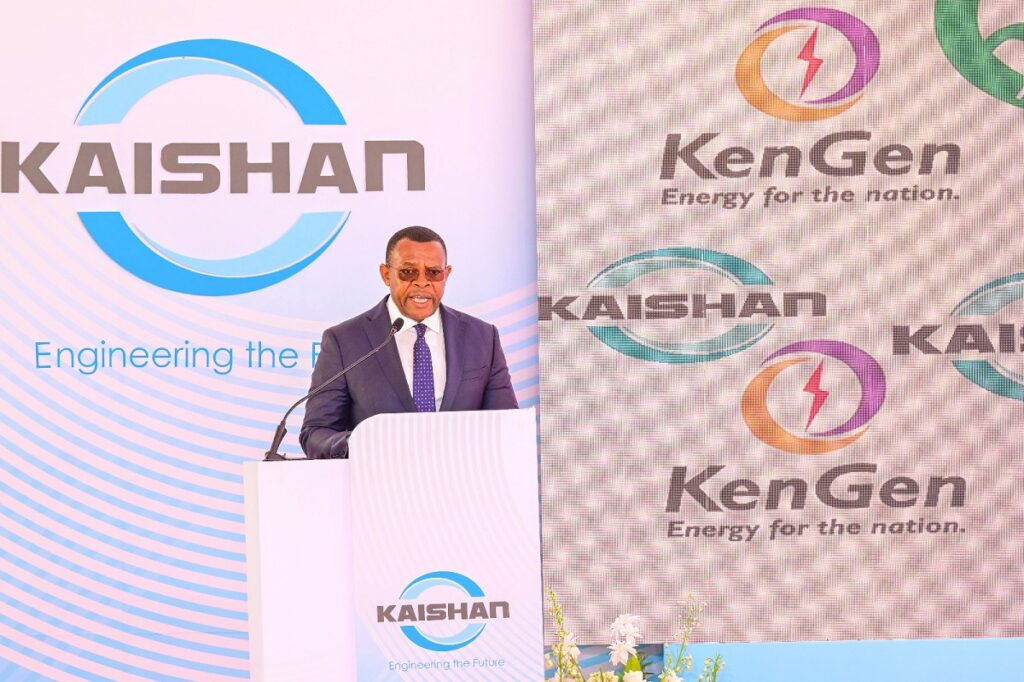
“This project shows that Kenya is not just a leading producer and consumer of clean energy, we are now going further to add value and generate prosperity from it,” said President William Ruto during the groundbreaking ceremony on Monday.
“Our agriculture is highly dependent on fertilizer prices with high prices leading to decline in maize output nationally. As we know, maize is the staple crop that feeds millions of Kenyans. That is why domestic, competitively priced fertilizer matters not just for commerce, but for food security for our people.”
Over and above stabilizing the prices of fertilizer, the president noted that the project will generate jobs across construction, operations, maintenance, supply chain, and other services within the country. It provides a career pipeline for electricians, engineers, plant operators, lab technicians, and local suppliers.
Kenya’s green fertilizer factory will also make the East African country the first nation in Africa to industrialize fertilizer production using renewable energy.
“This project shows that Kenya is not just a leading producer and consumer of clean energy — we are now going further to add value and generate prosperity from it. By harnessing our geothermal wealth, we are lowering fertilizer costs, supporting our farmers, and contributing to global climate goals,” noted Dr. Ruto.
Cost of fertilizer
The President added that the cost of fertilizer directly impact agriculture, particularly in maize farming, which is a staple crop and pillar of the economy.
“Our agriculture is highly dependent on fertilizer prices. High costs lead to reduced maize output, which affects millions of Kenyans. Domestic, competitively priced fertilizer is vital not just for commerce but for food security,” he added.
The Olkaria Green Fertilizer Project aligns with the government’s Bottom-Up Economic Transformation Agenda (BETA), which focuses on local value addition, job creation, and food system resilience. It also advances the Africa Green Industrialization Initiative launched at COP28 to accelerate green manufacturing on the continent.
KenGen CEO Eng. Peter Njenga hailed the partnership as a “milestone in clean industrialization,” saying geothermal energy is the bridge between Africa’s green potential and its manufacturing future.
“Kenya’s leadership in geothermal power gives it a unique advantage in pioneering low-carbon manufacturing models for the Global South,” he said.
Read also: Rwanda geothermal energy sector sets its sight on a path to diversification