

Trending
- Africa’s Green Economy Summit 2026 readies pipeline of investment-ready green ventures
- East Africa banks on youth-led innovation to transform food systems sector
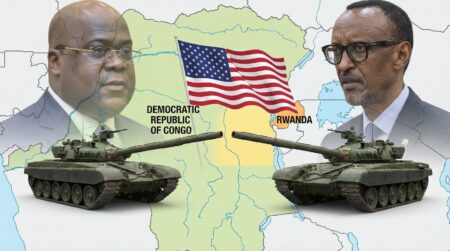
- The Washington Accords and Rwanda DRC Peace Deal
- Binance Junior, a crypto savings account targeting children and teens debuts in Africa
- African Union Agenda 2063 and the Conflicts Threatening “The Africa We Want”
- New HIV prevention drug is out — can ravaged African nations afford to miss it?
- From banking to supply chains, here’s how blockchain is powering lives across Africa
- Modern railways system sparks fresh drive in Tanzania’s economic ambitions


South Africa has adopted a number of measures aimed at boosting the country’s critical mineral industry. In January 2023, mining production experienced its twelfth…
The rapid snowballing of Africa’s rare earths metal production is…
Africa has been hailed as the next frontier in the…
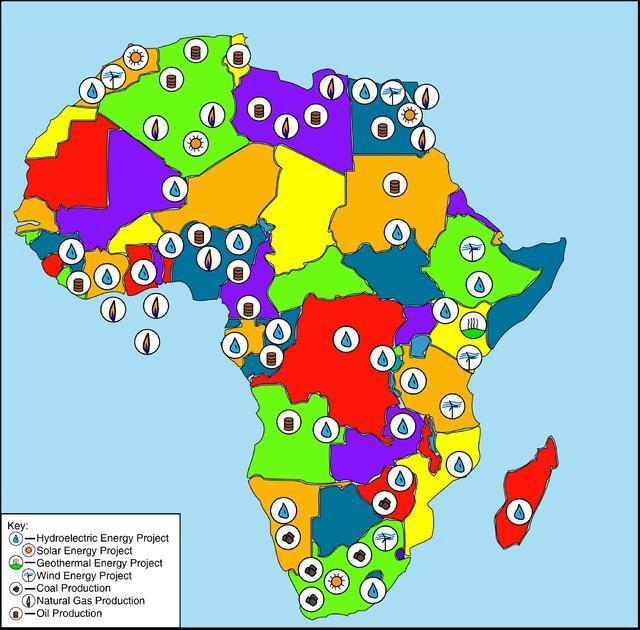
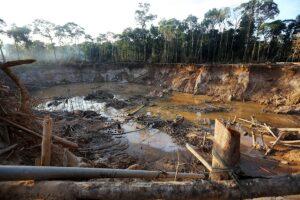
Anglo American, the mining behemoth took the decision on May 7th, 2021 to divest from…
Has Africa stumbled upon an environmental apocalypse? The numerous natural disasters that have descended upon the continent hitherto—from the plague of desert locusts that have ambushed the Horn of Africa, tropical storms, floods across Eastern and Central Africa, severe droughts and heat waves to massive cyclones whose devastating effects are still felt across Southern Africa. The aftermath is a trail of death and destruction, threatening to erode hard-won development that most African countries have struggled to achieve, inflicting cascading economic consequences. Loss of lives, displacement of people, sources of income compromised, destruction of infrastructure and numerous development projects have been the ill-fated victims across the continent and have succumbed, in the wake of these natural disasters, to such events that have all stemmed from climate change.
The African continent has been endowed with about 30 per cent of the world’s total mineral reserves with over 60 different types of minerals. If more geological surveys are conducted systematically there is potential to discover even more extensive tracts of mineral deposits.
Minerals are vital inputs in the production of a broad range of consumer goods, infrastructure and agricultural materials and they are also used in making transport, communication and energy applications. Minerals are a necessity in the industrialisation of many nations across the globe.
With a favorable geographical position on the westernmost point of Africa, an abundance of natural…
The Energy sector has received substantial capital commitments. In the course of the continent’s growth,…
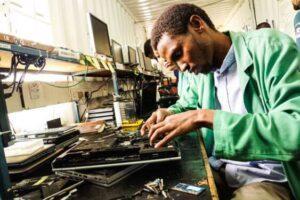
According to the Global E-Waste Monitor Report, in 2019 the world generated 53.6 million metric tonnes (Mt) of electronic waste (e-waste), and only 17.4 per cent was recycled through appropriate channels. Africa in particular lacks formal governance to support e-waste management.
Households in Africa generated 2.9 Mt of e-waste in 2019, of which only 0.9 per cent was reported to be collected and recycled by the formal sector. Discarded equipment such as phones, laptops, fridges, sensors and televisions contain substances that pose serious environmental and public health risks, particularly if treated inadequately.