
Trending
- AI’s Dual Capacity and a Strategic Opportunity for African Peace and Security
- How African economies dealt with the 2025 debt maturity wall
- Africa’s Green Economy Summit 2026 readies pipeline of investment-ready green ventures
- East Africa banks on youth-led innovation to transform food systems sector
- The Washington Accords and Rwanda DRC Peace Deal
- Binance Junior, a crypto savings account targeting children and teens debuts in Africa
- African Union Agenda 2063 and the Conflicts Threatening “The Africa We Want”
- New HIV prevention drug is out — can ravaged African nations afford to miss it?


Project Management Institute’s recent Talent Gap report shows 2.3 million…

Vodafone Group developed a business tailor-made to deal with Africa’s…
Much of the talk at the moment, and nearly always, is where we should invest in a world of recession, low-interest rates, unpredictable markets and a challenging socio-political climate. As open borders in East Africa close, open, close and re-open again and as Kenya prepares for yet another Covid-19 lock-down our own region is particularly challenging.
I am a member of several international investment groups and so I am fortunate to hear the views, perspectives and experiences of many clever and visionary investors around the world. I have written here before about ESG investing – Environmental, Social Impact and Governance – the “do’s” of impact invest but I haven’t written about the “Don’ts”. And it strikes me that we should be talking just as much, perhaps even more, about where not to invest at the moment and in the future.

Africa has experienced marginalisation and social exclusion since gaining independence from its colonisers. Among the policies developed during the colonisation era was the exclusion of Africans from any level of government, or if they were allowed to join, they joined without authority. This kind of racial discrimination is still being experienced in global workspaces to date. Africa has remained stagnant and regressed in terms of foreign trade, investment, per capita income, and other economic growth measures to date due to the effects of colonisation.
Poor governance and corruption, amongst other factors, have continued to repress Africa’s growth; however, more governments are taking the initiative to improve policies that promote education and health outcomes for their people, thereby reducing social exclusion and marginalisation.

The AfCFTA gives Africa an opportunity to confront its trade and economic development challenges such as market fragmentation, small-scale national economies, a narrow export base, caused by shallow manufacturing capacity, and underdeveloped industrial regional value chains.
AfCFTA is one of the tools for making a fundamental structural transformation for Africa’s economy and placing it on the path of long-term industrial development. AfCFTA will also strengthen the continent’s bargaining position when engaging in trade negotiations with economic powers such as China and the European Union. This implies that trade will become more favourable for African products, and now when Africa partners with the likes of China and other countries, focus should be on capital supply as well as industrialisation.

Africa is music and music in Africa. The music and entertainment industry in Africa is…
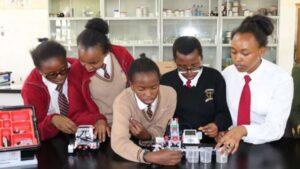
Our world has changed, and we need to adapt accordingly. Science is all around us and technology is expanding faster than we could have imagined. In the past few decades, STEM occupations have risen, with STEM degree holders earning higher incomes even if they are not employed in STEM-related professions. With a lot of professions becoming redundant, it is crucial to make informed decisions to stay ahead of the game.
Some of the world’s leading economies have significantly invested in STEM, and this has had a direct impact on the sustainable growth and stability of their economies. Countries that are lagging in the STEM revolution end up being high importers of new technologies, with the export countries being the dominant players on the economic front.
STEM education creates active thinkers and not passive observers. The early introduction of such an education system will encourage innovative thinkers that will be relevant in the future. As STEM takes a hands-on and minds-on learning approach, children find it easier to grasp concepts through practical participation as compared to the theoretic approach to learning.
Globalization has encouraged open trade between continents. In a bid to gain economic dominance, the…