Trending
- Silicon Valley’s Tim Draper backs Nairobi blockchain festival, sees Africa as next digital frontier
- Dangote breaks ground on $16bn Lamu refinery as East Africa seeks fuel independence
- Gulf and African states meet in Dar to rewrite rules of labour migration
- African governments drive new forest finance progress as global report warns funding globally must scale faster
- Fine Spinners eyes Kenya’s Agoa-backed apparel supply chain with $5m plant
- Why young Kenyan investors need to stop treating the stock market like a betting slip
- Tanzania tax reforms mandate VAT refunds to under 30 days
- In New York, world leaders unveil plan to overhaul global health architecture


Browsing: Africa

According to John Howkins, the orange economy incorporates industries whose goods and services arise from intellectual property. These include research and development, radio and TV, visual and performing arts, publishing, advertising, music, software, gaming, design, film, crafts, architecture, fashion, and design. Artists, cultural non-profits, and creative businesses can produce and disseminate goods and services that generate jobs, revenue, and quality of life.
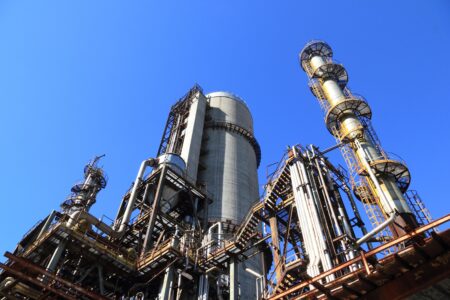
Africa’s oil and gas industry is entering a new era. The world is looking to fast-track its transition from fossil fuels. Consequently, this puts pressure on the continent’s oil and gas-producing nations. Most producing countries remain highly exposed to the global energy transition since their economies depend on oil and gas revenues. Similarly, their oil and gas reserves cost more to produce and, on average, remain more carbon-intensive than those from other regions.
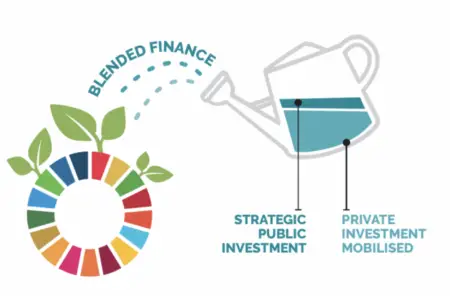
With its immense potential and vast resources, Africa stands at a critical point in its economic growth path. While the continent has promising economic prospects, it also has significant challenges that have impeded growth. A concept known as “blended finance” has gained popularity in recent years as a viable answer to assist governments in overcoming economic challenges. As a result, it is vital to look into what blended finance is, how African economies can leverage its benefits and its crucial role in supporting sustained growth across the continent.
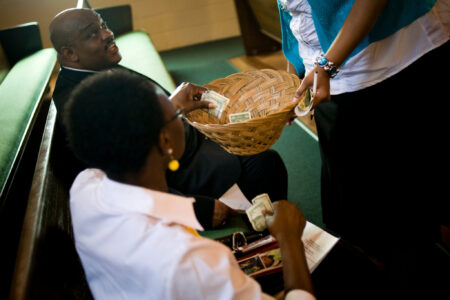
Africa is a continent of diverse religions, cultures, and intricate histories. Christianity is one of the major faiths that has shaped the lives and identities of millions of Africans. The continent has also evolved beyond its spiritual dimension to encompass a thriving business aspect.
Numerous churches and religious organizations have ventured into various economic activities, generating income and wielding significant influence. Consequently, some churches have become mega-churches with thousands of members and millions of dollars in revenue. They often own businesses such as schools, hospitals, media outlets, and real estate investments.
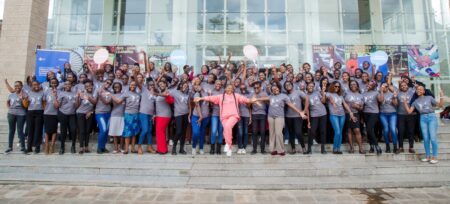
The demand for cybersecurity skills in Africa has increased by 35% over the past year. Africa has a significant digital…

According to Investopedia, a gig economy is a labour market mainly reliant on temporary and part-time work filled by independent contractors and freelancers rather than full-time permanent employees. A gig economy produces cheaper, more efficient services for those willing to use them.
A gig is a broad category that includes a wide range of positions. Work can range from cab driving or restaurant delivery to writing code or freelance essays. Instead of tenure-track or tenured professors, adjunct and part-time professors are contracted employees. By recruiting more adjunct and part-time teachers, colleges and universities can save costs while also better-matching instructors to academic needs.
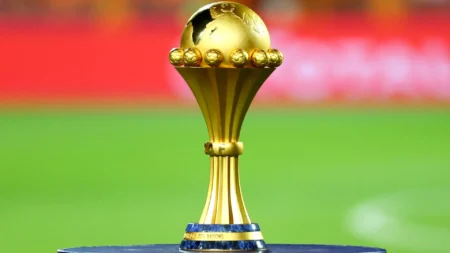
The Confederation of African Football (CAF) has selected Kenya, Tanzania, and Uganda to host the 2027 Africa Cup of Nations (AFCON) over bids from Morocco, Algeria, Senegal, Botswana, and Egypt. The East Africa joint bid, commonly called the “Pamoja AFCON Bid,” has won the hosting rights for the 2027 AFCON as Morocco takes the rights for the 2025 showpiece.
CAF president Patrice Motsepe announced the news on Wednesday morning, 27 September, shortly after the body held an executive committee meeting in its headquarters in Cairo, Egypt. Recommendations from several nations boosted the East Africa Pamoja AFCON Bid. In a move that will elate East African sports enthusiasts, the CAF Executive Committee chose the Pamoja Afcon Bid.
A new commentary from the International Energy Agency (IEA) on the upcoming World Energy Outlook 2023 has revealed that despite improvements, global access to electricity still needs to catch up to the pace required to meet SDG 7. The commentary supports discussions from the recently concluded United Nations’ SDG Summit on 18-19 September 2023. It is also part of the IEA’s support of the first global stocktake of the Paris Agreement, which will be finalized in the run-up to COP28, the next UN Climate Change Conference, at the end of 2023.
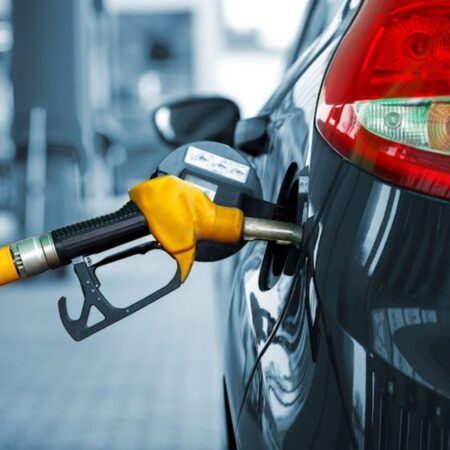
Russia’s invasion of Ukraine in February 2022 threw oil and gas markets into disarray. Consequently, the world experienced the first real global energy crisis during the uneven economic recovery from the COVID-19 epidemic. Russia’s inclusion in the OPEC+ group has hampered international attempts to manage the situation. This has made it harder to handle the significant inflationary effects of rising global fuel prices, particularly in developing nations.
Global fuel prices have risen exponentially in the last few months. The rise is hugely significant, as it has seriously aggravated the global cost-of-living crisis. African economies have particularly been on the receiving end. The continent has suffered from disrupted supply chains and a slowdown in the global economic outlook. Thus, rising energy costs complicate matters even further.
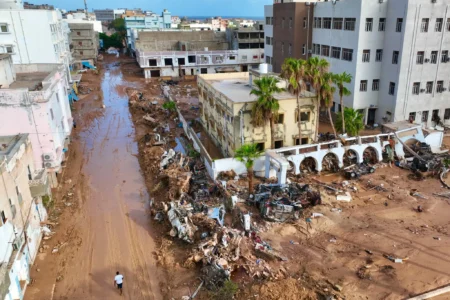
The eastern Libyan city of Derna has gone into mourning after catastrophic flooding that left about 10,000 people missing. Rescue teams have embarked on recovery efforts for the remains of loved ones as the scale of the disaster unfolds. Media reports say authorities estimate that close to 2,000 people have lost their lives in the Derna area alone.
The Libyan Government of National Unity (GNU) has issued a heartbreaking report stating that the entire road and bridge network in Derna has collapsed. This now calls for an estimated $67 million for reconstruction.