
Browsing: Samia

Tanzania NGOs
  • Government of Tanzania launches fund for NGOs.
  • Tanzania NGOs urged to wean off donor dependency. 
  • NGOs encouraged to seek alternative fundraising solutions.

Players across Tanzania NGOs segment can breathe a sigh of relief following the government’s decision to establish a fund to support non-state actors in the country at a time when organizations are grappling with thinning donor support.

Last week, the government of Tanzania launched a National Committee tasked with coordinating the establishment of the Non-Governmental Organisations (NGOs) Basket Fund (NBF), an initiative that is wired to support entities in the segment during the current period of reduced donor funding.

The announcement was made at the annual NGOs forum held in the country’s capital Dodoma. Reading the Vice President’s speech at the ceremony, Minister for Community Development, Gender, Women and Special Groups, Dr. Dorothy Gwajima challenged the committee to carry out its duties with utmost diligence.

“We expect the …

Tanzania Sugar
  • Tanzania sugar output increasing.
  • New factory launch to bridge demand gap.
  • President Samia urges sustainability in sector.

The Tanzania sugar industry is experiencing growth, with production nearing self-sufficiency but a gap still exists between domestic demand and production. According to sector authorities, the country’s annual sugar demand is in excess of 600,000 tonnes, while production is nearing this demand, but it is still not quite there.

“The government has a target to increase production to 756,000 tonnes by the end of 2025 to meet both local and industrial needs, as well as for export,” reads a press release shared during a recent opening of yet another sugar factory.

The factory launch was graced by President Samia Suluhu Hassan, who officially opened the multi-billion Mkulazi Sugar Factory at Mbigiri Estate in Kilosa District, Morogoro Region.

In her comments about the Tanzania sugar industry, the president admitted that there have been what …

Tanzania Vision 2050
  • Tanzania President Samia launches Vision 2050, an ambitious growth plan that seeks to make the country a $1 trillion economy in the next 25 years.
  • Tanzania aspires for higher middle income status riding on agriculture, tourism, mining and blue economy.
  • President urges legal reforms to align with Vision 2050.

Tanzania President Samia Suluhu has launched the country’s Vision 2050, which envisions the country achieving higher middle income status in the next 25 years. This national growth blueprint aims at transforming the country into an upper-middle income with a projected economy of $1 trillion.

The ambitious strategy centres on nine key sectors: agriculture, tourism, industry, construction, mining, the blue economy, sports and creativity, finance and services.

According to the president, these sectors were identified for their potential to generate employment, increase exports, stimulate other sectors, add value to agricultural produce and enhance national income.

President Samia stressed that achieving the …

commercial agriculture Tanzania
  • Tanzania is intensifying efforts to shift from subsistence to commercial agriculture by tripling its agriculture budget and investing in new grain storage infrastructure.
  • Recently, President Samia Suluhu Hassan launched the construction of 28 rural warehouses and announced plans to boost national grain storage capacity to 3 million tonnes by 2030 to address food insecurity and reduce post-harvest losses.
  • With an anticipated bumper maize harvest, Tanzania is also engaging regional trade opportunities while tightening export restrictions to protect local farmers and stabilize prices.

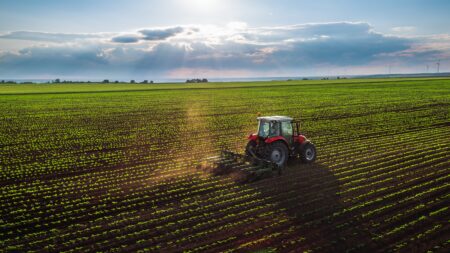
Tanzania has reiterated its commitment to transitioning from subsistence farming to commercial agriculture. To achieve this ambitious goal, the country is scaling up its agricultural industry and is already anticipating a bumper harvest this season.

In line with this vision, Tanzania has significantly increased the budget for the Ministry of Agriculture. Notably, the ministry’s budget has tripled over the past three years—from 460 billion shillings (US$172 million) in …

foreign investors
  • In their letter dated June 26th, 2024, High Commissioners and Ambassadors from 10 countries expressed their dissatisfaction with how the Tanzania Revenue Authority (TRA) handled taxation issues related to investors from their countries.
  • The French Embassy acknowledges the contribution to attracting and expanding quality international investment into Tanzania.
  • Tanzania has attracted a stock of over $3.87 billion of investments from India, with a total of 675 projects and over 61,000 jobs delivered, making India one of the Top 5 investors in India.

Foreign Investors Challenges in Tanzania

“We are writing to express our concerns regarding both recent and ongoing challenges faced by foreign investors in Tanzania,” said a letter by a group of Ambassadors representing the United States, the United Kingdom, the Kingdom of Netherlands, France, Belgium, Canada, Korea, Sweden and Germany obtained by The Exchange, in part.

According to the letter addressed to January Makamba, Minister of Foreign Affairs …

clean cooking tanzania
  • Firewood is responsible for killing at least 33,000 people yearly in Tanzania.
  • A person who is exposed to firewood smoke for an hour has similar health risks as a person who smokes between 200 and 300 cigarettes.
  • Tanzania is estimated to lose nearly 470,000 hectares of forest each year due to the rampant acts of cutting down trees for charcoal and firewood.

The use of clean cooking energy is no longer a luxurious thing. It is a necessity, Tanzania’s President Samia Suluhu Hassan noted recently during the launch of the 10-year National Clean Cooking Strategy in Dar es Salaam. However, this assertion comes at a precedented moment when women such as Magreth are seeking alternative energy.

“We ask President Samia to help us in any way possible with alternative ways of cooking such as gas,” says Magreth Ngole, a resident of Njombe and a frequent user of firewood for cooking

Tanzania railway
  • New investment in Tanzania’s railways sector is expected to directly benefit nearly 900,000 people and indirectly impact an estimated 3.5 million.
  • Tanzania operates two railway systems, totaling 3,682 km in length.


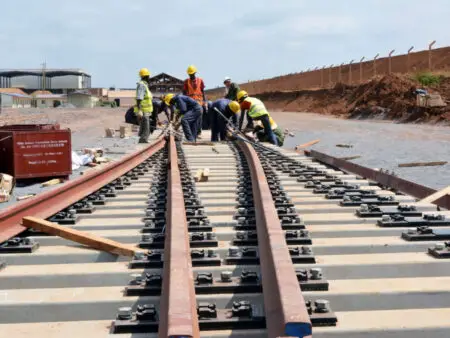
Tanzania railway sector is poised for immense growth as the World Bank poured significant funding by approving $200 million in financing from the International Development Association (IDA) which is a part of the bank.


According to available information from the World Bank statement made on Friday, the bank said the financing for the second phase of the Tanzania Intermodal and Rail Development Project (TIRP-2) will improve safety, climate resilience, and operational efficiency along this railway segment.


Read also: AfDB approves $696.4M financing for Tanzania-Burundi-DRC railway project

Tanzania railway plan anchored on Dar- Morogoro SGR

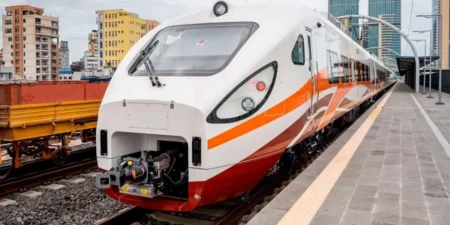
The funding comes a few weeks after Tanzania Railways Corporation (TRC) began its inaugural trial journey of the electric Standard Gauge Railway (SGR) train

SAGCOT
  • By 2030, partners of the Southern Agricultural Growth Corridor of Tanzania (SAGCOT) aim to cultivate 350,000 hectares of land for profitable production.
  • Using the SAGCOT model, Tanzania aims to achieve self-sufficiency in food production to feed Africa by the same year.
  • Agriculture in Tanzania currently contributes nearly 30 percent of the country’s GDP and employs over three-quarters of the nation’s workforce..

The Southern Agricultural Growth Corridor of Tanzania (SAGCOT) has achieved significant success over the last decade since its establishment in 2010. Tasked with promoting inclusive, sustainable, and viable agricultural value chains in southern Tanzania, the organization has notably enhanced agricultural productivity.

SAGCOT has established production clusters, including Ihemi, Mbarali, and Kilombero, in southern and Morogoro. Through these agricultural clusters, SAGCOT has successfully increased food production, developed value chains, and elevated household income for farmers.

“I am truly impressed with the work of the SAGCOT Centre Limited and its …

Tanzania economy
  • Tanzania is significantly scaling up regional integration through cross-border trade.
  • The East African country is also banking on a rebound in the tourism industry with receipts doubling to $2.7 billion in February 2023.
  • Overall the number of investments powering Tanzania economy increased by 128 percent by February 2023.

Tanzania is poised to emerge as a premier investment destination not only in East Africa but across the entire continent, driven by its robust economic growth. The recent International Monetary Fund (IMF) report underscores this positive trajectory, indicating that the nation's GDP is expected to grow from the current 5.2 per cent to an impressive 6.1 per cent next year.

Remarkably, Tanzania's economy is resilient, overcoming the challenges posed by the global COVID-19 pandemic that hindered growth in various regions. The World Bank's economic overview for Tanzania reflects a notable GDP growth rate of 4.6 per cent in 2022, with expectations of…

Mozambique-Tanzania Road
  • The Negomano-Roma Road was financed by the African Development Bank.
  • President Nyusi finds the road reminiscent of the two nations’ Pan-Africanism aspirations.
  • Road will facilitate residents with transportation services for health, education and local economic needs.

Mozambique President Filipe Nyusi has commissioned a critical cross-border link road, Negomano-Roma connection that was financed by the African Development Bank.

The road, which stands to be a key link for intensifying regional integration with Tanzania, stretches from the nation’s northern province. At the moment, the road is facilitating residents with decent transportation services for health, education and local economic needs.

Mozambique-Tanzania Pan-Africanism aspirations

Constructed under 42 months, and with the inclusion of 417 local workers under the framework of promotion and inclusion of local content, President Nyusi finds the road reminiscent of the two nations’ Pan-Africanism aspirations.

“The road is a great gain for the viability and maximization of regional integration. It is …