


Trending
- Africa Blockchain Festival ignites a new dawn for African innovation
- Africa’s gaming market set to quadruple to $4 billion, defying global slowdown
- Tanzania throws its bond market wide open to the global investors
- VALR sets sights on East Africa as blockchain moves deeper into Africa’s financial system
- The cost of the data gap: Why Kenya’s lenders can’t afford to miss the full picture
- Tanzania takes EAC labour migration helm as regional rules face overhaul
- 2026 is turning out as a defining year in geopolitics, but for whom?
- Saudi Arabia and Tanzania pledge to deepen bilateral trade ties


Browsing: Trade in Africa
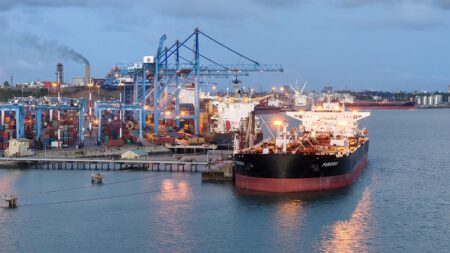
Africa’s trade corridors, such as the Abidjan–Lagos Coastal Corridor, the Northern Corridor from Mombasa, and the Central Corridor from Dar…

· Public-private partnerships (PPPs) have a critical role in Africa, providing not only the systems but also the security…
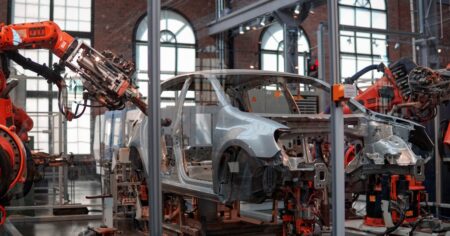
Four feasible value chains, namely pharmaceuticals, cars, cotton apparel and baby food, could drive intra-Africa trade A new report said…
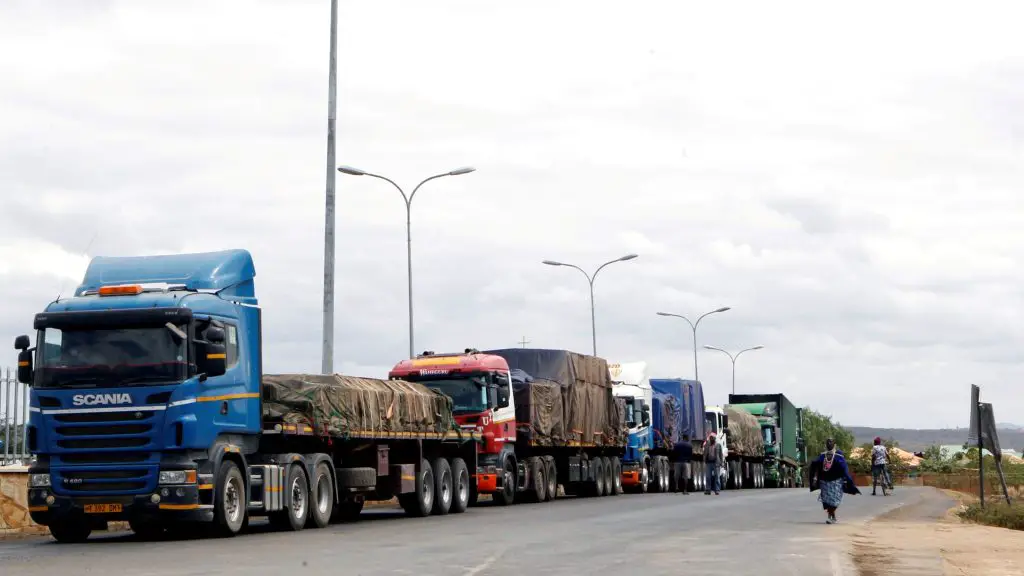
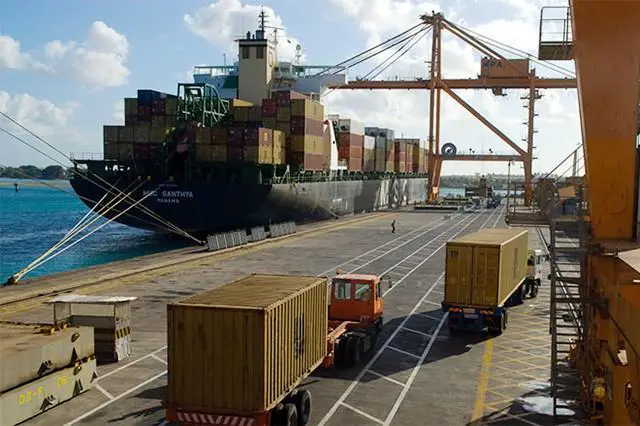
The difficulty of transferring commodities throughout Africa is not new to the continent. It is currently a key impediment to the AfCFTA’s prospects, especially in building regional industrial supply chain clusters. Africa’s massive infrastructure deficit has hindered regional trade and economic integration for decades, notably in transportation and supply chain fragmentation.
Some parts of the continent, specifically areas surrounding East African nations, do far better in cross-border movement and trade. However, most African countries fare poorly on metrics such as cross-border clearance processes. According to the World Bank’s Logistics Performance Index, the regions also struggle with trade quality, infrastructure, inconsistent tax regimes, and consignment trace and track techniques.
Digitalisation in Africa’s logistics industry will address some of these difficulties. Furthermore, the development of digital logistics startups has aided in the facilitation of connection, which is critical to the movement of commodities within the area and across borders.
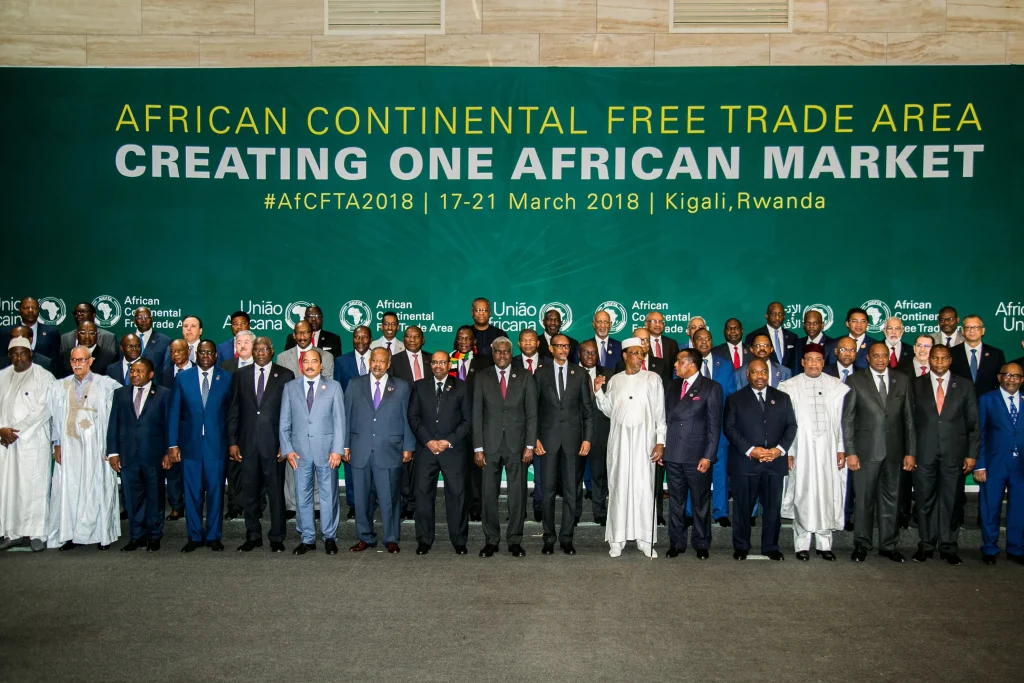
It is critical to strengthen a professional, independent supervision secretariat to make the AfCFTA agreement’s promise a reality. A strong secretariat can assist states in developing strong domestic institutions to administer, monitor, and enforce the AfCFTA. The moment for change has arrived. The conventional development models have failed Africa. The AfCFTA, on the other hand, signifies that Africa is open for business.
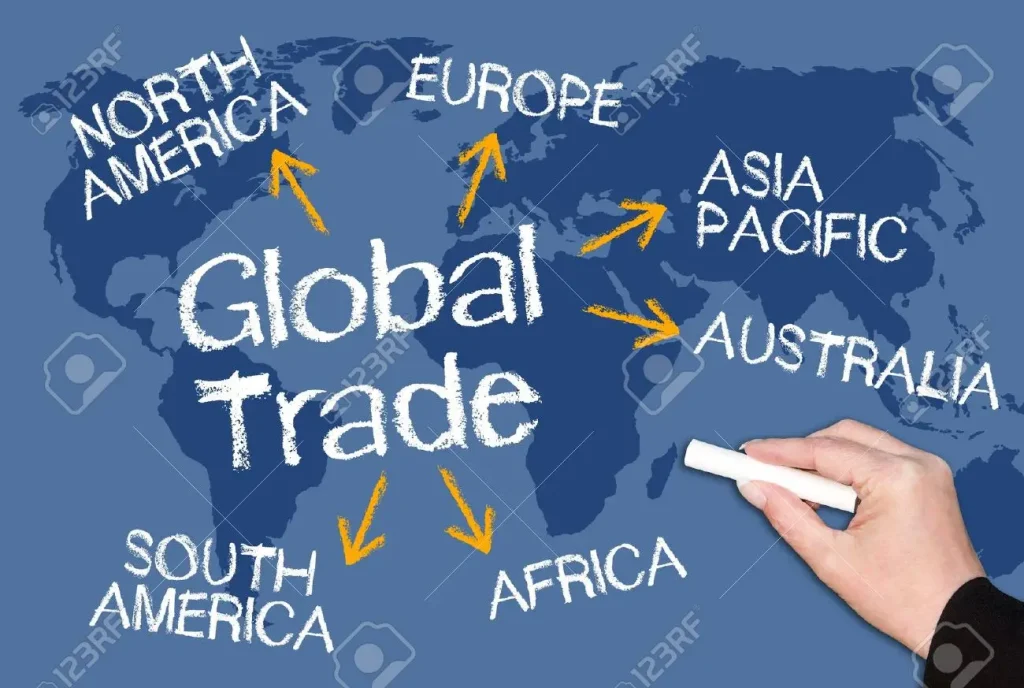
Nations launched the AfCFTA as one of the actions made to support more extensive intra-African trade. The AfCFTA aspires to establish a unified continental market for goods and services. The agreement seeks to harmonise the continent’s various trade liberalization procedures and promote regional integration. Each African nation is a member of at least one of the continent’s approximately 30 bilateral or regional trade agreements.
Africa suffers from marginalization in the global trade system. Nevertheless, the African Regional Trade Agreements heralded a new age of economic integration with significant trade creation impacts. The path to free trade poses several significant obstacles and concerns that African governments must solve.
A mineral-rich continent, with a fast-growing economic potential and a considerable population stands a chance to become a predominant global hub for trade and investment. Africa’s growth potential has been mainly driven by a significant surge in investment, as indicated by the African Development Bank. As opposed to consumption expenditure driving economic growth, industry players and governments have realised the long-term benefits of investment to the growth of African economies. A longevity approach to a sustained growth of the African continent as a whole is the thrust of Agenda 2063 of the African Union, propelled by the African Continental Free Trade Area (AfCFTA) agreement.
The US and China, two of the world’s biggest superpowers, are currently in the midst of a trade war. The…
Africa is great and has the potential to be greater—economically. The youngest continent in the world stands to garner billions…