
Trending
- African governments drive new forest finance progress as global report warns funding globally must scale faster
- Fine Spinners eyes Kenya’s Agoa-backed apparel supply chain with $5m plant
- Why young Kenyan investors need to stop treating the stock market like a betting slip
- Tanzania tax reforms mandate VAT refunds to under 30 days
- In New York, world leaders unveil plan to overhaul global health architecture
- Minisend grows Kenya presence as official payment partner of Africa Blockchain Festival 2026
- UN resolution challenges world maps that make Africa look smaller
- Zimbabwe edges closer to arrears payment, debt restructuring and reset of ties with IMF


Browsing: premium
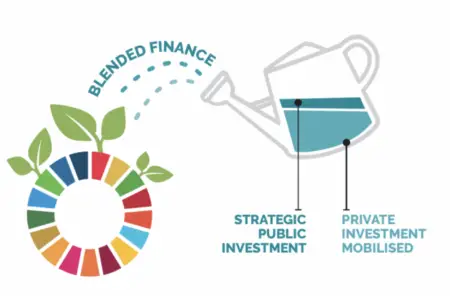
With its immense potential and vast resources, Africa stands at a critical point in its economic growth path. While the continent has promising economic prospects, it also has significant challenges that have impeded growth. A concept known as “blended finance” has gained popularity in recent years as a viable answer to assist governments in overcoming economic challenges. As a result, it is vital to look into what blended finance is, how African economies can leverage its benefits and its crucial role in supporting sustained growth across the continent.
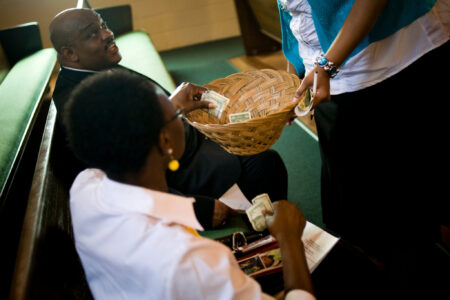
Africa is a continent of diverse religions, cultures, and intricate histories. Christianity is one of the major faiths that has shaped the lives and identities of millions of Africans. The continent has also evolved beyond its spiritual dimension to encompass a thriving business aspect.
Numerous churches and religious organizations have ventured into various economic activities, generating income and wielding significant influence. Consequently, some churches have become mega-churches with thousands of members and millions of dollars in revenue. They often own businesses such as schools, hospitals, media outlets, and real estate investments.
Uganda has issued first Islamic Banking License after a 20-year wait. On its part, Kenya has issued the first Islamic…

Egypt and Nigeria markets remain the top targets of international hotel chains. New hotels’ pipeline in sub-Saharan Africa has gone…
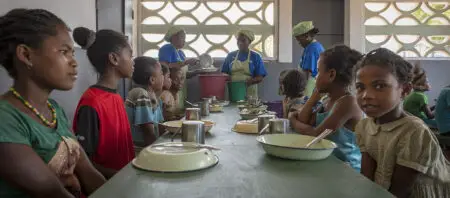
ECOWAS member states fed 22.4 million school-going children in 2022, up from 20 million learners in 2020. This represents 42%…
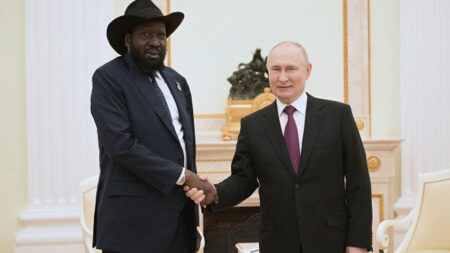
Last week, President Salva Kiir of South Sudan stepped into Moscow to meet his Russian counterpart, President Vladimir Putin. Their talks echoed the promise of an expanding relationship. However, an air of curiosity tinged the talks as the pair discussed energy, trade, and the ever-hot subject of security. In a secluded meeting that held the weight of geopolitics, Kiir and Putin’s dialogue not only spanned the customary diplomatic matters but also ventured into the depths of political and security concerns within South Sudan.
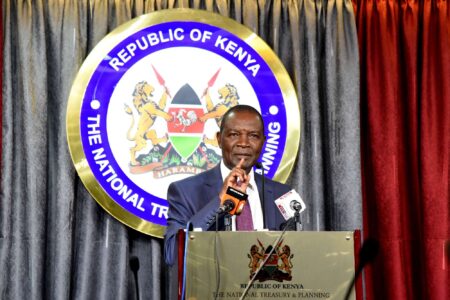
The government has no option but to squeeze taxpayers further to raise revenues to meet budgetary obligations as the depreciating shilling worsens Kenya’s debt and economic struggles. This comes as the Kenyan shilling weakens against the US dollar and other major global currencies, pushing up the country’s spending on repayment. Kenya’s shilling has lost about 19 per cent of its value to the dollar year-to-date, exchanging at an average of KSh147.47 on Monday, September 25, 2023.
The weak currency has pushed the country’s public debt repayment bill by at least $4.67 billion (Sh690 billion) in the last eight months. Piling debt comes as the National Treasury went on a borrowing spree to bridge the budget deficit.
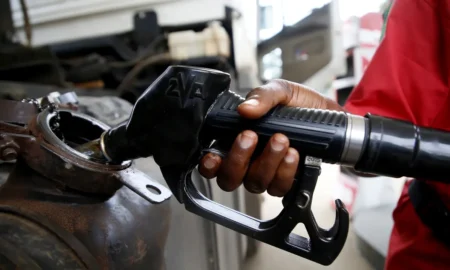
The energy crisis gripping South Africa is set to intensify as rising global oil prices, coupled with a heavy dependency on oil imports, threatens to trigger economic fallout in the country. The expected announcement of fuel price increases for October, will put further strain on the country’s economy.
According to data from the Central Energy Fund (CEF), the Automobile Association (AA) has issued a stark warning to South Africans about the impending hit on the economy starting October.

Zimbabwe’s economic history has been turbulent with hyperinflation, currency devaluation, and a shortage of the Zimbabwean dollar. To cope with…

RBZ Governor John Mangudya revealed that as of July 21st, the bank had conducted 11 issuances of GBDT. The Governor…