


- For Zimbabwe, the real test may lie not in IMF’s latest seal of approval, but in whether the fruits of macroeconomic stability can be converted into tangible improvements for ordinary citizens, especially the vulnerable households that are supposed to benefit from protected social spending.
Zimbabwe has been lauded by the International Monetary Fund (IMF) following key milestones in advancing the economy towards clearance or arrears, the restructuring of debt and the reset of ties with the Bretton Woods institution.
In an update on Thursday, authorities in the southern Africa country struck a staff-level agreement with IMF following a 10-month review of economic reforms by policymakers under President Emmerson Mnangagwa, who has been in office since 2017.
Wojciech Maliszewski, who led the IMF team to Harare, said programme implementation through end-June 2026 had been “strong”, with all quantitative and indicative targets met, except one on protected social and priority spending.
The agreement marks another step on Zimbabwe’s long road towards arrears clearance, debt restructuring and re-engagement with the international community. But the missed social spending target casts a shadow over the reform agenda’s credibility.
IMF tips Zimbabwe for macroeconomic stability and turnaround
Zimbabwe’s economy is projected to expand by 5 per cent in 2026, following growth of 8.3 per cent last year. The country’s annual inflation fell to 2.9 per cent in August, a low single-digit rate supported by tight monetary conditions and relative exchange rate stability. The current account is expected to remain in surplus, reflecting strong export receipts and remittance inflows.
John Mushayavanhu, the governor of the Reserve Bank of Zimbabwe, said in his August mid-term monetary policy statement that the country had recorded seven consecutive months of single-digit inflation, with the ZiG exchange rate stable for nearly two years since October 2024.
Central bank data show foreign exchange inflows reached US$10.72 billion in the first half of 2026, up 47.8 per cent from US$7.25 billion in the same period of 2025. Reserves rose to U.S.$1.7 billion by end-July, equivalent to about 1.7 months of import cover.
Fiscal performance has also exceeded expectations. Finance Minister Mthuli Ncube told parliament in his mid-term budget review in July that the government recorded a budget surplus of ZWG14.2 billion (about US$530 million) in the first half of the year, with average inflation of 4.2 per cent between January and July, the first sustained period of single-digit inflation in more than three decades.
Ncube attributed the outcome to the “co-ordination, effectiveness and efficiency of macroeconomic policy management”.
The social spending gap
Yet the IMF was unequivocal that the missed indicative target on protected social and priority spending remains a “significant concern”. Maliszewski said the shortfall “underscores the need to improve cash planning and budget execution so that approved resources reach priority programmes and vulnerable households in a timely manner”.
Although Ncube claimed the government spent ZWG27.2 billion on social services in the first half of the year — ZWG16.9 billion on education and ZWG9.5 billion on health, social protection received just ZWG832 million. For a country facing severe drought risk, such a thin social safety net raises questions about resource allocation priorities.
The authorities have committed to addressing implementation bottlenecks and strengthening monitoring of social spending. But analysts note that with fiscal space constrained by debt restructuring and austerity measures, reconciling social commitments with macroeconomic stability will remain a persistent challenge.
Read also: Aliko Dangote’s Billion Dollar Investment Plans for Zimbabwe
Reform progress and governance concerns
The IMF welcomed progress on monetary and exchange rate reforms. Maliszewski noted that the RBZ has advanced the development of an electronic foreign exchange trading platform, an important step towards more transparent, market-based FX trading. The authorities are also developing a comprehensive strategy to further liberalise the foreign exchange market, strengthen monetary policy operations and reform the FX intervention framework.
On structural reforms, Zimbabwe has brought US dollar payments within the public financial management system and strengthened commitment controls and expenditure monitoring. Completion of the framework for liability management operations is seen as an important step towards ensuring debt operations are transparent, well governed and consistent with the medium-term debt strategy.
In governance, the National Anti-Corruption Strategy 2 is being prepared, and the Mutapa Investment Fund has published its financial statements. But the latter has drawn scrutiny. An analysis published by Zawya noted that Mutapa controls assets with a claimed fair value of US$15 billion yet recorded a surplus of just US$3.6 million, a return the publication described as “virtually negligible”.
It also questioned whether parliamentary oversight had been materially weakened after the fund was moved from the finance ministry to the direct control of the President’s Office.
Debt restructuring enters a critical phase
Resolving Zimbabwe’s external arrears and restoring debt sustainability remain central to the re-engagement agenda. Maliszewski noted that continued strong performance under the SMP, progress in debt data reconciliation and sustained engagement with creditors would be important to support the next stages of the arrears-clearance and debt-resolution process.
Earlier this year, the UK and France agreed to co-chair Zimbabwe’s debt negotiation platform, helping to advance the restructuring of its US$23 billion in arrears. Zimbabwe’s finance ministry said the platform’s objective was to provide “a transparent, predictable and institutionalised platform for engagement with creditors”.
Read also: Why economies in Africa must brace for a powerful El Niño
Climate risks cloud the 2027 outlook
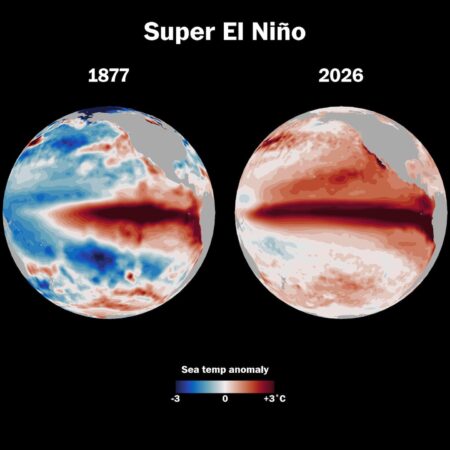
The IMF expects growth to moderate to 3.5 per cent in 2027 because of the anticipated effects of a super El Niño event. Maliszewski warned that the outlook remains subject to downside risks if the El Niño event is more severe than assumed, or if mitigating measures are delayed or less effective than expected.
That warning aligns with the RBZ’s own assessment. Mushayavanhu likewise identified a super El Niño, spillovers from Middle East conflict and commodity price volatility as the principal risks.
For Zimbabwe, the current macroeconomic stability has been hard-won. The shift from the brink of hyperinflation, when inflation reached 95.8 per cent in July 2025, to sustained single-digit inflation is remarkable. But stability is not an end in itself. As one local economist put it, having “achieved stability, the next biggest task is to achieve inclusive growth”.
The IMF’s Executive Board has yet to discuss the review, and the staff-level agreement remains subject to management approval. But for Zimbabwe, the real test may lie not in the IMF’s seal of approval, but in whether the fruits of macroeconomic stability can be converted into tangible improvements for ordinary citizens, especially the vulnerable households that were supposed to benefit from protected social spending.