



- TotalEnergies’ fast-track development on Acacia-5 field signals renewed confidence in Angola’s offshore resources, but questions remain over whether exploration success can help reverse Luanda’s dip in output.
TotalEnergies has announced a new oil discovery offshore Angola and committed to investing $10 billion in the country over the next five years, in a key vote of confidence in West Africa’s largest oil producer as it battles to halt a long-term output decline.
Speaking at the Angola Oil & Gas Conference in Luanda on Wednesday, Patrick Pouyanné, chairman and CEO of the French energy giant, said the company and its partners would deploy the capital across existing developments and exploration to sustain production at around 450,000 barrels per day, more than 40 per cent of Angola’s total output.
The oil find at Acacia-5 represents a discovery on Block 17 that TotalEnergies expects to bring into production within just three months of its identification in June 2026.
TotalEnergies’ fast-track development will leverage spare capacity on the Pazflor floating production, storage and offloading vessel, adding 6,000 barrels per day to Block 17 output.
TotalEnergies oil development template
The speed of the Acacia-5 development, from discovery to first oil in a single quarter, represents an unusually compressed timeline for offshore projects, which typically take years to develop. The approach relies on subsea tie-backs to existing infrastructure, a strategy that TotalEnergies has increasingly favoured as it seeks to monetise smaller discoveries without the capital intensity of standalone developments.
Acacia-5 is the second exploration success recorded across TotalEnergies’ Angolan portfolio in 2026, following a discovery on Block 0 in the Lower Congo Basin, where the company holds a 10 per cent interest alongside Chevron, the operator.
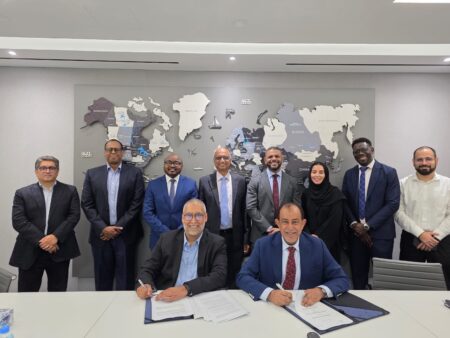
The company also signed agreements with Angola’s petroleum regulator, the Agência Nacional de Petróleo, Gás e Biocombustíveis (ANPG), to take a 40 per cent operated interest in exploration Blocks 17/25 and 32/21. ExxonMobil will hold a further 40 per cent, with state-owned Sonangol E&P holding the remaining 20 per cent.
These blocks benefit from extensive existing 3D seismic coverage and are located close to TotalEnergies-operated Blocks 17 and 32, where six FPSOs are currently producing. The proximity to existing facilities offers the potential for future tie-backs and cost-efficient development of any discoveries.
Separately, TotalEnergies signed a head of agreement in February 2026 with ANPG and ExxonMobil to farm into Blocks 40, 41, 42 and 58 in the Benguela Basin with a 35 per cent interest.
Angola’s oil production challenge
The latest announcement come as Angola confronts the structural challenge of maturing oilfields. The country, which joined Opec in 2007, has seen production decline from a peak of around 1.9 million barrels per day in 2008 to approximately 1.1 million barrels per day today. Maintaining output near current levels requires continuous investment simply to offset natural decline rates at ageing fields.
Artur Custódio, executive administrator of ANPG, told the conference that Angola projects more than $70 billion in investment across exploration, gas production and energy infrastructure over the next five years.
He noted that capital in the sector has become “more selective,” with investors evaluating geological potential, contractual stability, fiscal predictability and institutional efficiency with particular scrutiny.
Authorities in Angola have sought to address these concerns through reforms to the country’s hydrocarbon strategy, including a licensing round intended to be “faster, more transparent and more efficient,” according to Custódio.
The strategy, currently under public consultation, focuses on maintaining production through 2050, developing new discoveries and monetising gas resources.
Read also: How a war in Iran is rewriting Africa’s Gulf-reliant energy security rulebook
Broader industry interest
TotalEnergies is not alone in expanding its Angolan footprint. Chevron has doubled its position in the country over the past two years while increasing its exploration budget by 50 per cent, according to Emmanuelle Garinet, the company’s exploration director. This includes more than $100 million invested after entering Blocks 49 and 50.
Azule Energy, a joint venture between BP and Eni, took a final investment decision in June on the $5.1 billion Greater PAJ offshore project, with first production expected in 2029. ExxonMobil announced a separate discovery on Block 15 this week.
Sonangol, the state oil company, is positioning the Kwanza Basin as the next frontier for deepwater development. Ricardo Van-Deste, Sonangol’s chief executive, said the basin “has the potential to be a game-changer,” with the company moving forward with appraisal and exploration drilling.
TotalEnergies is already advancing the Kwanza Basin’s first major deepwater oil development through Kaminho in Block 20/11, where the Cameia and Golfinho fields are being developed through an FPSO and subsea production system. The project’s FPSO reached 50 per cent completion in April, with first oil targeted for late 2027 and production expected to reach 75,000 barrels per day.
Read also: Bboxx and TotalEnergies strike deal to light the path towards clean cooking access in Rwanda
Strategic implications
The scale of TotalEnergies’ commitment, approximately $2bn per year over five years, underscores Angola’s continued importance to the company’s upstream portfolio.
TotalEnergies has operated in Angola since 1953 and employs around 1,500 people across various business segments. The country contributed 156,000 barrels of oil equivalent per day to the company’s production in 2025.
For Angola, the challenge lies in converting exploration success into sustained production growth. The country’s hydrocarbon strategy through 2050 aims to provide greater predictability for investors, but questions remain over whether the pace of development can offset decline rates at legacy fields.
Pouyanné struck an optimistic note: “Exploration is a key pillar of our ambition in Angola, supported by the incentives introduced to encourage investment. Together with our partners, we aim to explore further and unlock new resources, sustaining a strong exploration effort to identify new opportunities across Angola’s offshore basins”.