


- Saudi Arabia commits to increased trade with Tanzania. Already the oil-rich nation has entered into an agreement to set up a meat processing plant in the East African nation.
- Tanzania exports over USD 36 million worth of goods to Saudi Arabia annually.
Tanzania is looking to secure more than 500 million US dollars worth of investments from Saudi Arabia as Jeddah mulls setting up export production hub in the East African country. To this end, a two-day Tanzania-Saudi Arabia Business Forum was held recently in Dar es Salaam, Tanzania to deliberate potential investment areas across various sectors.
The forum brought together some 47 business representatives from various Saudi Arabia companies and institutions. The Saudi delegation was hosted by the Tanzania Private Sector Foundation (TPSF) and overseen by high ranking Tanzanian ministerial officials.
Tanzania is looking to increase exports and narrow trade imbalances with the Kingdom. According to Minister of State in the President’s Office (Planning and Investment), Prof. Kitila Mkumbo, Tanzania currently exports goods worth well over 36 million USD to Saudi Arabia annually.
On the flip side, the country imports between 900 million US dollars and 1.44 billion US dollars worth of goods from Saudi Arabia every year.
According to the Minister of State, Tanzanian exports to Saudi Arabia are growing at an average rate of 15.2% annually as reported over the past five years. By comparison, imports from Saudi Arabia to Tanzania have been growing at an annual rate of 9.4 per cent.
Tanzania imports about 25 times more from Saudi Arabia than it exports to the Kingdom; “Investment is the best way of balancing the trade imbalance,” Prof. Mkumbo noted.
The Minister of State went on to note that Tanzania is seeking to expand its domestic capacity in processing of minerals (graphite, nickel, cobalt, lithium and rare earth elements), rather than exporting raw materials.
“We do not want to mine minerals simply to export…We want to use minerals to industrialise Tanzania,” he emphasised.
According to the government official, mineral processing and manufacturing is the key to increasing technology transfer, creating skilled jobs and the door through which Tanzania can draw more value from its natural resources.
He cited some 44 million hectares of arable land that according to him are under utilised. As such, he called on Saudi Arabia to invest in agriculture citing opportunities in commercial farming, irrigation, agro-processing and cold-chain infrastructure.
“Saudi investors could participate in large-scale agricultural production and processing, with products ultimately exported to the Saudi market and help address the Kingdom’s food-security needs,” he noted.
“We have the capacity to provide food security for Saudi Arabia…through investment in large-scale commercial agriculture,” he detailed.
Further, Prof. Mkumbo highlighted investment opportunities in manufacturing as another priority investment area. He said Tanzania is seeking investment in agro-processing, mineral-based industries, machinery and pharmaceutical production.
Another investment area highlighted by the Minister of State is renewable energy of which he said electricity demand in the country and region is expected to rise towards 2030.
Summing up, he said successful corporation between the two nations should be reflected in the setup of factories and commercial farms as well as domestic mineral processing plants.
He urged Saudi Arabia to see Tanzania not only as a consumer market but also as a production base and a gateway to the wider African market.
Commenting, the Saudi-Tanzania Business Council Co-Chairman Engineer Abdulrahman Al-Thubaiti said the Kingdom is willing to increase trade with Tanzania and potentially setup production plants at select Export Processing Zones in Tanzania.
The Saudi Arabia delegation visited the Nguru Hills Ranch Meat Processing Plant in Morogoro Region. During the visit, Engineer Al-Thubaiti expressed his satisfaction with the plant’s operations and the fact that it adheres to internationally recognized quality standards.
“Saudi Arabia is committed to strengthening economic cooperation with Tanzania, particularly in increasing production, adding value to livestock products, and expanding access to international markets,” he said.
Also Read: Ethical sourcing boosting demand for Tanzania organic cotton
Saudi Arabia, Tanzania sign meat processing pact
The Saudi delegation went on to sign several trade agreements with Tanzanian companies. The business forum facilitated interaction between the countries and the exchange of information on opportunities and markets, as well as the organization of future conferences and trade delegation visits.
The Saudi Arabia delegation pledged to continue strengthening cooperation with Tanzania to promote production, add value to livestock products and open international markets for the mutual benefit of both countries.
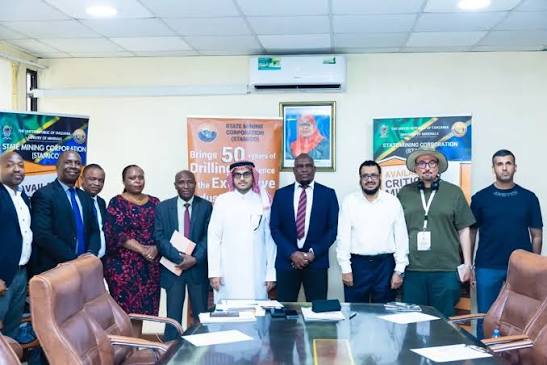
The delegation also visited the strategic industrial and investment sites, including Kinyerezi Power Plant, the Medical Stores Department (MSD), the State Mining Corporation (STAMICO), Mtwara, and the said Nguru Hills Ranches.
After that, they visited Zanzibar, where the delegation held meetings with authorities responsible for industry and trade, labour and investment through the Zanzibar Investment Promotion Authority (ZIPA), as well as water, energy and minerals.
They engaged with the Zanzibar State Trading Corporation seeking to deepen bilateral economic relationship and greater private-sector participation, investment in productive sectors and development of new sources of economic growth.