


- Ervebo vaccine, a jab proven against the Zaire Ebola strain, will be tested in Phase Three trial as the latest outbreak claims nearly 2,500 lives in DRC.
- Africa CDC warns true scale of epidemic may be triple official figures, with roughly one life lost every 30 minutes.
Health authorities in the Democratic Republic of the Congo (DRC) are set to administer 70,000 doses of the Ebola vaccine Ervebo to combat the country’s deadliest-ever outbreak of the viral haemorrhagic fever, in an unprecedented deployment that doubles as a large-scale clinical trial.
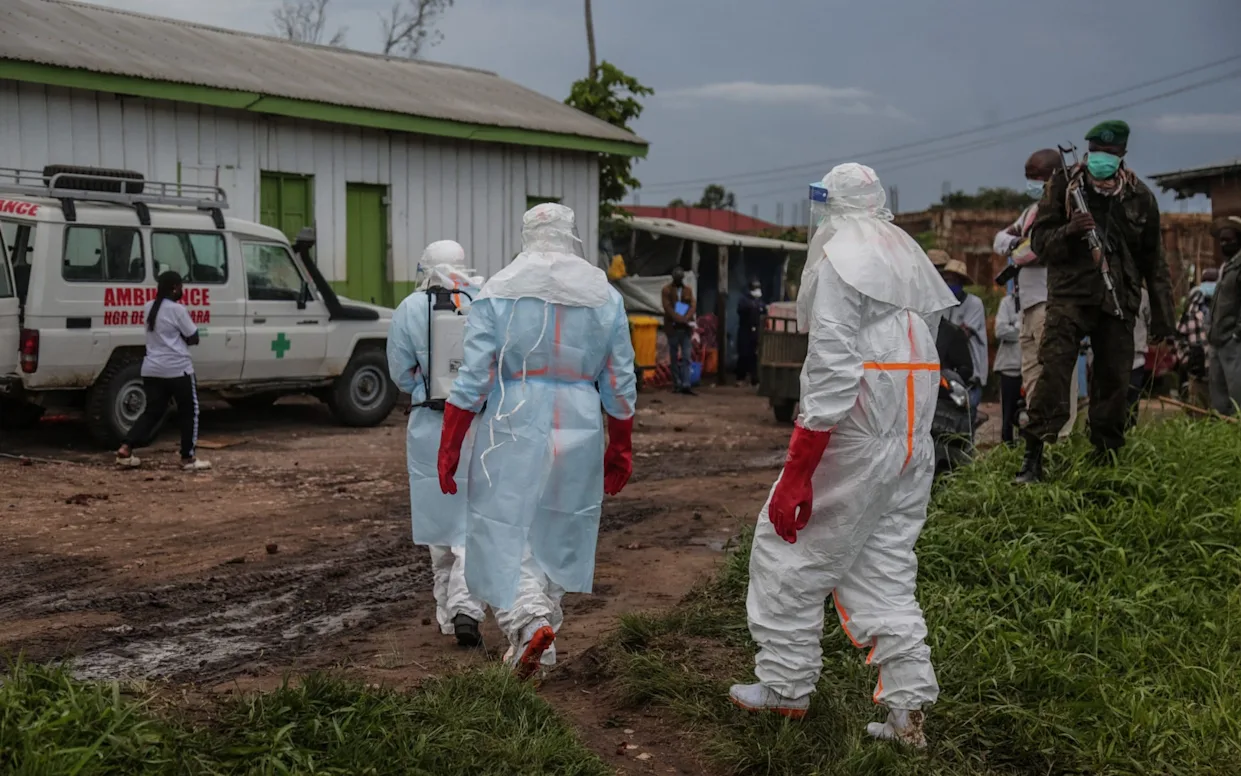
The move comes as the Bundibugyo virus disease outbreak, declared on 15 May, has spiralled into the second-largest Ebola epidemic globally, with 5,208 confirmed cases and 2,476 deaths recorded as of 18 August.
UN-backed World Health Organization has warned that the outbreak remains “far from being under control”, with transmission yet to enter a clear declining phase.
The vaccine allocation, which has received approval from the International Coordinating Group on Vaccine Provision, marks a critical moment in managing the disease. However, it carries a significant caveat: Ervebo is licensed and recommended only for Ebola virus disease caused by the Zaire ebolavirus, and its effectiveness against the Bundibugyo strain circulating in the DRC has not been established in humans.
Ervebo vaccine: A scientific gamble?
Of the 70,000 doses, WHO says that approximately 50,000 have been earmarked for frontline and healthcare workers under compassionate use protocols, while 20,000 will be deployed in a Phase 3 clinical trial to determine whether the vaccine can confer protection against the Bundibugyo virus.
Early laboratory and animal studies suggest Ervebo vaccine may offer some cross-protection, but the evidence remains inconclusive. Experts notes that the glycoprotein presented by the vaccine differs by approximately 35 per cent from that of the Bundibugyo virus, raising questions about efficacy.
Yet emerging real-world data has fuelled optimism. A comment published in the Lancet Infectious Diseases in July cited nine cases of Bundibugyo infection among individuals previously vaccinated with Ervebo vaccine – all of whom survived.
According to the DRC’s Health Minister, Roger Kamba, observations from the current outbreak suggest vaccinated individuals have either avoided developing the disease or experienced milder forms. “We have decided to expand this trial to health workers because we know this vaccine,” Kamba said at a press briefing in Kinshasa on Tuesday this week.
Read also: U.S. pours $162 million into rare Ebola virus fight as East and Central Africa reels
Bundibugyo Ebola virus outbreak spiralling beyond official counts
The urgency of the vaccine deployment is underscored by mounting evidence that the true scale of the outbreak may be far larger than official figures suggest. Africa CDC modelling, conducted in collaboration with the DRC’s National Institute of Biomedical Research and Imperial College London, indicates the actual number of cases could already exceed 10,000 and may be as high as 15,000, which is roughly three times the official tally.
“The real burden should be over 10,000 to 15,000 cases,” said Kyeng Mercy, an Africa CDC official, noting that less than 40 per cent of detected cases have an epidemiological link to a confirmed case.
At the moment, the case fatality rate stands at 47 per cent, with Africa CDC warning that the outbreak is currently claiming “approximately one life every 30 minutes”. Yap Boum II, head of emergency preparedness at Africa CDC, attributed the undercounting to the Bundibugyo strain causing milder and less typical symptoms than its Zaire counterpart, making detection more challenging.
Geographic spread and international risk
Statistics show that the outbreak has expanded to six provinces, including Ituri, North Kivu, South Kivu, Bas-Uele, Haut-Uele and Tshopo, with Ituri remaining the epicentre, accounting for up to 90 per cent of cases. Two cases have recently been reported in Buta, the capital of Bas-Uele Province, close to the border with the Central African Republic.
WHO assesses the risk as “very high” in the DRC and “high” for the nine neighbouring countries sharing land borders with DR Congo. Imported cases have been reported in Uganda, France and Germany, though no sustained transmission has occurred outside the DRC. Uganda formally declared its outbreak over this week.
Read also: Ebola virus: WHO boss seeks a united front against rare strain ravaging East Africa
Historical context and future implications
This is the 17th Ebola outbreak in the DRC since the virus was first identified in 1976. Bundibugyo virus was first identified in western Uganda in 2007, with a second outbreak reported in the DRC in 2012.
The current deployment marks the first time Ervebo vaccine will be used against the Bundibugyo strain at scale. Since the ICG established its Ebola vaccine mechanism in 2021, over 56,000 doses had been allocated for Zaire ebolavirus outbreaks in the DRC, with a further 167,000 doses used in preventive campaigns across five African countries.
Phase 3 trial is expected to provide critical evidence that could inform future vaccine policy and potentially expand the utility of existing Ebola vaccines against other viral species. Informed consent will be required for all recipients, who must be made aware of the risks, potential benefits and limitations of the vaccine in the context of the Bundibugyo outbreak.
WHO and Africa CDC have endorsed a community-led response approach, emphasising the central role of affected populations in outbreak control. The DRC government has already received 2,000 doses in Kisangani, capital of Tshopo Province, and has requested an additional 500,000 doses to expand coverage.
As the outbreak enters its fourth month with no clear end in sight, the vaccine deployment represents both a humanitarian imperative and a scientific experiment – one that could reshape Africa’s preparedness for future Ebola outbreaks.