
Trending
- Africa’s Green Economy Summit 2026 readies pipeline of investment-ready green ventures
- East Africa banks on youth-led innovation to transform food systems sector
- The Washington Accords and Rwanda DRC Peace Deal
- Binance Junior, a crypto savings account targeting children and teens debuts in Africa
- African Union Agenda 2063 and the Conflicts Threatening “The Africa We Want”
- New HIV prevention drug is out — can ravaged African nations afford to miss it?
- From banking to supply chains, here’s how blockchain is powering lives across Africa
- Modern railways system sparks fresh drive in Tanzania’s economic ambitions


Browsing: Russia
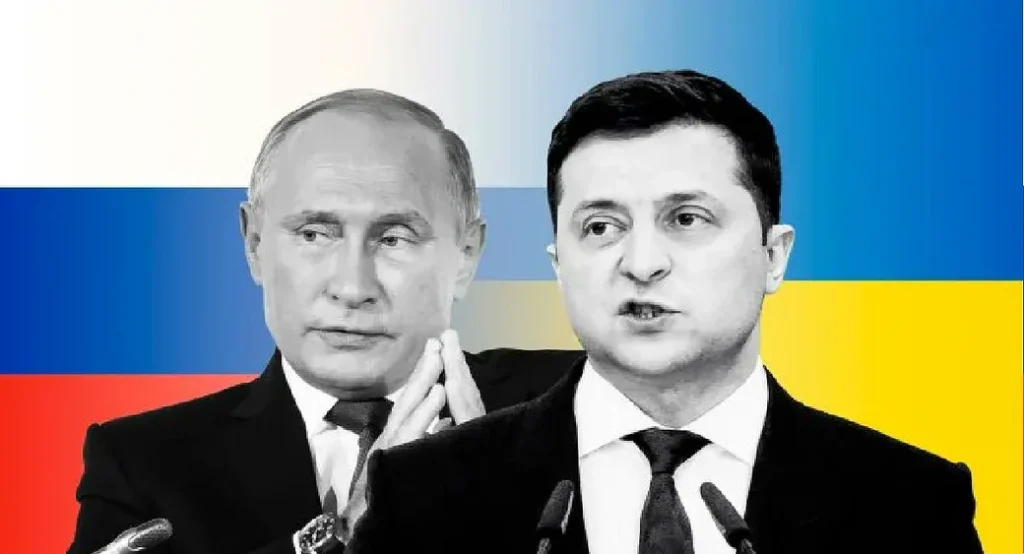
Ethiopia is the biggest Wheat producer in Africa, producing about 5.1 million tonnes in the 2020/2021 financial year. Russia’s restriction on the importation of Wheat has created a business gap in the African market and all over the globe.
Russia and Ukraine account for more than 70 per cent of Egypt’s imported wheat demand. In 2019, wheat imports from Russia to Egypt were worth US$2.55 billion, and Nigeria’s imports amounted to US$394 million. Other countries that import Russian Wheat include Sudan, Senegal, Tunisia and Morocco. Ethiopia will hold talks with Egypt and Sudan in March 2022 over the Nile waters’ use. Both countries are importers of Wheat, and production in Ethiopia could fulfil the demand from these two countries without exerting pressure on their production.
While Russia’s preferred visions and modes of action in the Maghreb seem to be fairly well identified, the perceptions and expectations, but also the possible reservations on the Maghreb are more rarely expressed by the leaders of these countries and little-studied at the academic level.
Perhaps we should look at this, as far as the powers that be are concerned, a concern for discretion regarding the sensitive aspects of this foreign policy component – this is particularly true for Algeria – an area on which they generally communicate little and for the academic research community in North Africa, a lack of knowledge related to the history, geography and culture of contemporary Russia.
If there is undoubtedly, on the Maghreb side and with important nuances from one country to another, a manifest interest in a development or a deepening of the partnership with Moscow, questions may remain about Russia’s objectives, especially in Rabat and Tunis.
Apart from the absence of a public strategy for the continent, there is a lack of coordination among various state and para-state institutions working with Africa.
Despite the growth of external players’ influence and presence in Africa, Russia has to intensify and redefine its parameters. Russia’s foreign policy strategy regarding Africa has to spell out and incorporate the development needs of African countries.
Unlike most competitors, Russia has to promote an understandable agenda for Africa: working more on sovereignty, continental integration, infrastructure development, human development (education and medicine), security (including the fight against hunger and epidemics), normal universal human values, the idea that people should live with dignity and feel protected.
An additional advantage is that African government representatives and heads of many international organizations work in this city.
South Africa and Egypt, as possible alternatives, were thoroughly discussed as South Africa and Russia are members of BRICS, and Egypt has excellent post-Soviet relations.
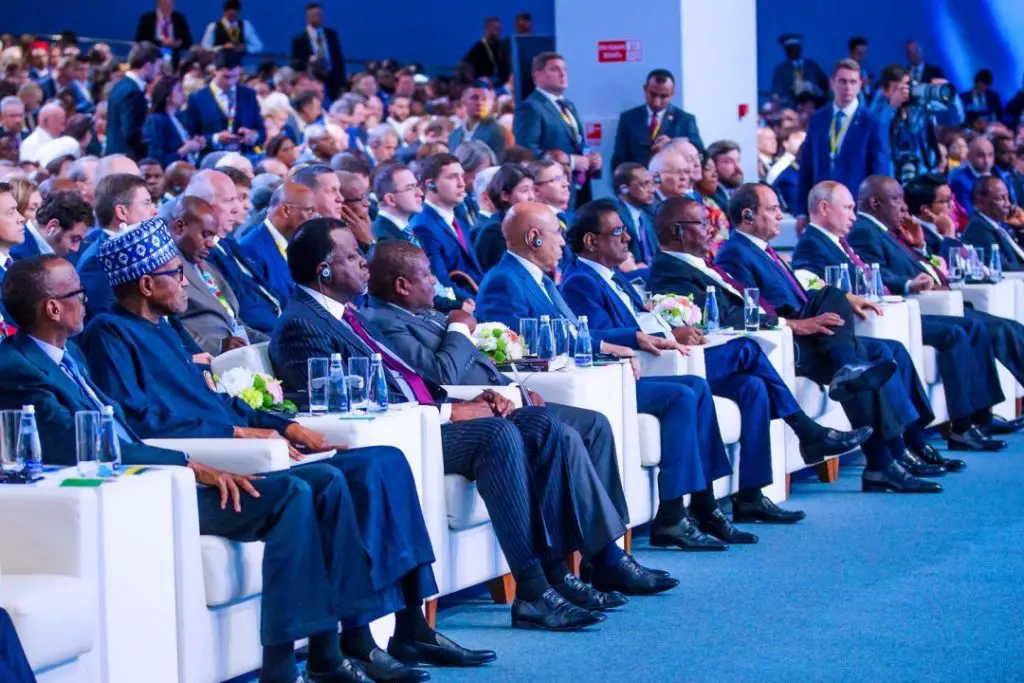
Reminding that the first summit held in Sochi was co-chaired by President Vladimir Putin and Egyptian President Abdel Fattah el-Sisi, who also rotationally during that year headed the African Union.
The large-scale Russia-Africa summit, held in Sochi in October 2019, and described as the first of its kind in the history of Moscow’s relations with Africa, attracted more than 40 African presidents, as well as the heads of major regional associations and organizations.
By 2022, France plans to reduce and move its troops and will be restricted to regions that are not strategic for combating terrorism, which indicates that they will probably only act in the security of specific points, such as diplomatic and international organizations facilities.
That ends the so-called “Operation Barkhane”, which was a military mission marked by a tactic of permanent occupation of the Sahel countries by French troops.
The French government, however, apparently will try to reorganize its strategy in Africa. It seems that the focus of action will turn to the Gulf of Guinea.
A few African countries have also imposed similar restrictions on entry into their territories. The southern African countries include Lesotho, Botswana, Zimbabwe, Mozambique, Namibia and Eswatini.
Russia and South Africa, which later joined in 2011, are both members of the BRICS, and since the outbreak of the coronavirus in December 2020, have discussed some aspects as well as the prospects for collaborative work in fighting the disease.
Russia and South Africa previously proposed localizing production of Russian vaccines, but the key setback was that the vaccines were yet to be approved by the World Health Organization. As a result, there were neither concrete practical results nor effective collaboration between the two countries.
With its about 1.3 billion people, Africa is a potential market for all kinds of consumable goods and for services. In the coming decades, there will be an accelerated competition between or among the external players over access to the resources and for economic influence in Africa.
Despite the growth of external players’ influence and presence in Africa, says the report, Russia has to intensify and redefine its parameters as it has now transcended to the fifth stage. Russia’s Africa policy is roughly divided into four periods, previously after Soviet’s collapse in 1991.
The first historic summit in 2019 created a good basis for launching or ushering in a new fifth stage of Russian-African relations. The joint declaration adopted at the summit raised the African agenda of Russia’s foreign policy to a new level and so far remains the main document determining the conceptual framework of Russian-African cooperation.

The price for crude oil is down 60 percent since the year started and it is only tumbling further, global…
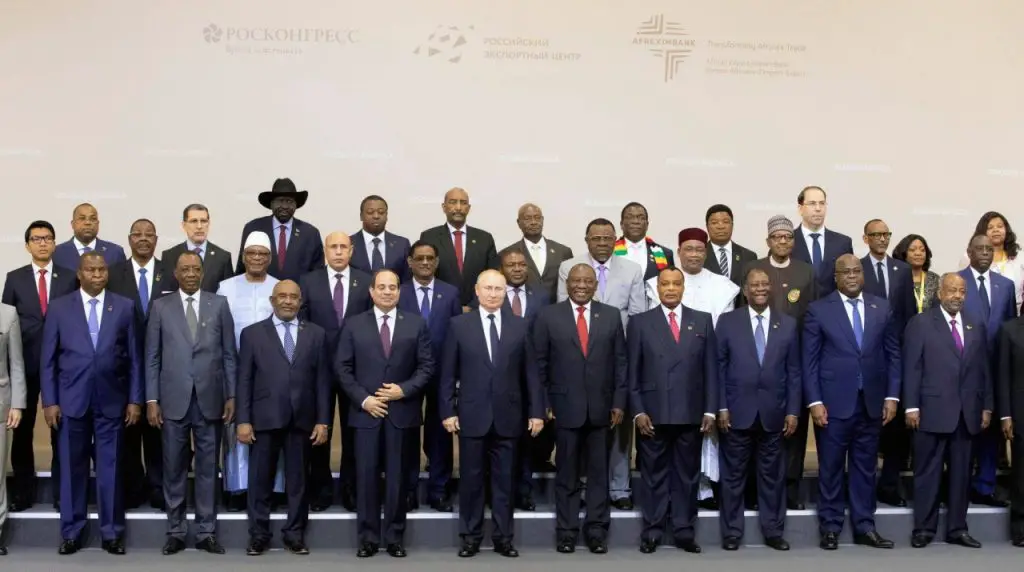
President Vladimir Putin hosted the first-ever Russia-Africa summit Wednesday and Thursday in the latest display of Moscow’s efforts to restore…
More than 50 African leaders made their way to the Black Sea resort city of Sochi on Oct. 23-24 for…