

Trending
- AI’s Dual Capacity and a Strategic Opportunity for African Peace and Security
- How African economies dealt with the 2025 debt maturity wall
- Africa’s Green Economy Summit 2026 readies pipeline of investment-ready green ventures
- East Africa banks on youth-led innovation to transform food systems sector
- The Washington Accords and Rwanda DRC Peace Deal
- Binance Junior, a crypto savings account targeting children and teens debuts in Africa
- African Union Agenda 2063 and the Conflicts Threatening “The Africa We Want”
- New HIV prevention drug is out — can ravaged African nations afford to miss it?


Author: Laurence Sithole
Due to globalization, countries worldwide are increasingly interdependent. This is why a conflict between two countries in Europe will cause ripple effects that the rest of the world feels. On this basis, the World Bank projects that economic growth in 2022 will slump. Not slow down but slump. The choice of words is intentional.
Malpass now believes that the world is in for several years of above-average inflation and below-average growth. This projection will most likely lead to destabilizing consequences for low- and middle-income economies. These low- and middle-income countries are largely on the African continent. Stagflation which the world last saw in the 1970s, will have a devastating effect on countries in Africa. Most countries in the continent do not have the resources like Germany to muster multibillion Euro or multi-billion United States dollar packages to subsidize the economic plight of their citizens.
World Bank forecasts a sharp downgrade of its global economic outlook and anticipates a sharp contraction in the economy. The global economy is expected to slow down from the GDP growth rate achieved in 2021 of 5.7% to 2.9% in 2022. The downgrade from the multilateral institution is because of the war in Ukraine, which has triggered food and energy increases as well as supply and trade disruptions.
According to the EIU graphic, much of the external debt stock of African countries consists of public medium- and long-term borrowings. This form of borrowing has been on the rise since 2000.
Private medium- and long-term debt stock in Africa has also been on the increase but not at the same scale and magnitude as the public debt. In short, governments, through their finance ministries, have been on a borrowing binge since 2000, whereas the private sector has marginally increased its borrowings in United States-denominated debt.
The increased levels of borrowing in hard currency badly expose governments to movements in interest rates and exchange rates. South Africa has the most external debt exposure of any country in Africa, followed by Egypt and Nigeria. With these facts in mind, it is no surprise to how much the Rand, the South African currency unit, has depreciated against the dollar.
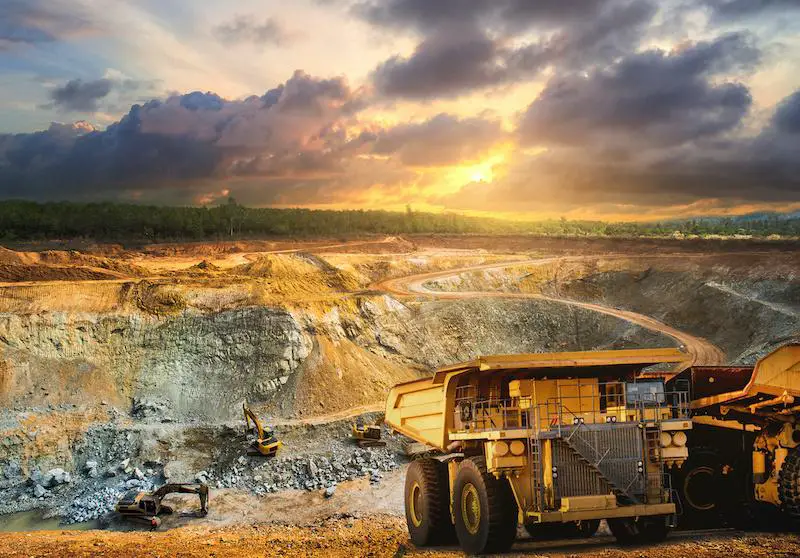
The answer is in the law and the governance models that these countries approach. The way in which the governments of those countries approach the mining industry is imperative.
In South Africa, the natural resource curse is more pronounced in the sense that while the mining sector has made a few individuals fabulously wealthy, inequality in that country has meant that while the richest of the rich get richer, the poor get poorer.
How can governments approach the mining sector to ensure its development leads to broad-based and shared prosperity for all? The answer is the same. The answer is in the respective governments and the legal frameworks for the mining industries of those countries.
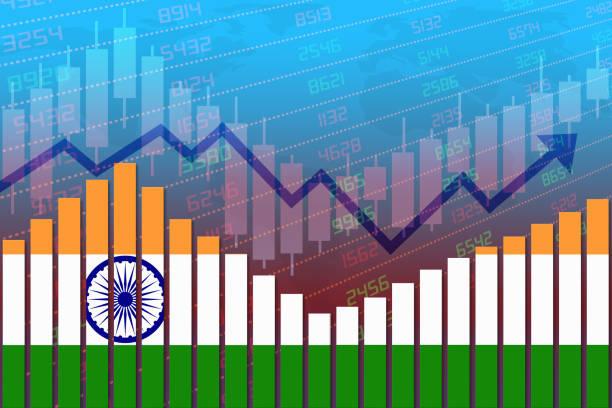
In terms of the economic outlook for India, opinions are divided given the headwinds facing the global economy presently, like the cost-push inflation from increases in food prices and soaring energy costs brought on by the Russia-Ukraine conflict. Deloitte, the global consulting and accounting firm, is optimistic about the economic growth prospects of India. It is projected that the Asian country will remain the fastest growing economy in the world, with growth projected to come in at between 7.1% to 7.6% in the years 2022 to 2023 and 6% to 6.7% in the years 2023 to 2024.
How has India managed to bullet-proof its economy to the extent that it has managed to register economic growth within a context of slowing global economic growth? According to Deloitte, India is primarily a domestic demand-driven economy, with consumption and investments contributing to 70% of the economic activity.
According to the Reserve Bank of India (RBI) analysis of 10,000 listed companies, businesses have seen a steady net profit-to-sales growth over the past year and are sitting on piles of cash. This fact highlighted by the global accounting firm is a key contrast with African economies, which tend to be driven by factors other than domestic demand. African economies generally suffer from a disproportionate dependence on foreign demand to drive economic growth.
McKinsey’s report notes that the wages of consumers are steadily being eroded. Wages in the largest economies reportedly flatlined; in other words, no significant change in their levels was recorded. Prior to the pandemic, the same wages were said to have increased, giving workers the upper hand in negotiations. The pandemic, however, drastically altered that state of affairs. Wages in developed markets post the pandemic are also related, but the advent of inflation has checked that growth and, in some instances, set the trend backwards.
In the United Kingdom, there have been reports of wages being lower year on year.
The culmination of these factors is that the outlook for global economic growth will be lower this year than last. McKinsey expects central banks to increase interest rates more assertively to deal with inflationary pressure. The risk of recession is becoming more and more prevalent.
If it so happens that the said stimulus package is financed by increasing the money supply. It may have unintended and unpleasant consequences.
Economists have a phrase that means the same as “in a perfect world”. Economists will often say “ceteris paribus”. In a perfect world, government expenditure would have been all that is necessary to fix the lingering economic problems confronting the world post-COVID. However, reality would beg us to consider that government expenditures of money that they did not have to jump-start economies that were in a prolonged period of stasis would invariably lead to inflationary pressures. The United States has been grappling with the problem of inflation throughout 2021.
Its inflation figures are the highest they have been in decades. The fascinating thing about this current brand of inflation is that it is multi-faceted. Granted, it began when governments decided to spend their way out of an economic slump and introduced inflationary pressure on the global economy.
Southern Africa, East and West Africa saw their flows of FDI rise in 2021. It was only in Central and North Africa that flows of foreign direct investment were flat or declined, respectively. Flows to North Africa fell by 5 per cent to $9.3 billion.
Egypt saw its FDI drop by 12% as large investments in exploration and production agreements in extractive industries were not repeated. Despite the decline, Egypt has the second highest flows of FDI in 2021 on the continent.
UNCTAD reports that it expects FDI flows to increase in North Africa owing to pledges of as much as US$ 22 billion to the region from Gulf states. In Egypt, according to the UNCTAD World Investment Report 2022 tripled green field projects of US$ 5.6 billion and real estate projects of US$ 1.5 billion.
In Morocco, FDI flows increased by 52% to US$ 2.2 billion. This was driven by a large international project finance deal announced in that country to finance the construction of a power line.
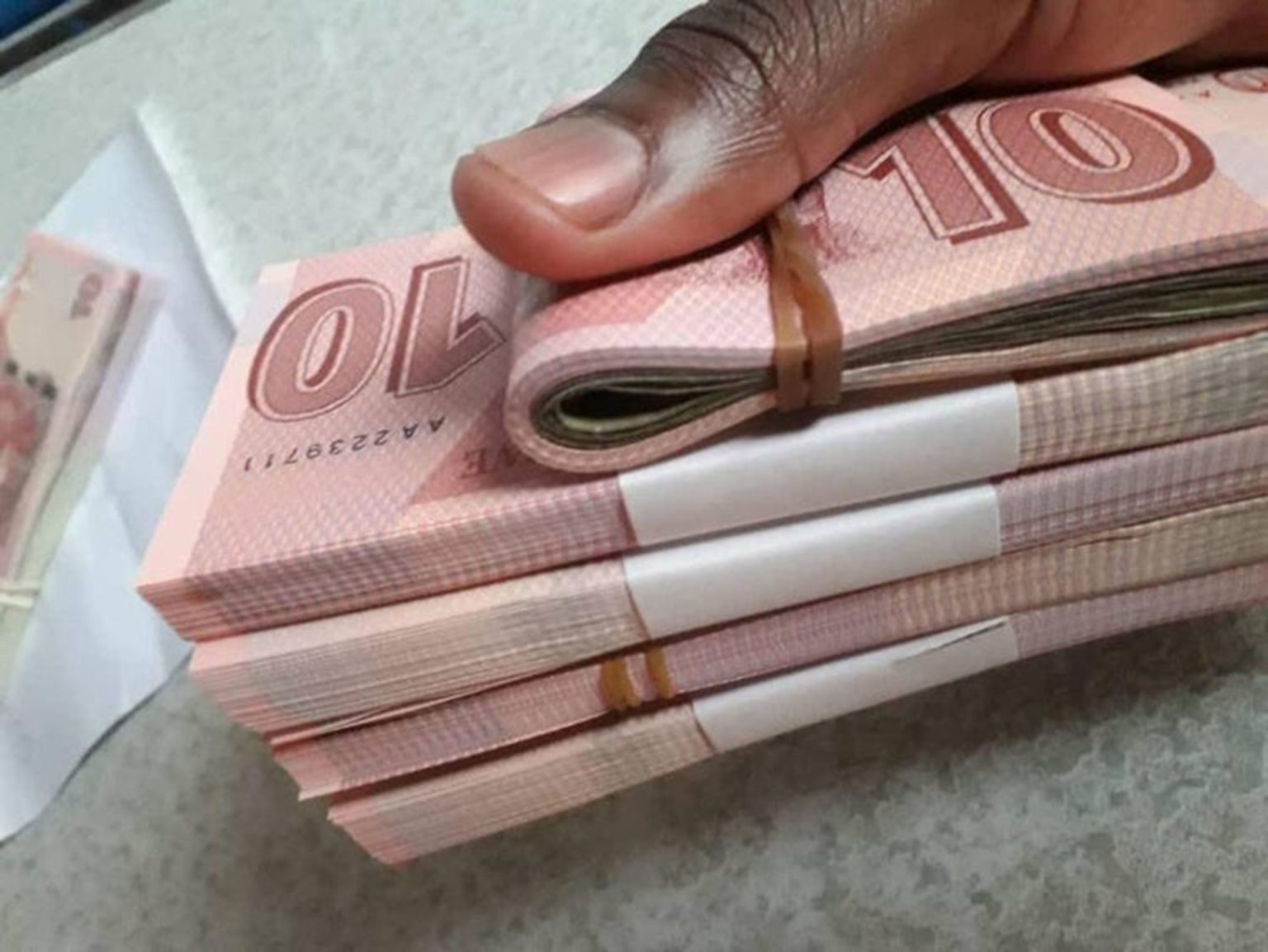
The shrinking economy and resulting unemployment have given birth to an informal economy that has spiralled out of control. Treasury and monetary authorities have been at pains to find ways they can tax the informal sector. The informal economy is difficult, if not impossible, to absorb into the formal economy or to include in the tax pool from which the government can draw revenue.
As the formal economy shrinks, so has Zimbabwe’s effective tax revenue stream, and this problem can only be arrested and mitigated by a growing economy.
An economy characterized by slow or negative growth makes it more difficult for the government to repair its finances. This is because there is a positive relationship between a country’s tax pool and the growth of the economy. A shrinking economy brings with it the added cost of having to provide social safety nets for the vulnerable members of its society.
If the government does not cater to these members of society during times when the economy shrinks, it will invariably experience heightened levels of poverty.
This is specifically in the case of South Africa, which has enjoyed the most benefit from the mining sector in the southern region. This benefit translated into further foreign direct investment flows of more than US$ 40 billion in 2021 alone, up from US$ 3 billion in 2020.
This is in contrast with Zimbabwe, which has been an investment pariah for the last two decades. Zimbabwe has not appropriated as much from its mining sector relative to South Africa, especially when viewed through the foreign direct investment lens. According to its central bank, the country garnered foreign direct investment proceeds of US$ 103 million for the year.
Regardless of the poor showing in FDI terms, the country has recorded a 33% rise in export earnings driven primarily by the mining industry to US$ 5.45 billion. This is to show that the mining sector is central to southern Africa’s economic development.
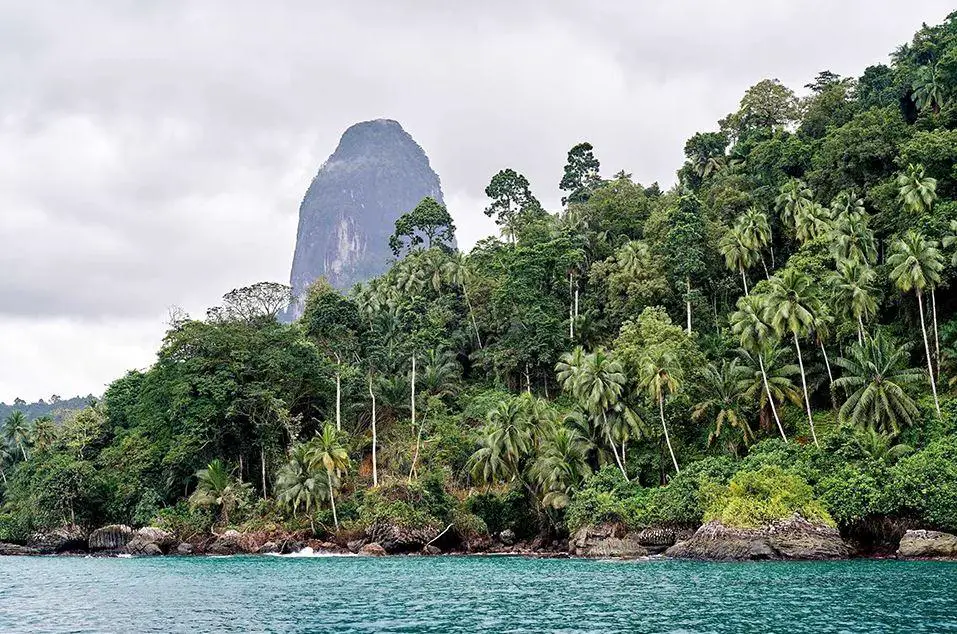
Economically the World Bank categorizes São Tomé and Príncipe as a lower middle-income state with what it calls a fragile economy.
This is not a mischaracterization as the country relies heavily on the tourism sector, making it much more susceptible to external and exogenous shocks. This assertion is confirmed by the African Development Bank, which reported in its economic outlook on São Tomé and Príncipe that the country’s economy shrank by an estimated 6.4% in 2020 after growing by 2.2% in 2018 and 1.3% in 2019.
Will Ghana’s stance on value addition resonate in Africa?
For the first time in a decade, the contraction in output is attributed to a sharp decline in tourism and service sectors, which were severely hurt by weak external and domestic demand and COVID–19 containment measures.