


Trending
- Tanzania throws its bond market wide open to the global investors
- VALR sets sights on East Africa as blockchain moves deeper into Africa’s financial system
- The cost of the data gap: Why Kenya’s lenders can’t afford to miss the full picture
- Tanzania takes EAC labour migration helm as regional rules face overhaul
- 2026 is turning out as a defining year in geopolitics, but for whom?
- Saudi Arabia and Tanzania pledge to deepen bilateral trade ties
- Tanzania rewrites its digital investment playbook
- Ethical sourcing boosting demand for Tanzania organic cotton


Author: Laurence Sithole

Laurence Sithole
I am a financial services professional with a strong background in diverse areas of banking. My skill set includes among others International Banking, Trade Finance, Commercial Lending, Customer Service, Finance, Banking, Corporate Finance, and Investment Banking. Africa is my home and I am passionate about its development,
AfCFTA will be a game changer for Africa, but its success depends on certain enablers being present. The first and most obvious impediment and an obstacle to the initiative will be mustering the political will of the signatories to implement the necessary reforms to enable its success. This may not always be politically feasible or possible.
The less obvious enablers and the financial institutions on the African continent. Their presence and activities have a direct and strong bearing on the success of AfCFTA. One of the foremost bankers on the African continent, Sim Tshabalala, the chief executive of the continent’s largest banking institution by assets, is fond of saying that banking is a derived business. This means that banks butter their bread from the activities of economic agents.
If AfCFTA is to succeed in its quest to merge the various comparative advantages of the countries that constitute Africa it will need champion banks to support the intra and intercontinental trade activity from there being a single market and all participants, both local and foreign looking to make money. Africa will need champion banks to facilitate the flow of capital to worthwhile projects and ensure that the capital deployed into various activities earns the best returns for its providers.
Transnet Freight Rail, the South African rail logistics giant has few admirers lately. It has disappointed nearly all who rely on it to haul goods from where they are produced to where they are needed. Infrastructure is critical for the flow of goods and services in an economy. Countries that have efficient infrastructure tend to find that goods and services flow relatively easily and, in a cost-efficient manner relative to their peers whose infrastructure is not in the same condition. Where infrastructure is not optimally developed there, tend to be bottlenecks and constrictions that hamper the flow of goods and…

Interestingly, of the US$1.5 trillion in foreign direct investment recorded in 2021, 53% of that money was channelled towards developing economies. Africa made a very strong showing in terms of foreign direct investment in 2021.
According to the report, Africa attracted US$ 83 billion in foreign direct investment compared to the US$ 39 billion it achieved in 2020. Of the global investment flows that landed on African shores in 2021 US$ 41 billion went directly to South Africa.
Despite the positive developments that occurred in 2021 in foreign direct investment, the UNCTAD report concludes by stating that the growth and momentum in FDI flows in 2021 will not be sustainable given the adverse economic developments that have occurred in 2022.
UNCTAD expects these developments will either put downward pressure on the flow of FDI or flatten the curve.
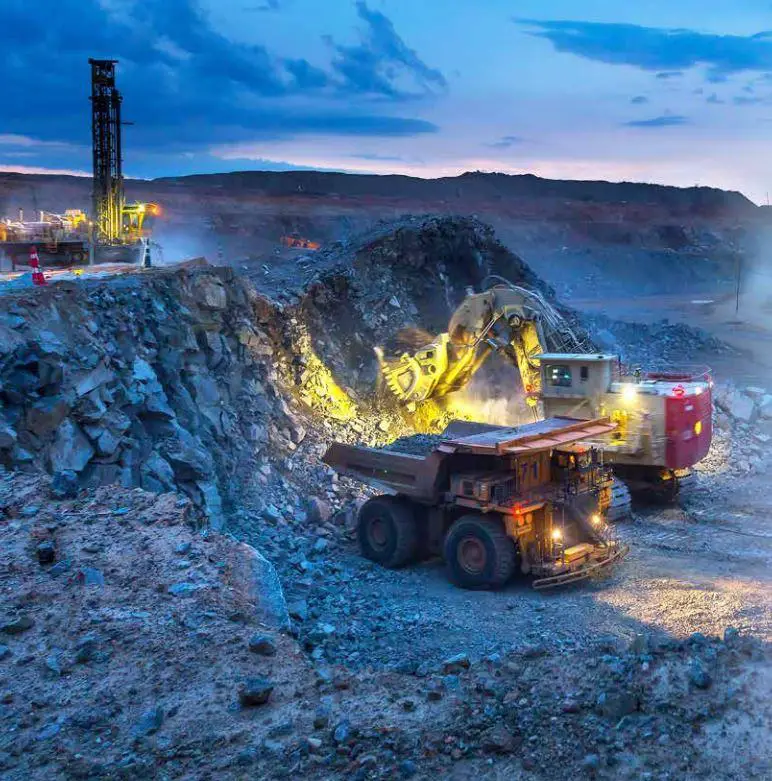
Caledonia’s chief executive, Mark Learmoth, speaking of the Bilboes Project called it a “premier gold development project in Zimbabwe and one of the best gold development projects in Africa”.
Through its acquisition strategy, Caledonia is steadily and certainly transforming itself from being a single mine operator to one where it produces a single commodity but operating various mines and mining projects. The company’s boss called this transaction a “transformational asset” and said it was the next step in Caledonia’s journey to becoming a multi-asset mid-tier gold producer.
Prior to its acquisition strategy Caledonia operated a single mine in Zimbabwe which is the Blanket Mine situated in Gwanda, in the Matabeleland South province of Zimbabwe. The company targeted producing 80,000 ounces of gold from its mine in 2022. The acquisition of the Bilboes project, considering that it will produce 168,000 ounces of gold annually over its 10-year life of mine, means that Caledonia will exceed its annual gold production target by at least 3 times!

Ntsele and his partners began to diversify the interests of their company.
The highlight of this strategy to diversify their interests was trip Ntsele made to the United States to obtain a license to distribute Nike not only in South Africa but also in southern Africa in the early 1990s. Ntsele got the money to grow his Nike operation in southern Africa from Citibank!
The largest transaction that Ndaba Ntsele was involved in which put Pamodzi Investment Holdings on the map must be the leveraged buy-out of Food Corp. When he could not come up with the money needed to buy the company from the local banks in South Africa he went overseas to the Netherlands and got the bulk of the US$ 1.8 billion needed to acquire Food Corp! How about that for a black man with guts!
Ndabahle Ntsele and his Pamodzi Investment Holdings are certainly a class act worth emulating. However, despite his great success, Ntsele has experienced failures. Pamodzi Gold which was one of his mining ventures was liquidated. He had started it by approaching the mining majors who no longer thought it was profitable to mine from older mines.

Visa, for its part, has lodged an application seeking to dismiss the charges. In its defence, the payments platform company said that the people who posted the victims’ underage images and those who distributed and earned money from the material caused the alleged harm and not Visa, the Washington Post reports.
The company went on to argue that it had nothing to do with the operations of the websites run by Mind Geek which include adult entertainment websites where child sexual abuse videos have been featured. Since the news of child sexual abuse broke and the landmark ruling delivered by the California court, Visa has been at pains to distance itself from the lawsuit of which it is now a defendant. The company made a statement to the Washington Post where it condemned sex trafficking, exploitation, and child sexual abuse materials as “repugnant” to its values and purpose as a company.
The statement reads: “This pretrial ruling is disappointing and mischaracterizes Visa’s role and its policies and practices… Visa will not tolerate the use of our network for illegal activity. We continue to believe that Visa is an improper defendant in this case.” The application filed with the California court to be dismissed from the lawsuit on the grounds that Visa was an improper defendant was dismissed by Judge Carney. It is now alleged that Visa helped users on the internet to make money from illegal images.
In terms of achieving net zero carbon emissions, the largest mining companies in the world have several options – each with merits and demerits – they can explore. Mining companies can either divest, decommission, reduce emissions in existing operations, and/or offset assets that produce high greenhouse gas emissions (GHG).
Achieving net zero presents a dilemma because many of the largest miners have made their goal of reaching net zero by offsetting current emissions either through purchasing carbon offsets or investing in solutions that mitigate climate change.
Divesting assets, which is something Anglo American did with their coal assets which they spun off into a pure play standalone coal miner, will decrease a miner’s GHG emissions on a standalone basis. This move simply makes the emissions another person or entity’s challenge. The transfer of assets to third parties increases the risk that those assets may not be de-commissioned promptly or appropriately and will continue to contribute to GHG emissions far into the future.
Zimbabwe Stock Exchange has been one of Africa’s best performing stock markets during the years 2019 to 2021 Zimbabwe’s economy officially dollarized for the second time since 2009 when it first abandoned the use of the Zimbabwe dollar. The Zimbabwe Stock Exchange is home to some high quality companies that generate consistent quality returns. When dollarization first occurred in 2009 companies in Zimbabwe were left poorly capitalized and in need of fresh capital in hard currency. The need for fresh capital resulted in a flurry of rights issues from companies listed on the Zimbabwe Stock Exchange which for the most…

Zimbabwe’s economic and currency woes run much deeper than the finance minister can allude to. For starters, the country heavily relies on imports; it produces little in the form of manufactured goods for exports. This means that the country’s means of generating income in the form of foreign exchange consist largely of producing and selling raw goods with no value addition.
This phenomenon constrains the country’s ability to generate the foreign exchange it is in desperate need of to help underscore the value of its currency. This is perhaps the biggest stumbling block to the universal adoption and warm reception of the Zimbabwe dollar.
Zimbabwe’s citizens have had unpleasant experiences with the Zimbabwe dollar even before it collapsed in 2009. The country’s citizens have seen numerous bank failures with their savings and receiving no compensation for their losses. This was in 2004 when the banking crisis claimed the scalps of all but a handful of local/indigenous banks. In 2006 the central bank raided the foreign currency accounts of the largest exporters in the country. The foreign exchange, it is said, was used to finance the government and political expenditures.
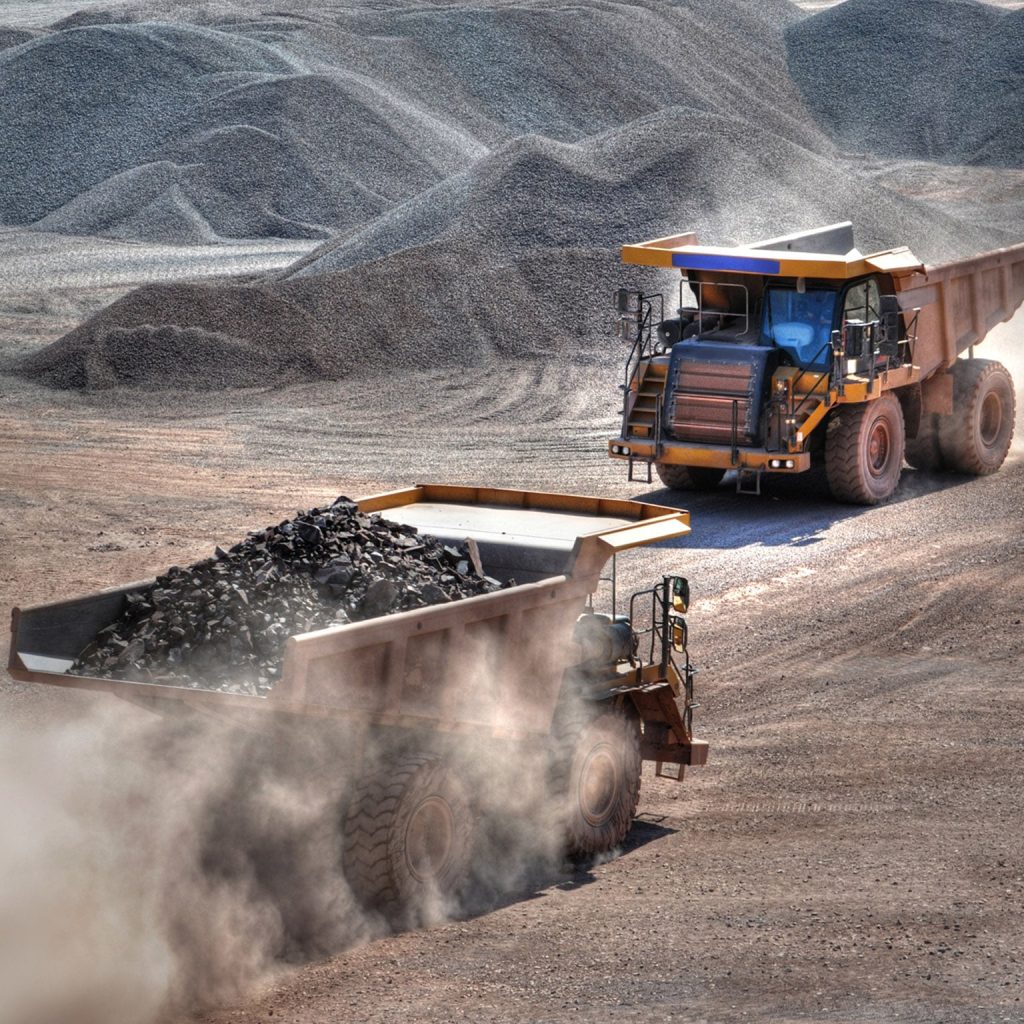
The global mining industry is changing minerals that drove mining activity and profits are slowly being eclipsed by the emergence of a new class of resources, PWC reports. The pursuit of net zero emissions has altered the global mining industry which is increasingly leaning towards the production of minerals used in renewable energy and away from the production of fossil fuels. According to PWC Fossil fuels still contribute substantially to global mining companies despite critical minerals taking center-stage. Global mining activity despite the threat of global warming is not slowing down. It is to the contrary on the rise as…