

Trending
- AI’s Dual Capacity and a Strategic Opportunity for African Peace and Security
- How African economies dealt with the 2025 debt maturity wall
- Africa’s Green Economy Summit 2026 readies pipeline of investment-ready green ventures
- East Africa banks on youth-led innovation to transform food systems sector
- The Washington Accords and Rwanda DRC Peace Deal
- Binance Junior, a crypto savings account targeting children and teens debuts in Africa
- African Union Agenda 2063 and the Conflicts Threatening “The Africa We Want”
- New HIV prevention drug is out — can ravaged African nations afford to miss it?


Author: Laurence Sithole
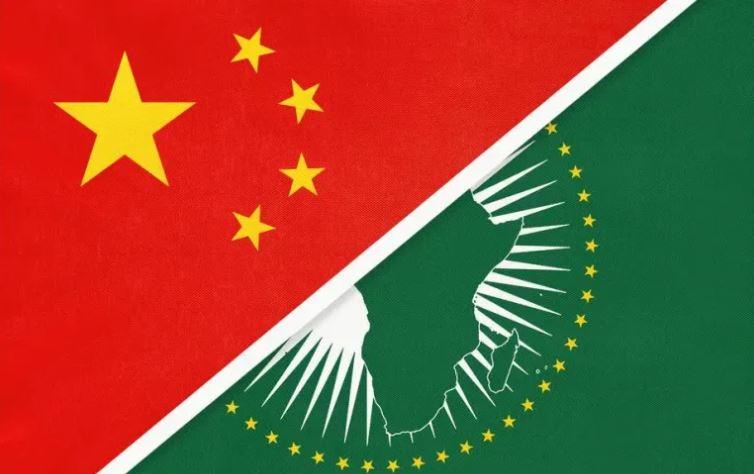
China’s GDP is central to the global economy and especially in Africa The Asian country’s economy is integrated with nearly every sphere of global trade from manufacturing to finance and mining This means that when China does well economically so do African countries The AFCFTA will transform Africa if it can be implemented. China is an integral part of the global economic matrix. The Asian behemoth is responsible for the economic well-being of a litany of countries in the world. Much of the economic growth enjoyed by numerous countries owes itself to and is sponsored by China’s economic activity either…
This shortage of hard currency implies that those businesses that rely on foreign exchange have often had to source it from the parallel market, where it is easily available relative to the formal market.
To mitigate the inflationary pressures caused by businesses looking for foreign exchange on the parallel market and passing on the effect of higher exchange rates to consumers in the form of higher prices, the central bank instituted the foreign currency auction system, which allocates foreign exchange to importers.
This foreign exchange shortage affects all businesses across the economic spectrum and is not limited to retailers only. Manufacturing companies import raw materials and spares. They have recently experienced viability challenges from charging prices in local currency.
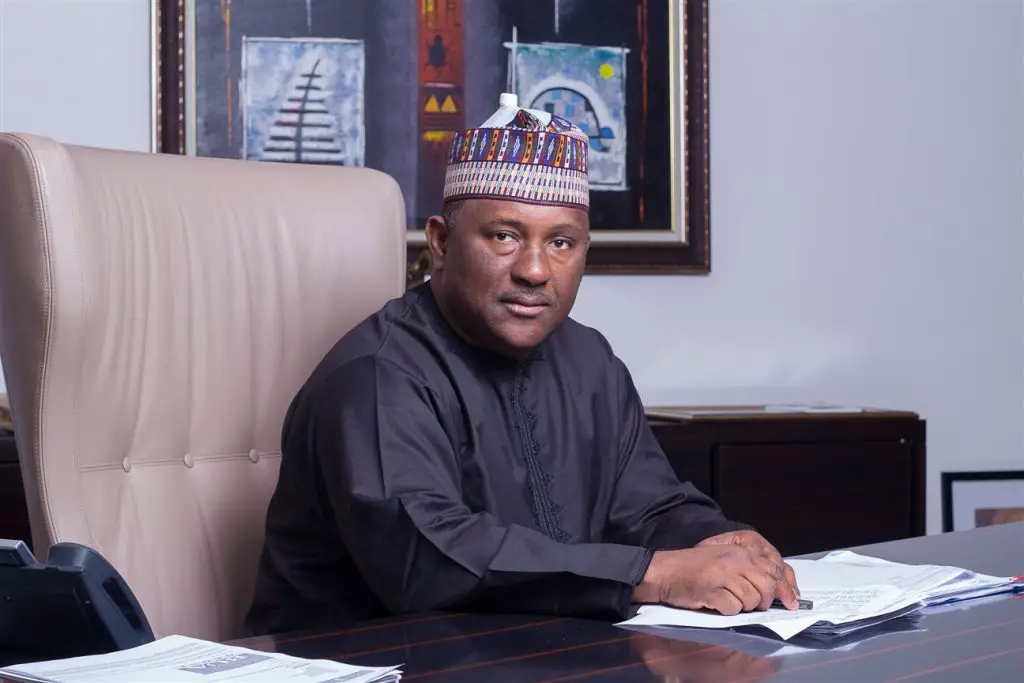
Right across the financial divide, the company reported strongly. Even more remarkable and unprecedented, the Nigerian cement company declared a dividend of N$ 2.61, which was paid instantly during the shareholders’ meeting. This is not something that often happens, if at all.
Normally a company declares a dividend, and then what follows is a process where shareholders are notified by either their stockbrokers, the company itself or the press of the dividend on offer and which shareholders are eligible for the payout, usually those shareholders who are on the company’s record on or before a specific date. This was not the case at the BUA Cement Limited shareholder’s meeting.
The dividend was declared during the meeting and was paid to shareholders before they left the auditorium where they were gathered.
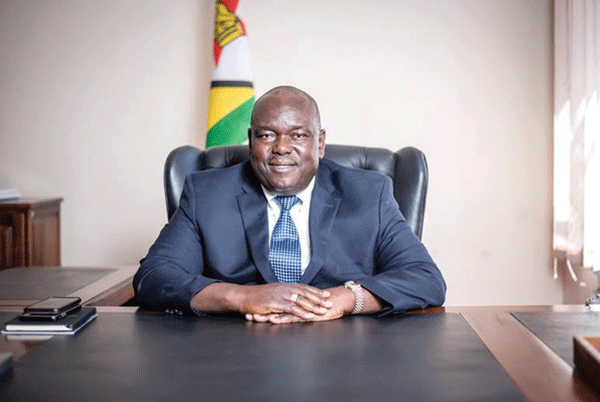
Oliver Chidawu had been the founding shareholder of an outfit called Heritage Investment Bank, and Douglas Munatsi was the founder of First Merchant Bank. Chidawu, in that period, also acquired a substantial portfolio of shares of companies listed on the Zimbabwe Stock Exchange. His portfolio comprised furniture retail and manufacturing companies as well as the manufacture and distribution of agricultural inputs.
In the 2000s, Chidawu was at his zenith. He had a portfolio of thriving businesses and had board seats on several Zimbabwe Stock Exchange listed companies like ABC Holdings Limited, Zimplow Limited, and Bindura Nickel Corporation.
Things started to go badly in the 2010s. Chidawu had made an unsuccessful expansion of his construction outfit to the United Kingdom. A difficult business environment coupled with expensive and unsustainable loans saw the businessman lose some of his prized interests.
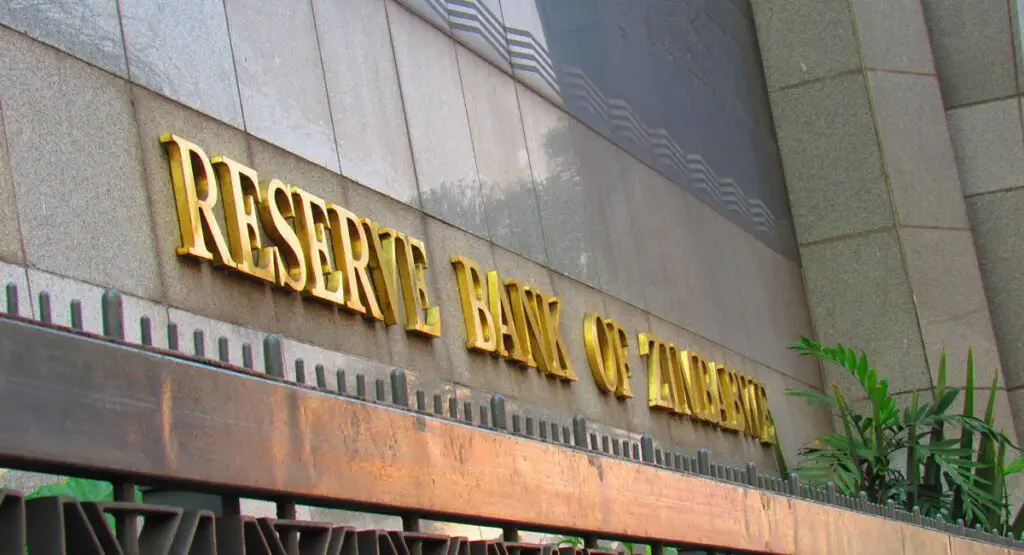
Among Zimbabweans, there is a clear preference for the use of the United States dollar over the local currency. This is to the extent that there are some government services which cannot be accessed without United States dollars.
There are also some basic household commodities and goods that one will need to pay for using hard currency and will not be able to purchase if they have the local currency. Following on the issue of the currency crisis is the fact that exporters are already heavily burdened with operating costs in United States dollars.
Regardless of whether it is an exporter or partial exporter, 40 per cent of all export proceeds generated by Zimbabwean-based exporters must be surrendered to the central bank. This is how the central bank has been funding its auction system to allocate foreign exchange to importers.
To be fair, the surrender requirements are not uniformly or universally applied. The central bank has introduced some concessionary measures. For instance, the tourism and agricultural sectors have been exempted from all foreign exchange surrender requirements. In the mining sector, players are allowed to retain up to eighty per cent of their export proceeds and only must surrender twenty per cent of their export proceeds.
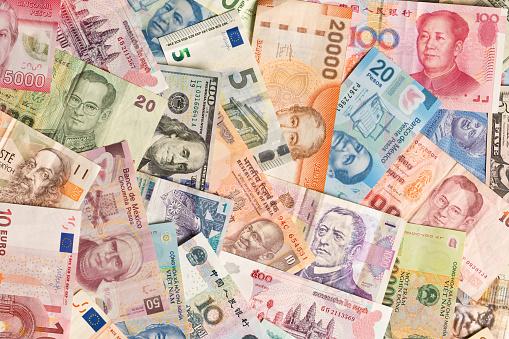
Despite these fundamentals, the Zimbabwe dollar has continued to slide against the United States dollar prompting the government to take drastic and unprecedented measures last month which culminated in the prohibition of bank lending (albeit temporarily), the prohibition of third-party international payments, the prohibition of third-party payments to stockbrokers and the introduction of taxes which can be viewed as punitive for investors on the Zimbabwe Stock Exchange.
Prior to these stringent measures, the monetary authorities had instituted a policy called willing buyer willing seller to try and narrow the gap between the official foreign currency exchange rate and the parallel market foreign currency exchange rate. This gap between the 2 exchange rates reached its peak in the first week of May 2022 at 153% according to a Zimbabwe publication called the Business Weekly.
The premium between the parallel market rate and the official rate has reduced somewhat to 60%. The attempt to get the foreign exchange rates to converge set the parallel market rate raging and it has since breached the ZWL$ 500/US$ 1 mark in the first week of June 2022.
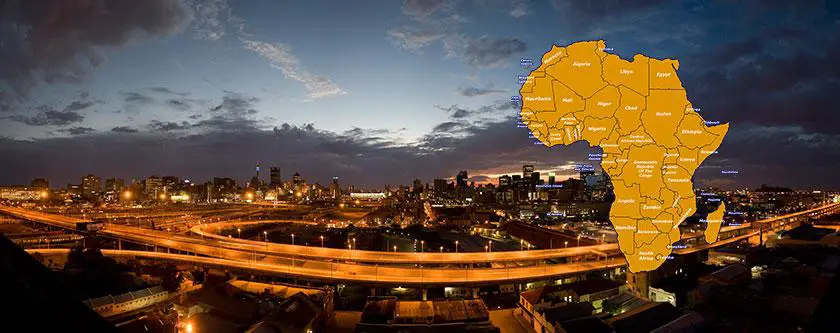
In as far as global trade is concerned Africa has a central role to play. So critical is this role that should Africa be absent from the global trade equation the global economy simply will not prosper. Africa’s mining sector offers in 2022 and going forward a real opportunity for expansion.
Africa’s economic transformation will come from its ability to leverage the comparative advantage position its natural resources offer. Africa needs to become the seventh corridor of the Belt & Road Initiative (BRI). China will be able to enhance its dominance in the global economy if it does more to invest in and develop economic ties with Africa.
Currently the BRI in as far as Africa is concerned restricts the role of Africa to providing access to raw materials.
These gains will come from reduced tariffs which are stubbornly high among states in the region. More and greater gains will come from the reduction of trade costs by reducing non-tariff barriers and improving what the World Bank describes as hard and soft infrastructure at borders. The aim of these measures is to reduce red tape, lower compliance costs for traders and make the integration of African businesses with global supply chains seamless.
AfCFTA is still in its infancy stages in terms of implementation with a lot still to be seen in terms of its success. These practical reforms will be difficult to implement given the sheer size of the trade area. The trade area encompasses 54 countries however, the successful implementation of the initiative will provide substantial rewards. In terms of employment, seamless and frictionless trade between African countries has the potential to lower the gender wage gap in favour of women and help all workers by increasing the amount of decent employment opportunities.
The World Bank estimates that the implementation of AfCFTA will lead to an increase in wages by 10% with the largest gains accruing to women and unskilled labour.
Banking industry in South Africa staged a strong come back in 2021 in report by PWC. Banks enjoyed supportive credit conditions in the economy of South Africa. Banking industry is widely seen as a proxy of the general economy in South Africa South African economy has returned to pre-pandemic levels as evidenced by the financial performance of banks according to PWC The banking industry in South Africa is in for good times according to a report by PWC. The banking industry sector analysis and report by the global management consulting firm published in March 2022 reports that the major South…

Interestingly if the US$9 million which the company said it lost from the statutory surrender requirement is added back to the top-line revenue, it will take the company’s revenues for the 2021 financial year to just above US$ 24 million which would be higher than what it achieved in 2020. This policy position which the company lamented needs revision by the authorities as it is inflicting real financial harm to companies that are Zimbabwe’s biggest exporters and earners of foreign exchange.
In the 2021 financial year, Padenga Holdings Limited incurred higher interest expenses at US$ 10,138,637 which was up from US$ 6,665,084.00 the previous year. The increase in this cost category was due to leverage and borrowings which Padenga employed in rehabilitating the Eureka gold mine which is now in full production and is also responsible for the increase in group revenues.
The company enjoyed increased production from its gold mining operations. The company sold a staggering 976 kilograms of gold which was higher than the 722 kilograms of gold sold in 2020. The increase in gold production came from the newly commissioned Eureka gold mine. From its crocodile operations, Padenga Holdings Limited sold a total of 55,341 skins which was less than the 72,244 skins it sold in 2020. The Zimbabwe crocodile operation sold 39,936 skins down from 43,254 skins that it sold in 2020.