

Trending
- Weather experts warn of the most powerful El Niño in decades as extreme weather hits Africa
- Africa Blockchain Festival ignites a new dawn for African innovation
- Africa’s gaming market set to quadruple to $4 billion, defying global slowdown
- Tanzania throws its bond market wide open to the global investors
- VALR sets sights on East Africa as blockchain moves deeper into Africa’s financial system
- The cost of the data gap: Why Kenya’s lenders can’t afford to miss the full picture
- Tanzania takes EAC labour migration helm as regional rules face overhaul
- 2026 is turning out as a defining year in geopolitics, but for whom?



A majority of Kenyan workers are disengaged according to the 2024 edition of Gallup employees survey. The survey further shows that men are slightly…
Kenya’s $168Bn plundered development loans were taken over 11 year…

Kenya’s Political Instability has seen calls for President Ruto’s impeachment,…



For the longest time, Africa has been regarded as a hub of extraction, with a…
KCB Group Plc reported a 22.2% y/y decrease in EPS to KES6.11. The turn in profitability was mainly due to a slight doubling in Loan Loss Provision (LLP) to KES27.5Bn. Net Interest Income (NII) recorded a solid growth of 21.0% y/y to KES67.9Bn. The balance sheet grew 9.9% y/y to KES987.8Bn, propelled by growth in both deposits (driven by precautionary instincts due to COVID-19 shock) and loan book. During the period, the company rallied from KES38.75 at the beginning of the month and closed at KES41.3 accounting for a significant investor participation in the sector.
Equity Group reported an 11.6% y/y decrease in EPS to KES5.24. The drop in profitability was as a result of a quadrupling in LLP to KES26.6Bn. Its balance sheet grew by half its previous level to KES1,015.1Bn. Equity group benefited from its digital transformation that accounted for 63% of the total transactions being generated outside the branch network. Its 66.5% acquisition of Banque Commerciale Du Congo that widened the bank’s penetration in the regional market increased its customer deposits by 53% to KES740.8Bn, boosting investor confidence in the growth of the bank across the region.
Insurance uptake in any sector is always influenced by the insuring public’s awareness about insurance.…
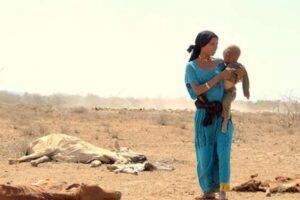
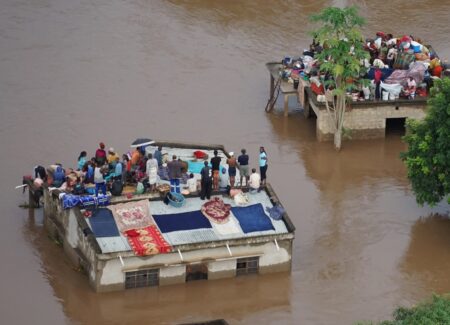
Over the years, various climatic disasters have occurred, notably the recent Cyclone Idai that hit the continent’s south-eastern part. Various more catastrophic weather events continue to affect the continent socially and economically. Kenya, which relies on its agricultural sector’s performance, has evidenced a sustained and growing divergence between farm production and consumption. Notable air masses like the El Nino and La Nina have had substantial negative impacts on coastal countries such as Kenya due to rising sea levels caused by changing oceanic climatic conditions.
Kenya has been forecasted to face another severe dry spell this year as a result of La Nina. La Nina, an air mass typical of cold weather, which is not ideal for rainfall, has been hitting the east coastal country nearly every five years. In 2016, 2.7 million people were affected by a hunger crisis, and the majority of them displaced. A notable concern in such events is the government’s limited financial ability for relief aid. Much of the burden has been borne by humanitarian organizations that continue to offer substantial assistance both for disaster relief and Africa’s economic development.
There is a certain state of mind where someone is so sure something is true…
in this article you will get to learn more about mpesa fees, what’s the process…