

Trending
- Silicon Valley’s Tim Draper backs Nairobi blockchain festival, sees Africa as next digital frontier
- Dangote breaks ground on $16bn Lamu refinery as East Africa seeks fuel independence
- Gulf and African states meet in Dar to rewrite rules of labour migration
- African governments drive new forest finance progress as global report warns funding globally must scale faster
- Fine Spinners eyes Kenya’s Agoa-backed apparel supply chain with $5m plant
- Why young Kenyan investors need to stop treating the stock market like a betting slip
- Tanzania tax reforms mandate VAT refunds to under 30 days
- In New York, world leaders unveil plan to overhaul global health architecture



Kenya’s forex reserves dipped to $6.2 billion on May 19, an eight-year low, before a slight improvement to $6.4 billion on May 26. At…

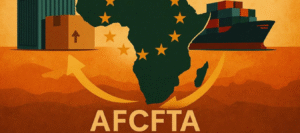
According to SWIFT, African regions with strong integration saw increased use of local currencies and decreased use of hard currencies such as the US dollar. For instance, the use of the West African franc by the eight countries in the West African Economic and Monetary Union has overtaken the South African rand and the British West African pound.
This implies that boosting the use of regional currencies will shield the African trade market from adverse global conditions associated with the performance of US dollars. However, further regional coordination remains necessary to build a continental payment system that encourages the use of local correspondent banks and local currencies. These moves can help in managing currency depreciation to boost African trade finance.
Into a menacing economic quick sand African economies have been…




Education is the lifeline of development in Africa. At present, things are changing rapidly within the African education domain. Modern technology is now transforming learning in classrooms in South Africa, Nigeria, Kenya, Tanzania and Rwanda to mention a few.
African states, just as other nations across the globe, are experiencing economic shocks from the coronavirus (COVID-19), which forced 250 million African children to stay home.
Across the region, children were out of school for various periods. In Kenya, children remained home for the entire course of 2020 since March, while Tanzania’s school shutdown lasted for three months.

In 2019, 9 per cent of the GDP in Africa was contributed by mobile technologies and services. This means the mobile industry in Africa is fueling sound growth and social impact necessary for acquiring sustainable economic growth.
The world is interconnected and it is getting seamlessly interconnected by the hour each day. This means the more you get digitally connected the more knowledgeable, wealthy and creative you become, to say the least.
This scenario is manifesting itself across developing countries, especially in Sub-Saharan Africa, where ingenious innovations are made in Rwanda, Kenya, Uganda, South Africa and Tanzania, featuring seamless use of online platforms to learn, earn a living and access services.

The Tanzanian central bank (Bank of Tanzania – BoT) published a detailed economic bulletin for the quarter ending September 2020, which showed Zanzibar’s economy taking a nosedive contracting by 2 per cent compared to a growth rate of 5.2 per cent in the corresponding quarter in 2019.
Zanzibar—the semi-autonomous region of Tanzania, is taking various measures to enhance economic and trade liberalization that can pave a smooth way for the private sector to get engaged in the local, regional and international arena.

Africa’s tech habitude is on the rise. Internet usage has risen significantly on the continent. On top of that, the advent of the coronavirus pandemic accelerated the prospect of growth in the digital sphere. E-commerce is one such opportunity that affords businesses access to broader market opportunities in every arena. According to McKinsey, a worldwide consulting firm, the e-commerce industry in Africa is expected to grow to a $75 billion industry by 2025.
E-commerce is growing. It is accelerated by a growing and youthful population that is increasingly exposed and has an appetite for greater efficiency and improvement of business to first-world standards. The African diaspora has also contributed to this growing demand as people have become more exposed to what is going on around the world. Technology itself dissolves existing borders and opens up trade regionally and internationally.

The year 2020 had a lot of events across the development aisle, and Tanzania’s economic upgrade from low to lower-middle-income status by the World Bank (WB), is worth noting as one of the success stories.
There have been a number of forecasts on the economy of Africa and Tanzania at large, with a variety of predictions which point at different directions.
On June 11 2020, the Tanzanian government confidently, via the Ministry of Finance and Planning stated that the nation’s economy is expected to grow at a rate of 5.4 per cent in 2020 compared to earlier estimates of 6.9 per cent.

It is with great joy and pride to say Africa is mounting the digitalization hill and none of the 54 countries seems to tire of the climb. From the emergence of mobile money in East Africa to the use of drone technology in monitoring farmland activities in Ghana, all seem as ground-breaking as the other digital operations executed in Africa.
Through the years East Africa has seen a surge in fintech exceeding expectations; services such as M-Pawa in Tanzania, M-Shwari and M-Pesa in Kenya (offered by Vodacom Tanzania and Safaricom Kenya respectively) has not only digitalized financing en masse for the unbanked but enabled digitalization in East Africa to soar to new heights.