


- Nigerian industrialist tells African leaders the plant will prove the continent can industrialise without foreign labour; Ruto warns Kenyans will hold him to the deadline.
- Beyond fuel, the complex will generate 1,000 megawatts of power, double the capacity of Dangote’s Lagos operations, and produce one million tonnes of polypropylene and base oils.
- Dangote said the refinery would also target a meaningful share of the European and British jet-fuel market, citing the role his Nigerian plant played in easing recent shortages.
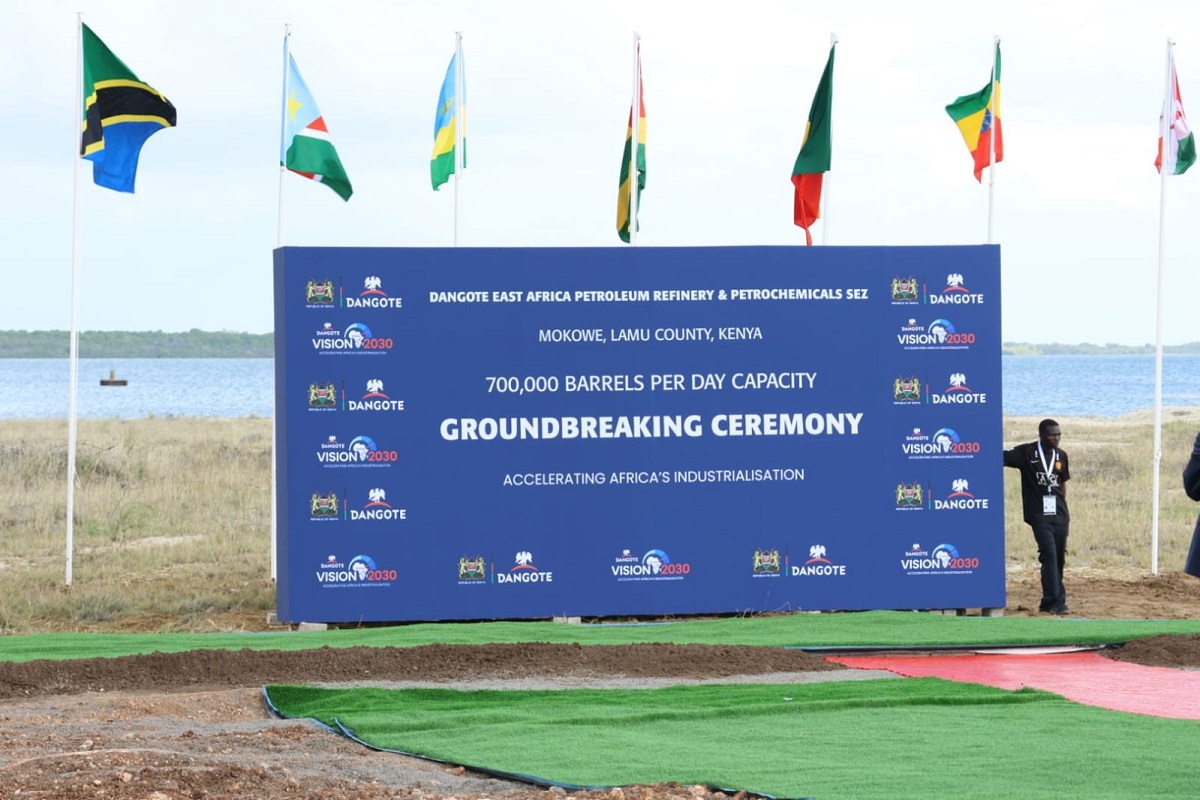
Aliko Dangote used the groundbreaking of his $16 billion East Africa oil refinery on Wednesday to issue a personal challenge: return in 40 months and switch the plant on.
Addressing President William Ruto, Ethiopian Prime Minister Abiy Ahmed and other regional leaders in Mokowe, the Nigerian billionaire declared that the 700,000-barrel-a-day facility would demonstrate Africa’s ability to deliver complex industrial projects with its own workforce.
“Lekki refinery in Nigeria proved that it is capable, so Lamu must prove that it can be repeated,” Dangote said. “Mr President, and our other respected presidents, my brother, Prime Minister Abiy, I want to assure you will come back here and commission this refinery in 40 months from today.” President Ruto immediately accepted the challenge, cautioning that Kenyans keep strict score of political timelines.
Read also: Aliko Dangote’s Billion Dollar Investment Plans for Zimbabwe
Training, not just tanks
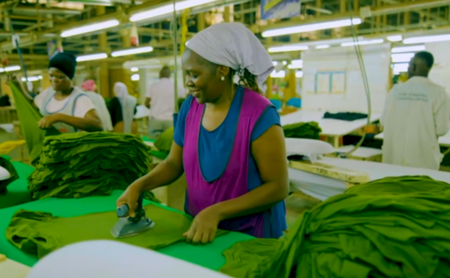
Dangote devoted a substantial part of his speech to skills transfer. He announced the creation of a training school in Lamu that will prepare 1,000 local residents, particularly those holding engineering degrees and diplomas, for roles at the refinery and supporting industries. “We will set up a training school for those with engineering degrees and diplomas,” he said. “Moving forward, we will no longer need to rely on foreign labour from China or India to construct our infrastructure; we are training and empowering our own workforce right here.”
He framed the project as a partnership rather than an imposition. “We have not come merely to build in your community. We want to build with your community,” Dangote told Lamu residents. Anyone with relevant technical qualifications, he added, would find guaranteed employment. The plant is expected to create around 60,000 jobs during peak construction, with local firms invited into the supply chain.
Beyond fuel, the complex will generate 1,000 megawatts of power, double the capacity of Dangote’s Lagos operations, and produce one million tonnes of polypropylene and base oils. Dangote said the refinery would also target a meaningful share of the European and British jet-fuel market, citing the role his Nigerian plant played in easing recent shortages.
Dangote pledges industrial ecosystem
Dangote repeatedly described the Lamu investment as the foundation of a broader industrial zone rather than a standalone refinery. “We are not here merely to build tanks, pipelines, processing units and jetties. We are here to help build an industrial ecosystem,” he said, listing opportunities in logistics, marine services, manufacturing, technology and small businesses. He revealed that more than 110 pieces of equipment are already on site, with another 400 expected within 60 days.
The industrialist also returned to a familiar continental theme: Africa must process more of what it consumes. “By 2030, the majority of African countries will be self-sufficient [in fuel]. It does not matter where it is refined, but it should be in the African continent, on the soil of Africa,” he said. The message echoed President Ruto’s own call at the ceremony for the region to “produce more of what we consume.”
Read also: The stakes and risks in Dangote Refinery’s $5bn grand bet for a Pan-African IPO
Land dispute remains unresolved
The ceremony proceeded despite a Malindi Environment and Land Court order requiring the status quo on a contested parcel claimed by 133 residents of the Chandavai community until mid-October. Dangote has previously dismissed such challenges as “normal for us in Africa” and “even small.” Environmental groups continue to raise concerns about mangroves, fisheries and tourism, while crude-supply questions linger: Kenya has no commercial oil production yet, and pipelines from Turkana and Uganda remain incomplete.