


Trending
- Weather experts warn of the most powerful El Niño in decades as extreme weather hits Africa
- Africa Blockchain Festival ignites a new dawn for African innovation
- Africa’s gaming market set to quadruple to $4 billion, defying global slowdown
- Tanzania throws its bond market wide open to the global investors
- VALR sets sights on East Africa as blockchain moves deeper into Africa’s financial system
- The cost of the data gap: Why Kenya’s lenders can’t afford to miss the full picture
- Tanzania takes EAC labour migration helm as regional rules face overhaul
- 2026 is turning out as a defining year in geopolitics, but for whom?


Browsing: Reserve Bank of Zimbabwe

RBZ Governor John Mangudya revealed that as of July 21st, the bank had conducted 11 issuances of GBDT. The Governor…
The central bank kept the policy rate at 200 per cent saying it would be reviewed in line with developments in monthly inflation. The high rate is to ensure that it is not viable to borrow local currency to speculate in the black market or even buy gold coins.
With foreign currency-denominated loans now constituting more than half of the total banking sector loans, with effect from September 1, statutory reserve requirements would be extended to forex deposits at rates of 5 per cent for call deposits and 2,5 per cent for time and savings deposits to ensure continued soundness of the banking sector.
Foreign exchange retention thresholds have been maintained at 75 per cent for agricultural exporters and 100 per cent for tourism, recovering from the effects of Covid-19.

Senditoo and Access Forex partner to give clients hassle-free international transfers. The partnership means that Senditoo’s services will be available…

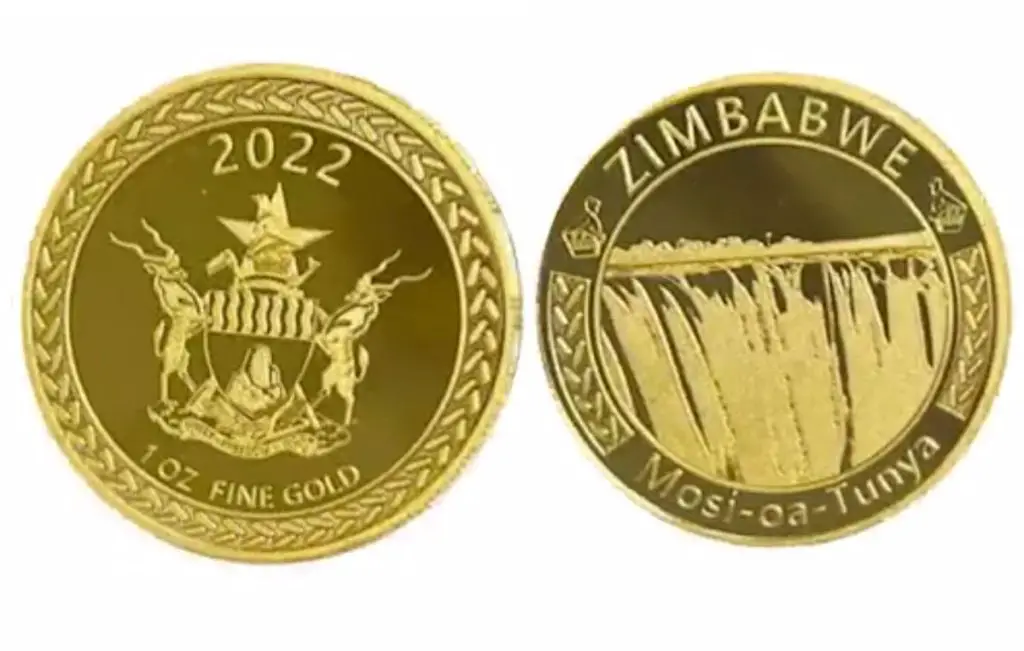
All sales of the gold coin, weighing 33.93g, by the agents would be subject to normal know-your-customer (KYC) principles in line with international best practices, which include the declaration of the source of funds.
“The gold coins shall be sold at the prevailing international price of gold plus 5% to cover the cost of production and distribution of the coin on a payment vs delivery basis,” the guidelines read in part.
“The bank shall publish the Mosi-oa-Tunya gold coin price by 0800 hours daily, which shall be based on the previous day’s London Bullion Market Association (LBMA) PM Fix plus the cost of producing the coin. The Mosi-oa-Tunya gold coins shall be sold with an accompanying bearer certificate with security features.”
Among Zimbabweans, there is a clear preference for the use of the United States dollar over the local currency. This is to the extent that there are some government services which cannot be accessed without United States dollars.
There are also some basic household commodities and goods that one will need to pay for using hard currency and will not be able to purchase if they have the local currency. Following on the issue of the currency crisis is the fact that exporters are already heavily burdened with operating costs in United States dollars.
Regardless of whether it is an exporter or partial exporter, 40 per cent of all export proceeds generated by Zimbabwean-based exporters must be surrendered to the central bank. This is how the central bank has been funding its auction system to allocate foreign exchange to importers.
To be fair, the surrender requirements are not uniformly or universally applied. The central bank has introduced some concessionary measures. For instance, the tourism and agricultural sectors have been exempted from all foreign exchange surrender requirements. In the mining sector, players are allowed to retain up to eighty per cent of their export proceeds and only must surrender twenty per cent of their export proceeds.
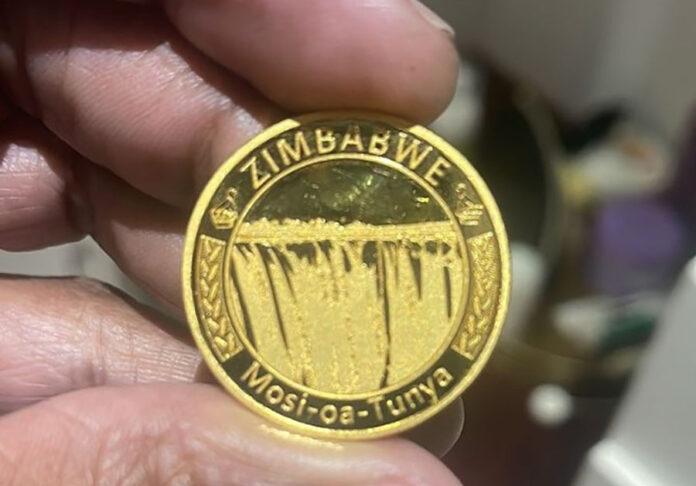
The new coins will be available for sale from 25 July in local currency, US dollars, and other foreign currencies at a price based on the prevailing international price of gold and the cost of production.
“The gold coins will be available for sale to the public from 25 July 2022 in both local currency (ZW$) and United States Dollars (US$) (and other foreign currencies) at a price based on the prevailing international price of gold and the cost of production. The coins will be sold through the Bank and its subsidiaries, Fidelity Gold Refinery (Private) Limited and Aurex (Private) Limited, local banks, and selected international banking partners. Entities selling the coins shall be required to apply to Know Your Customer (KYC) principles,” read the statement.
Aurex Private, a subsidiary of the central bank, is involved in diamond cutting and polishing over and above the manufacturing of jewellery.
Despite these fundamentals, the Zimbabwe dollar has continued to slide against the United States dollar prompting the government to take drastic and unprecedented measures last month which culminated in the prohibition of bank lending (albeit temporarily), the prohibition of third-party international payments, the prohibition of third-party payments to stockbrokers and the introduction of taxes which can be viewed as punitive for investors on the Zimbabwe Stock Exchange.
Prior to these stringent measures, the monetary authorities had instituted a policy called willing buyer willing seller to try and narrow the gap between the official foreign currency exchange rate and the parallel market foreign currency exchange rate. This gap between the 2 exchange rates reached its peak in the first week of May 2022 at 153% according to a Zimbabwe publication called the Business Weekly.
The premium between the parallel market rate and the official rate has reduced somewhat to 60%. The attempt to get the foreign exchange rates to converge set the parallel market rate raging and it has since breached the ZWL$ 500/US$ 1 mark in the first week of June 2022.
According to an article by the Herald published on June 27, 2022, popular bullion coins include the American eagle, the Canadian Maple Leaf, the South African Krugerrand, the Isle of Man Gold Cat, the Australian Kangaroo, and the China Mint Panda Bear. They added that gold is a haven against inflation and a gold coin is made mostly of gold while most gold bullion coins are pure gold.
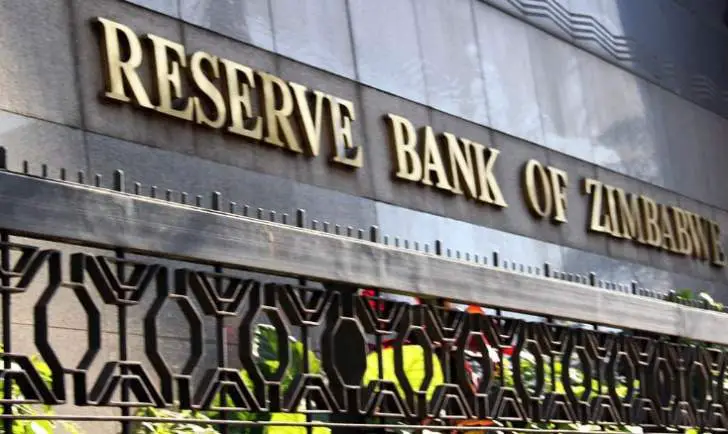
Meanwhile, in an article dated May 27, 2022, Bloomberg described the RBZ as the world’s most aggressive central bank. According to an article by Pindula News published on June 27, 2022, Zimbabwe’s former Finance and Economic Development Minister, Tendai Biti, said the Reserve Bank of Zimbabwe (RBZ) has outlived its usefulness and, therefore, should be abolished.
He made the remarks in response to a cocktail of measures introduced by the government to stabilize the economy. The main duty of the RBZ is to present monetary policies with primary objectives that address the management of inflation or unemployment, and the maintenance of currency exchange rates.
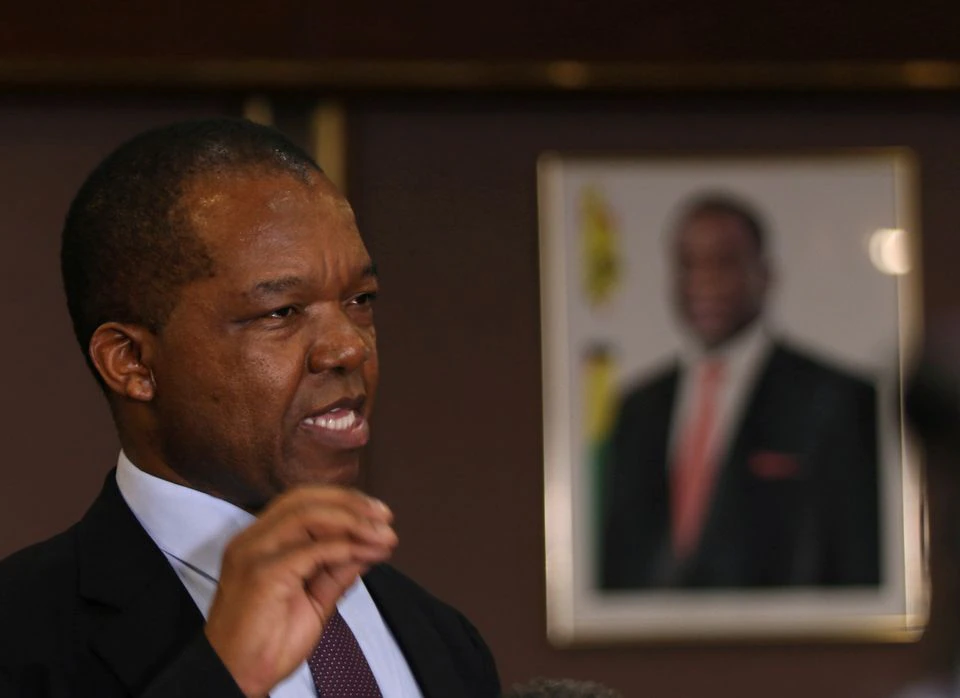
The president announced in a May 7 televised speech that banks had been banned from lending in a bid to stem the precipitous decline of the local currency inter alia increasing capital holding tax, banning third party transactions on the local bourse, and increasing Intermediated Money Transfer Tax (IMTT).
The move came as the local currency had been depreciated against the United States dollar. This is amid high demand for the greenback which is seen as a store of value.
An executive at an agro-processing firm, name with-held, told NewZimbabwe that his company can’t borrow what it needs to pay 500 farmers for the soy and sugar beans. It contracted them to grow, or fund the purchase of inputs such as fertilizer for the next season’s crop.
Large-scale miners supplied nine tonnes of gold over the time, according to FPR, the country’s lone buyer of gold, lagging output from small-scale producers, which delivered 13 tonnes.
Bullion output fell slightly to 1,38 tonnes in April, then jumped to 1,66 tonnes in May before soaring to 2,92 tonnes in June.
According to the study, July’s output was 2,82 tonnes before climbing to 3,17 tonnes and 3 tonnes in September and October.