
Trending
- 2026 is turning out as a defining year in geopolitics, but for whom?
- Bitcoin Surges 20%: How Crypto Holders Are Exploring Cloud Mining Income in 2026
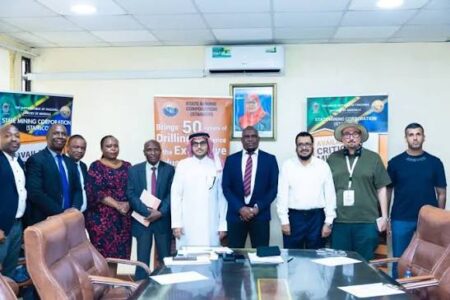
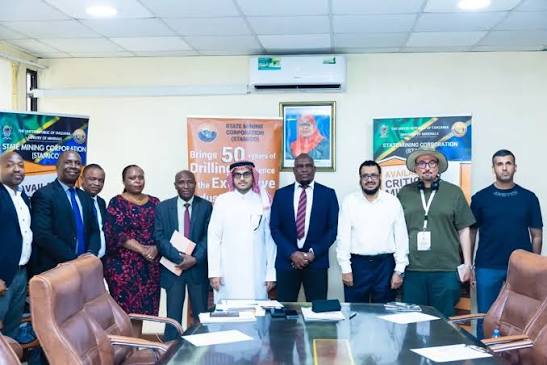
- Saudi Arabia and Tanzania pledge to deepen bilateral trade ties
- Tanzania rewrites its digital investment playbook
- Ethical sourcing boosting demand for Tanzania organic cotton
- DRC deploys 70,000 Ebola vaccine doses in high-stakes trial against deadly Bundibugyo strain
- Kenya’s private sector optimistic on growth despite inflation and geopolitical risks
- AfDB and Standard Bank ink $332 million social bond deal to fund South African SMEs



Family Bank marks largest private-sector listing on the Nairobi Securities Exchange (NSE) in more than 17 years. On Tuesday, the lender debuted trading with…

Resilience, revolution and rivalry have long marked the Horn of…
Under a new COMESA programme, farmers in the five East…

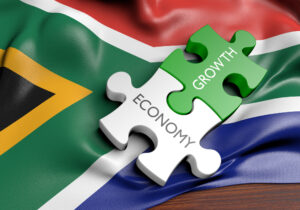
South Africa is set to topple Nigeria and Egypt as Africa’s biggest economy in 2024. This is according to forecasts from the International Monetary Fund. According to IMF’s World Economic Outlook, South Africa’s gross domestic product will reach $401 billion per current price in 2024. On the other hand, Nigeria’s GDP will reach $395 billion, with Egypt’s GDP reaching $358 billion.
South Africa, the continent’s most industrialised nation, is expected to maintain the top spot as Africa’s biggest economy for only one year. In 2025, the country will again lag behind Nigeria and fall to third place behind Egypt a year later. This is according to the IMF’s World Economic Outlook, a report released last week.
Counterfeits and the informal alcohol industry is increasingly eating into EABL’s mainstream market. EABL net…
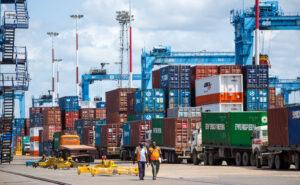
Kenya’s Mombasa port has for years remained the leading harbour in East Africa, serving traders in the country and neighbouring landlocked states. Uganda is the biggest destination for transit cargo through the Port of Mombasa, accounting for about 83.2 per cent of transit cargo through the Kenyan port. South Sudan takes up 9.9 per cent while DR Congo, Tanzania and Rwanda account for 7.2 per cent, 3.2 per cent and 2.4 per cent, respectively.
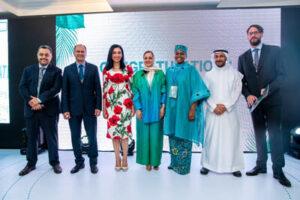
The demand for carbon offsets is rapidly growing in Africa, unlocking billions for the climate finance needs of economies. Kenya recently hosted a carbon credits auction. The auction is the world’s largest sale, where firms from Saudi Arabia bought more than 2.2 million tonnes of certified carbon credits.
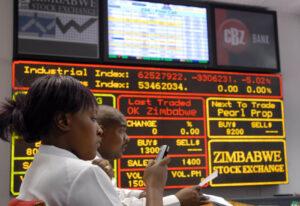
The Zimbabwe Stock Exchange (ZSE) on June 7 announced a halt in trading for two consecutive days. This comes amid investors flocking to the stock market as an escape from the rapid depreciation of the Zimbabwean dollar. The ZSE All Share index surpassed the 10 per cent threshold on the upside. Consequently, the ZSE exchange had to take immediate action.
With tightening monetary policies globally, many African economies are struggling with falling forex reserves. Low…