
Trending
- 2026 is turning out as a defining year in geopolitics, but for whom?
- Bitcoin Surges 20%: How Crypto Holders Are Exploring Cloud Mining Income in 2026
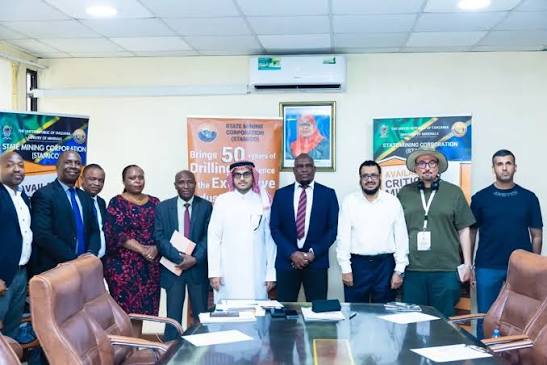
- Saudi Arabia and Tanzania pledge to deepen bilateral trade ties
- Tanzania rewrites its digital investment playbook
- Ethical sourcing boosting demand for Tanzania organic cotton
- DRC deploys 70,000 Ebola vaccine doses in high-stakes trial against deadly Bundibugyo strain
- Kenya’s private sector optimistic on growth despite inflation and geopolitical risks
- AfDB and Standard Bank ink $332 million social bond deal to fund South African SMEs



Family Bank marks largest private-sector listing on the Nairobi Securities Exchange (NSE) in more than 17 years. On Tuesday, the lender debuted trading with…
Resilience, revolution and rivalry have long marked the Horn of…
Under a new COMESA programme, farmers in the five East…

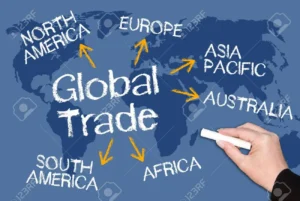
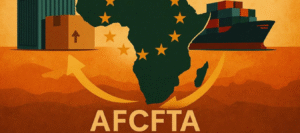
AfCFTA’s successful implementation can boost trade and promote Africa’s economic recovery and growth. The AfCFTA is the world’s most extensive free trade area in terms of size and number of nations, with a combined GDP of around $3.4 trillion.
Increased integration would improve incomes, generate employment, stimulate investment, and make establishing regional supply chains easier. In comparison to Africa’s external trade, intra-African trade remains tiny. In 2020, just 18 per cent of exports went to other African nations.
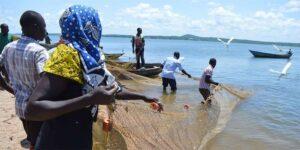
Lake Victoria’s fisheries support more than 3 million livelihoods and bring in US$500 million in revenues annually.
Nile Perch is the main fish caught in Lake Victoria. Fish maw – the air sack that aids the Nile Perch in floating and a Chinese delicacy – has been a major export source. Statistics from the Uganda Ministry of Agriculture indicate an increase in fish maw exports earning from US$27m in 2015, to US$31m in 2016, US$48m in 2017 and US$52m in 2018. These earnings exclude the earnings from Nile Perch and its eggs.
However, the lake has been invaded by water hyacinth – the floating, green mats of waxy leaves with purple blossoms – depriving the waters below of oxygen which makes it hard for aquatic life to survive.
That, plus overfishing which occurs when fishermen use undersized nets that catch fish before they reach maturity, rapid population growth, and pollution by wastewater, agro-pesticides and fertilisers threaten the future of fishing in Lake Victoria.
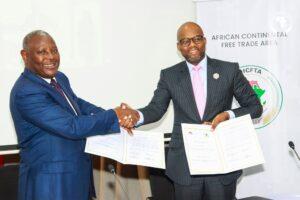
A statement posted by Equity Bank on its website indicated the plan hopes to revive the economy in the continent following the COVID-19 pandemic that halted operations in different sectors leading to the loss of jobs.
In this, AfCFTA and Equity will work on the private sector economic recovery and resilience stimulus plan where the lender has seeded with a $ 6 billion (Sh 678 billion) fund focusing on food and agriculture, extractives, manufacturing and logistics, trade and investments, social impact, health and environmental investments.
Equity plans to finance over five million micro, small and medium-sized businesses (MSMEs) and 25 million vulnerable households by 2025 to support the creation of 50 million jobs.
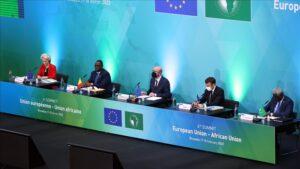
The European Union (EU) and Nigeria have enjoyed robust trade and bilateral relations since the…

Platinum mining is where Loucas Pouroulis, the chairman of mining outfit Tharisa PLC made and…
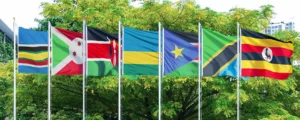
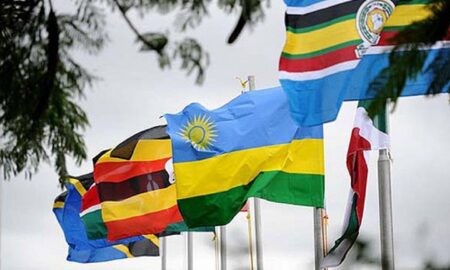
With the recent addition of the DRC to the East African region, landlocked countries have found an alternative port of entry in the Atlantic Ocean. The swiftness of trade with two ports of entry and the region’s strategic location will be incomparable to any other region on the continent.
The East African Federation would be the fourth largest country in both population and landmass, trailing after China, India and the United States. President Uhuru Kenyatta says that the federation would have over 300 million people.
The gross domestic product for the region will sum up to US$250 billion, the fourth-largest in Africa and the 34th biggest globally. Since the beginning of the last decade, East Africa has had the fastest growing economy globally. In 2019, the region’s economy grew by about 5 per cent. If the federation continues with this growth rate, the new country would quickly become the biggest superpower in Africa.
The EAF would become Africa’s largest superpower precisely because of the weaker nations surrounding the region. Among the languages official languages suggested in the region will be English and Swahili.