
Trending
- African trade is growing despite the obstacles
- Why global capital is betting big on Africa’s digital promise
- Kenya posts stronger-than-expected Q1 growth at 5.3% on manufacturing rebound, tourism boom
- China’s new investment rules are about guardrails, not closed doors
- Zanzibar optimistic economic growth will hit 7.5% on tourism boom
- Kenya defies economic shocks to post record $22 billion in tax collections
- Forget South Africa: East Africa now rules in banking industry returns
- Lamu over Tanga: The commercial calculus that cost Tanzania $20bn refinery


Author: Giza Mdoe

Giza Mdoe
Giza Mdoe is an experienced journalist with 10 plus years. He's been a Creative Director on various brand awareness campaigns and a former Copy Editor for some of Tanzania's leading newspapers. He's a graduate with a BA in Journalism from the University of San Jose. Contact me at [email protected]
Kenya has strategically managed to tap into the lucrative United Arab Emirates (UAE) tourism market. With less than five hours’ flight time from Dubai to Kenya’s capital Nairobi, the UAE is very well positioned to provide Kenya with much needed tourists to help re-boost the ailing industry. (https://vulcanpost.com/) Notably, tourists and business persons alike, have a wide range of flight options to and from Nairobi all scheduled at convenient times and routes. There is also a score of airlines that provide fast and efficient connectivity and frequency including Kenya’s own Kenya Airways, UAE’s Emirates Airlines (from Dubai), Air Arabia (from Sharjah), and Etihad…

Long gone are the days you hear of Africa and envision mud huts and malnourished babies. Well, maybe long-gone is an over-statement because these unfathomable pasts are buried in very shallow time graves and ever threatening to re-emerge and haunt the continent again. It is for this very reason that Africa, and its trade and development partners must harness the continent’s technology potential and put innovation at the forefront of every nation’s development agenda. Why? For Africa, it is how the continent will keep those shallow graves buried and build a bright, healthy future and for the world—well, Africa is…
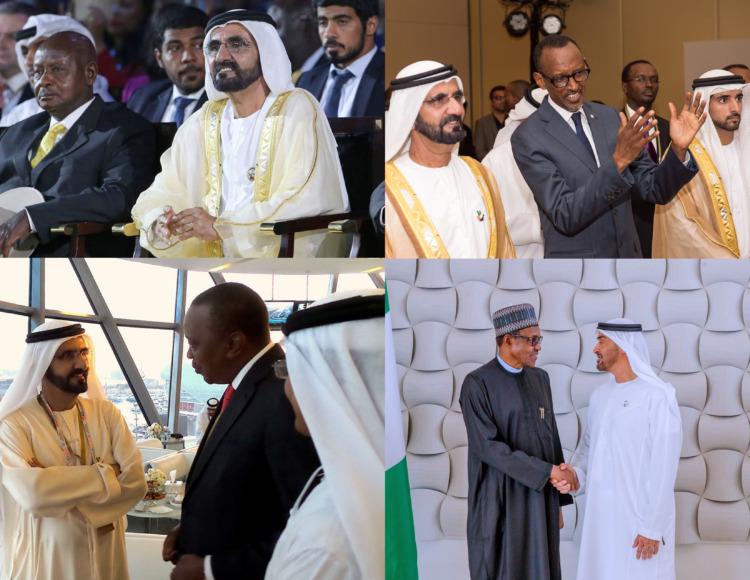
Commenting on Africa’s participation at the conference and the continent’s development in general Egypt’s representative at Expo 2020, Ahmed Maghawry Diab, who is also an official from the country’s Ministry of Trade and Industry said, “…the world has started to look at Africa and rediscover it…the continent has a lot of difficulties, but it has also started to develop.”
Another optimist for the continent’s development and what it has to offer is Dr. Levi Uche Madueke, Head of the African Union (AU) Strategic Partnerships Office and AU Commissioner General for Expo 2020 said, “…Africa is undergoing a dynamic socio-economic and political transformation. There is a lot happening on the continent but the world is yet to hear all about it. It is time to take charge of Africa’s narrative and reclaim its rightful place in the global arena.”

The Zanzibar government has issued express interest to rent out the more than 50 islets surrounding the main archipelago to investors in the marine tourism sectors as well as the catering and hospitality sectors to invest in eco-friendly investment on the islets without compromising on the safety of the ecosystem.
What is envisioned is an investment that will bring foreign exchange to the island yet maintain the pristineness of the environment.

The Covid-19 pandemic has had a devastating toll on the global tourism sector and Tanzania along with the acclaimed tourist destination of Zanzibar are no exceptions. According to the latest EABC report on the impact of Covid-19 on selected sectors, the East African Community (EAC) tourism sector has lost a shocking two million jobs between last year and this year August.
The report looked at key sectors including the Tourism & Hospitality Industry and the results are shocking if not downright appalling and calling for some kind of drastic action to resolve the situation. So when the out of work tour guide says she has no job she is only one of 2 million people out of work from the tourism industry in the EAC.

Moody’s points out that the “…good resilience of Islamic banks despite a difficult operating environment in many African countries, suggests that Sukuk issuance will continue to grow steadily and that these banks will continue to perform well.”
Places like South Africa where the First National Bank, the third-largest banking group in South Africa and the continent, associates its growth to “Islamic” deposits. The South African Islamic bank Al Baraka enjoyed increased profits by 12.4% between January and June 2019 compared to the previous year.

Barely three months since Tanzania’s incumbent president Samia Suluhu Hassan made a public announcement of her intention to regain investor confidence, the efforts are already bearing fruits. The president recently said ‘…investors view the country as having an unpredictable investment climate, hostile tax collection, and bureaucracy all of which are scaring investors away.’ As such, she pledged to change the status quo. “The sixth phase government will take an uncompromising approach on this, and we will start with the blueprint for the improvement of Tanzania’s business climate…” the president announced. Against the backdrop of the work that has already been done by her government…
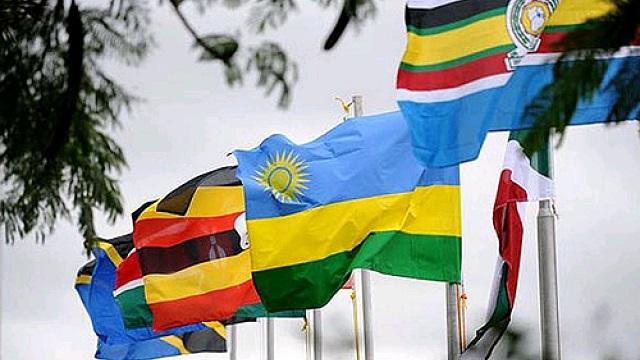
The East African Community (EAC) was formed to build socio-economic integration for East African countries. As a result, member states have entered into an agreement to, among other things, remove tariffs and trade barriers like levies and taxes to ease the movement of goods through their borders. This sounds like a noble plan—an aspiration of partners—but let us look closer. From taxed Ugandan milk to railway lines and oil pipelines along with cargo routes, these six countries are vying for control for a better economic deal, and they are starting to look more like rivals than partners. Uganda has recently…

Four critical universities best practices for fostering graduate employability are of interest: Industry partnerships, Aligning university education with a country’s development plans, Regular university curriculum reviews, and Strengthening quality assurance systems.
However, while Universities work to better prepare graduates for the workforce, it is imperative for the government and the private sector to step in and increase the employability of graduates who are already in the workforce.
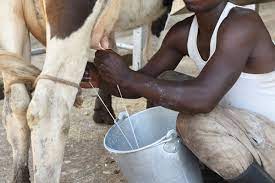
Looking at the bigger picture, speculations are that the milk and milk product levies and taxes are designed to lure Uganda to choose favourably towards other trade issues that are pending.
As local Ugandan media puts it; “Uganda maintains that if there are issues that need to be addressed, they can be handled through bilateral arrangements or the regional trade agreements within the East African Community instead of using arbitrary means such as high taxes.”
Squeezing Uganda to act in its favour, Kenya has also imposed what Uganda is terming ‘a restriction to Ugandan diary products since January 2020.’ Notably, Kenya is Uganda’s largest milk trading partner in the region, yet for over an year now, Kenya has maintained restrictions on Ugandan milk products despite the East African Community (EAC) common market protocol.