


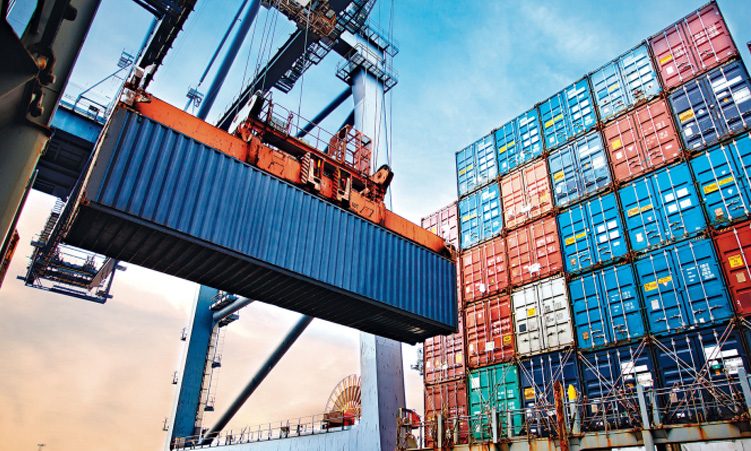
- Businesses are expanding across borders, new trade corridors are emerging, and regional ambition remains strong, but liquidity, payments and execution challenges continue to shape the reality of doing business across Africa.
Six months into 2026, African trade appears to be telling two stories at once. The first is one of momentum. Businesses are expanding beyond domestic markets, regional trade corridors continue to develop, and the ambition behind initiatives such as the African Continental Free Trade Area (AfCFTA) remains firmly intact.
The second story is more complicated. Many of the practical challenges that have historically constrained trade across the continent remain unresolved. Liquidity constraints, foreign exchange complexity, fragmented payment systems and regulatory hurdles continue to shape the day-to-day reality of doing business across borders.
Yet trade is growing anyway. That may be one of the most important lessons from the first half of 2026.
According to Ola Oyetayo, CEO at Verto, a global B2B financial technology firm, the momentum is being driven by businesses that are increasingly willing to pursue growth opportunities beyond their domestic markets. “What we’re seeing across the businesses we work with is real momentum.
Trade between South Africa, Nigeria, Kenya, Tanzania and the West African bloc continues to grow, despite many of the challenges businesses still face when moving money across borders. The appetite for expansion is there, and businesses are increasingly looking beyond their domestic markets for growth opportunities.
As one of Africa’s most sophisticated financial markets, South Africa occupies a unique position within the continent’s evolving trade landscape, serving both as a gateway into African markets and as a bridge to major global trading hubs.
New corridors and opportunities on African trade are emerging
One of the clearest shifts in 2026 is that African trade is becoming more diversified. Businesses are not only looking at traditional trade routes, but increasingly at new regional and continental corridors. Growing trade activity between African markets, together with stronger regional supply chains, is creating new opportunities for businesses looking beyond their domestic markets.
For South African businesses, this creates opportunities to reach new customers, source from new markets and build more resilient trade relationships across the continent.
Read also: High coffee, gold prices see Eastern Africa defy Trump tariffs to post export growth
Businesses are navigating a more complex environment
While the opportunity is clear, the operating environment remains challenging. Businesses trading across borders must manage currency volatility, changing regulatory requirements, liquidity constraints, compliance obligations and rising operational costs. For small and medium-size enterprises (SMEs) in particular, these pressures can affect pricing, cash flow, supplier relationships and the ability to scale into new markets.
This means that the second half of 2026 will not only be about identifying trade opportunities. It will also be about helping businesses manage the practical complexity that comes with acting on them.
One of the clearest lessons from the first half of the year is the growing gap between trade ambition and trade execution.
While businesses may identify opportunities in neighbouring markets, moving money across borders can still be significantly more complex than expected. In some instances, businesses report that making payments to major international financial centres can be simpler than settling transactions within Africa itself.
“Liquidity remains the core issue. Businesses need deep emerging-market FX, multi-currency accounts and a direct route to foreign-currency rails. Without that, payments age and working capital get tied up,” says Oyetayo.
“For South African businesses specifically, there’s a two-corridor reality. They need reliable access into the rest of Africa, and separately, into global markets such as London and New York. Most infrastructure is still built for one or the other, and that gap is where much of the friction businesses experience today originates.”
Read also: China’s new investment rules are about guardrails, not closed doors
Progress is being made
Despite these challenges, progress continues. The continued development of regional payment infrastructure, including initiatives such as the Pan-African Payment and Settlement System (PAPSS), represents an important step towards reducing friction in cross-border transactions.
At the same time, advances in digital payments, alternative settlement mechanisms and emerging financial technologies are creating new opportunities to improve liquidity and reduce transaction costs.
Financial institutions, fintechs and regulators are increasingly aligned around the need to modernise the infrastructure that underpins African trade.
While these developments are still evolving, they demonstrate that meaningful progress is being made.
Read also: Why global capital is betting big on Africa’s digital promise
What this means for the second half of 2026
The first half of the year has demonstrated that the appetite for African trade remains strong. The challenge now is ensuring that the systems, infrastructure and support mechanisms behind that growth evolve quickly enough to meet the needs of modern businesses.
As regional trade continues to expand, businesses will increasingly need the ability to manage multiple currencies, navigate regulatory requirements and move funds efficiently across markets.
“Initiatives like PAPSS are a meaningful step, but right now it’s the operators building the corridors who are setting the pace, not policy,” says Oyetayo.
“We’re not waiting for infrastructure to fully catch up before building what businesses need today. The businesses that will benefit most from the next phase of African trade growth will be those that can move capital efficiently across both regional and global markets.”
African trade is no longer waiting for perfect conditions. The businesses that succeed will be those prepared to build and grow despite them.