
Trending
- African trade is growing despite the obstacles
- Why global capital is betting big on Africa’s digital promise
- Kenya posts stronger-than-expected Q1 growth at 5.3% on manufacturing rebound, tourism boom
- China’s new investment rules are about guardrails, not closed doors
- Zanzibar optimistic economic growth will hit 7.5% on tourism boom
- Kenya defies economic shocks to post record $22 billion in tax collections
- Forget South Africa: East Africa now rules in banking industry returns
- Lamu over Tanga: The commercial calculus that cost Tanzania $20bn refinery


Author: Giza Mdoe

Giza Mdoe
Giza Mdoe is an experienced journalist with 10 plus years. He's been a Creative Director on various brand awareness campaigns and a former Copy Editor for some of Tanzania's leading newspapers. He's a graduate with a BA in Journalism from the University of San Jose. Contact me at [email protected]

The Paris Club (Club de Paris), a group of officials from major creditor countries has approved Kenya’s request for more debt relief to help it ease Covid-19 related financial weight. Formed in 1956, the Paris Club, which works to find sustainable solutions to payment difficulties experienced by debtor countries, announced earlier this month that it had accepted Kenya’s request for debt-servicing suspension and gave the East African country a six-month leeway (January to June) before it resumes to pay its national debt. “Kenya is committed to devoting the resources freed by this initiative to increase spending in order to mitigate the health, economic and…
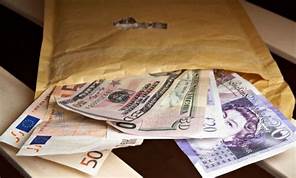
The African Union (AU) has been conducting an initiative subbed ‘Silencing the Guns’ that is meant to fight illicit financial flows (IFFs). Just so we are on the same page, illicit financial flows refer to the illegal movement of money from one country to other various channels including but not limited to tax fraud, money laundering, and other criminal activities. Now, here is who, what, and how of the matter, but not in any particular order. How grave is this IFF problem? Every year, Africa is robbed of a shocking $50 billion to IFF. Describing the annual illicit outflow as…
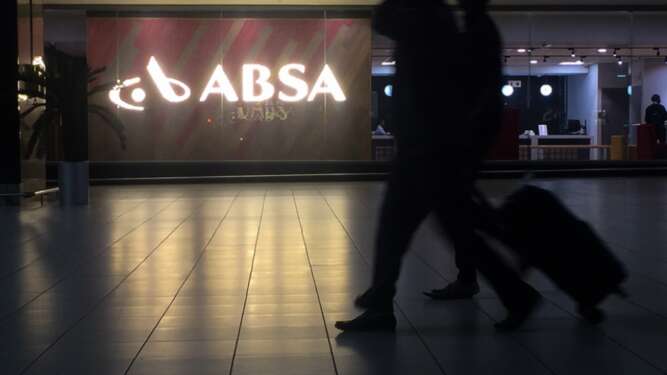
Absa suffered a major data leak in South Africa and even though the breach did not occur at the bank itself, the data leak still raises security questions concern the safety of client’s money. Absa is new in Tanzania, the newest big player in the banking industry and has invested a great deal in creating a positive image. However, earlier this month, that image was gravely tainted after an Absa employee allegedly leaked some of the bank’s customer data. The incident occurred in the bank’s South African main branch where it is reported that the said employee provided customer information…

Irony of the hungry farmer ‘Armed with machetes…and borrowed guns, two of three nations are fighting each other, what is to stop a nuclear holocaust should Africa be allowed to develop nuclear energy? First it will be to power their villages then they will weaponize and a nuclear catastrophe will follow…’ anonymous. Yet nuclear energy may be the very power thrust that Africa needs to pull itself out of the bottomless pit of abject poverty. Its clean, its efficient and comparably cheap. It will by large cut the cost of doing business and powering African homes. The cost of living…
The East African Community (EAC) business conglomerates are anxiously awaiting the Joe Biden administration to come into power. It is hoped that a Biden administration will revive negotiations and implementations of the already signed EAC-US Trade and Investment Partnership. While Trump continues to taint his administration’s short rule with prompting rioters to even invade Capitol Hill the ‘law body’ of the country, leaders from the EAC have gone ahead to congratulate Joe Biden for his election win. It is clear that businesses in Africa see Biden as a beacon of hope that will reignite the Trump dampened US trade ties…
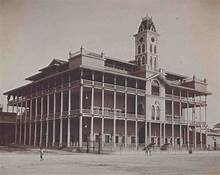
Only a fort night after the collapse of Beit-al-Ajaib or the House of Wonders in Stone Town, Zanzibar, the island’s tourism earnings are reported to be down 38 percent compared to last year. The report comes from the Bank of Tanzania (BoT) which states that despite the tourism sector racking in a surplus of $62.7 million, however this is still 37.7 percent lower than what it was able to amass during the same period in 2019. Zanzibar’s economy greatly relies on tourism and historical sites like the House of Wonders are a great attraction for tourists. Now with the building…

Businesses in Zimbabwe are feeling the covid sting has the government moves to reinforce a strict countrywide lockdown in response to renewed breakout of Covid-19 infections. The lockdown came to effect at the end of the week and involves restriction of movement as well as business operations. With borders closed, businessmen in the country fear worse losses than they are already suffering. As of January 15, 2021 Zimbabwe had 25,365 confirmed coronavirus (COVID-19) cases and 636 deaths prompting more restrictions. The lockdown means effective closure of what the country says are non-essential businesses and with it comes also the prohibition…

Arise, an African investment company has acquired 34.9 per cent of Rabobank shares in the Dar es Salaam Stock Exchange (DSE) listed NMB Bank Plc. Notably, NMB is one of the largest and most successful banks in Tanzania. The buyout actually took place late last year when on 28 December 2020, having been approved by the Capital Market and Securities Authority (CMSA) in Tanzania for the transfer of 174,500,000 NMB Bank Plc shares owned by Rabobank to Arise. The share transfer process was completed on 31 December 2020. According to Arise Chief Executive Officer, Mr Deepak Malik the conclusion of…
Looks like Kenya is in for a tough run in the coming financial year or maybe even for a longer span. Kenya needs to borrow to meet its budgetary needs. The International Monetary Fund (IMF) is willing to lend but wants structural and governance reforms for Kenyan state-owned enterprises. How did Kenya get into this tough spot? Officials blame it on Covid-19 and the global slowed-down economy that resulted from the pandemic. Granted, economies took a hit from the pandemic but despite that fact in mind, reason still begs to understand what of the IMF loans that were issued specifically to help countries muzzle down the negative effects of the pandemic?
Notably, at the onset of the pandemic in March 2020, Kenya received a whopping $739 million loan from the IMF. The money was specifically meant to help cushion the Kenyan economy from the adverse effects of the Covid-19 pandemic. Now the IMF says Kenya is being lax.

As of October last year, Tanzania, East Africa’s Largest producer of cement, was facing so much shortage that prices almost doubled.
A 50kg bag of cement that would, on normal market weather conditions go for about USD 6 the price shot up 30 per cent to a little over USD 8, show the National Bureau of Statistics data for October 2020.
It was a paradox, and the hardliner government wouldn’t have it, newly re-appointed into power, Tanzania’s Prime Minister Kassim Majaliwa was swift to act. He ordered a nationwide inspection of all known cement factories, warehouses, distribution points and even retail shops.